 2026-07-18
Prioritize thermal-break aluminum or system windows; definitely avoid standard aluminum alloys. Standard aluminum lacks thermal insulation, causing frames to heat up in summer and allowing noise to penetrate easily. In contrast, thermal-break aluminum uses PA66 nylon thermal strips to interrupt heat transfer, while its multi-chamber structure blocks noise. Given the hot, rainy weather and common street noise, Forge thermal-break system windows are recommended for personal residences; paired with insulated glass, they effectively reduce noise and block heat, with local manufacturing tailored to the southern climate.
Standard Aluminum vs Thermal-Break Aluminum: Quick Comparison
Quick answer: for an enclosed balcony where heat control and noise reduction both matter, thermal-break aluminum is normally the better starting point. The insulating separator reduces the direct metal path through the frame, but the frame alone does not determine performance. Glass selection, sash design, seals, drainage, installation and the size of each opening must be specified as one complete system.
| Decision factor | Standard aluminum | Thermal-break aluminum |
|---|---|---|
| Frame heat transfer | Continuous metal path conducts heat readily | Insulating separator interrupts the direct metal path |
| Condensation control | Interior frame surfaces can become hotter or colder more quickly | Better frame-surface temperature control when the full assembly is specified correctly |
| Noise control | Depends mainly on glass, seals and airtight installation | Also depends on glass, seals and installation; the thermal break is not a soundproofing solution by itself |
| Best fit | Low-priority utility spaces or mild conditions where thermal performance is not a main goal | Living spaces, street-facing balconies and climates with strong heating or cooling loads |
What Actually Controls Heat and Noise on an Enclosed Balcony?
A window or door should be evaluated as a complete assembly rather than by frame material alone. For heat control, review the frame, glass build-up, low-emissivity coating options, spacer, opening style and installation joint. For noise control, pay close attention to glass thickness combinations, laminated-glass options, the number and continuity of seals, locking pressure and gaps around the perimeter.
Sliding and casement systems behave differently. Sliding windows are convenient where interior clearance is limited, while casement windows can provide more continuous compression at the seals when properly adjusted. Compare the practical differences in our guide to sliding vs casement windows for an enclosed balcony.
How to Specify the Right Balcony Window System
- Define the main exposure. Record sun direction, local temperature range, wind and rain exposure, traffic noise and the floor height.
- Set priorities. Decide whether heat control, noise reduction, ventilation, view area, insect screens or easy cleaning comes first.
- Choose the opening type. Confirm how much usable space is available and how often each panel needs to open.
- Match the glass to the problem. Do not assume that one generic double-glazed unit solves every project. Ask for a glass proposal based on the required thermal, safety and acoustic performance.
- Request whole-unit evidence. Compare tested values for the complete window or door, not isolated frame or glass claims. The required ratings should match the project location and applicable building requirements.
- Review installation details. Head, sill and jamb joints need a clear plan for anchoring, insulation, weather sealing and drainage. A high-specification product cannot compensate for uncontrolled perimeter gaps.
When Standard Aluminum May Still Be Suitable
Standard aluminum can remain a practical choice for a non-conditioned utility balcony, a mild climate or a project where the enclosure is mainly intended to block rain. It should not be selected only because the initial price is lower. First confirm whether discomfort, condensation or traffic noise would require the assembly to be replaced or upgraded later.
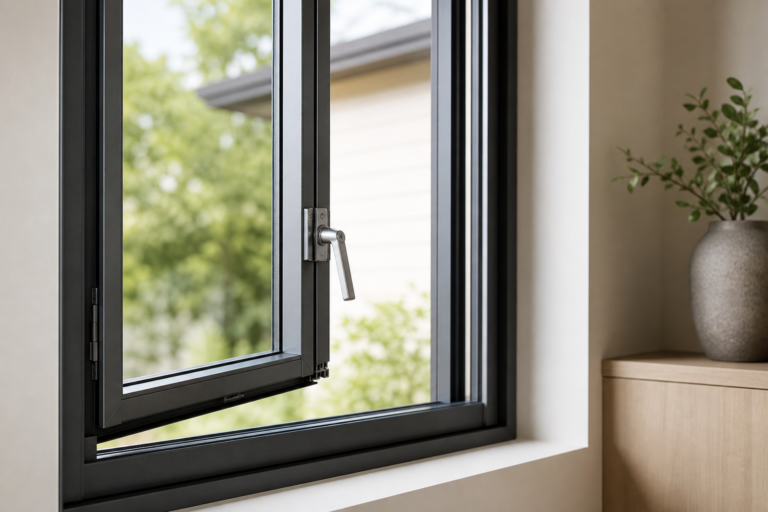
For a living area or a balcony connected directly to a bedroom, study or family room, start with a thermal-break system and then refine the glass and seals. Read how a thermal break works in a window frame, or compare a thermal-break casement window example.
Information to Send Before Requesting a Quote
- Opening width and height, plus photographs from inside and outside
- Number of panels and preferred opening direction
- Location, floor level, sun exposure and nearby noise sources
- Required glass safety, thermal or acoustic performance
- Screen, shade, railing and drainage constraints
- Drawings or wall-section details showing the installation joint
These details allow the frame, glass, hardware and installation method to be reviewed together. For projects beside a main road, also see the guide to glass selection for heat and traffic-noise control.
Frequently Asked Questions
Does thermal-break aluminum make a balcony soundproof?
No. A thermal break primarily interrupts heat transfer through the metal frame. Noise performance depends on the complete assembly, especially the glass configuration, airtight seals, locking pressure and installation joints. Ask for whole-window acoustic evidence when noise reduction is a primary requirement.
Is double glazing enough for both heat and noise control?
Not automatically. Different glass make-ups serve different goals, and the frame, spacer, seals and installation also affect the result. The supplier should match the glass proposal to the balcony orientation, climate, safety requirements and noise source instead of offering one generic specification.
Should I choose sliding or casement windows for better sealing?
Casement windows commonly use compression seals, while sliding windows prioritize convenient movement and space efficiency. Either type can work when designed and installed correctly. Choose according to ventilation, panel size, cleaning access, interior clearance and the tested performance required for the complete unit.