 2026-08-30
Direct answer: Casement windows vs double-hung windows should be compared against the actual opening first. Choose casements when a side-hinged sash, exterior swing, and interior operator fit the site; choose double-hung units when vertical sash travel and a no-projection exterior better fit the opening.
This comparison is for U.S. homeowners, architects, builders, and buyers deciding which operating type suits an existing or planned opening. It covers geometry, operation, reach, screens, cleaning, and documented performance; it does not rank every product or replace configuration-specific drawings, ratings, or local code review.
Key Takeaways
- Start with width, height, sill depth, furniture, exterior clearance, and the user’s reach—not a generic pros-and-cons list.
- A casement sash rotates on side hinges and projects inward or outward; a double-hung unit moves one or both sashes vertically within the frame plane.
- Do not assume one type is always more efficient, easier to clean, or code-compliant; compare the exact labeled product and operating details.
- Draw the full casement swing and both double-hung sash positions before coordinating screens, shades, guards, counters, and paths.
- Keep the final choice opening-specific so one room’s answer is not copied across the whole elevation.
Casement Windows vs Double-Hung: Start with the Opening
The National Fenestration Rating Council consumer guide groups casements with projected or hinged types and single- or double-hung units with sliding types. Its types and parts overview also separates operating type from frame, glazing, spacer, and other efficiency technologies. Treat the operator name as one classification, not a rating for a proposed unit.
Measure the rough or existing opening, finished sill depth, wall thickness, interior trim, exterior cladding, and surrounding clearances. A narrow, tall opening may naturally suit vertical sash travel, while a wider opening may allow a practical casement sash only within the selected series’ size and hardware limits. Never infer allowable size from the photograph of another project.
| Opening condition | Casement question | Double-hung question |
|---|---|---|
| Exterior walkway or planting | Can the open sash project without conflict? | Does the unit remain within the wall plane? |
| Counter, desk, or deep sill | Can the operator and lock be reached? | Can the lower sash be lifted and locked? |
| Tall, narrow opening | Is the sash size within written limits? | Are both sash positions usable? |
| Screen or shade | Where does it sit relative to the operator? | Where does it sit relative to both moving sashes? |
| Cleaning access | How is both glass faces safely reached? | Do the specified sashes tilt or remove, and how? |
Compare How Each Sash Moves
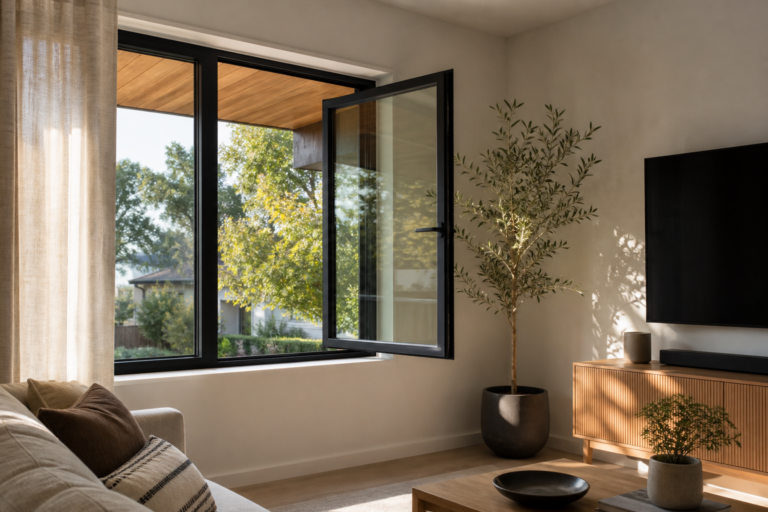
A casement rotates around a side hinge and may use a crank, handle, stay, or other product-specific control. The open sash creates an arc outside or inside the room. Show that arc on plan and elevation, including roof edges, screens, shutters, plants, guards, neighboring windows, faucets, curtains, and furniture. The Forge guide to casement screen and operating clearance provides a detailed coordination path.
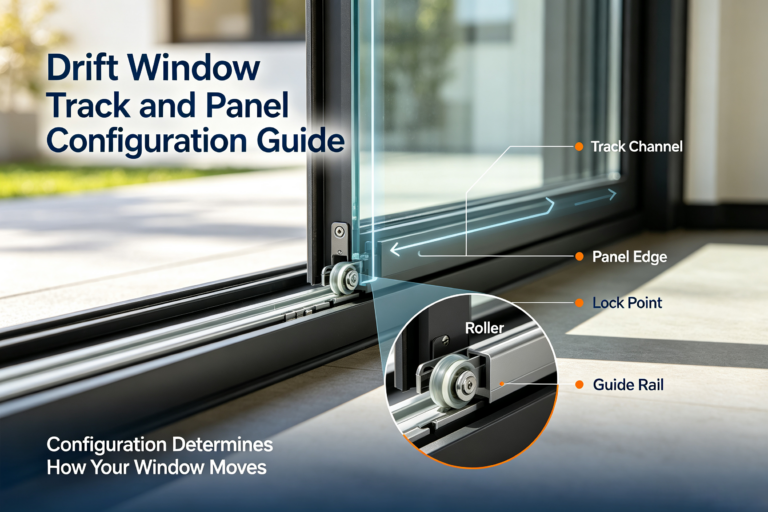
A double-hung window normally has two vertically sliding sashes. The National Fenestration Rating Council consumer guide describes how the upper sash can lower and the bottom sash can rise, but a specific product may use stops, balances, locks, screens, or tilt features that affect daily use. Review the NFRC consumer window-type definitions, then request the actual operating instructions.

Do not equate movement with ventilation performance without the opening geometry and local wind conditions. A casement can present an angled sash to moving air; a double-hung may allow openings at the top, bottom, or both. The useful opening area, insect screen, limit devices, room layout, and occupant behavior all change the result.
Match Operation, Cleaning, and Access to Daily Use
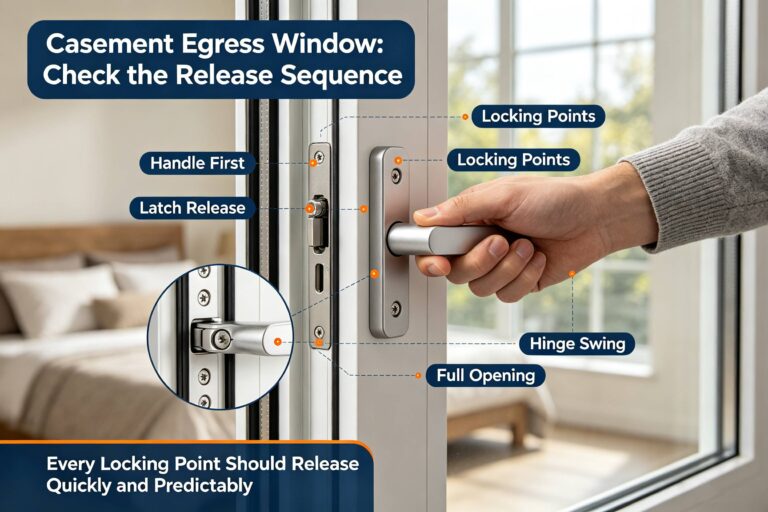
Stand where the occupant will operate the window. For a casement, test the distance to the lock and operator, wrist clearance, required force, and the number of actions from closed to ventilation position. For a double-hung unit, test access to the meeting-rail lock, the force needed to move each sash, and whether furniture or a deep sill blocks the user’s body position.
Cleaning claims require written confirmation. Some casements provide access to both glass faces from indoors at certain opening angles; others do not. Some double-hung products tilt inward; others require a different release or professional exterior access. Compare instructions for the exact model rather than choosing from a showroom demonstration alone.
Screen placement also varies. Casement screens are often coordinated on the room side because the sash projects away from them, while a double-hung screen commonly sits toward the exterior. “Often” is not a specification. Show the screen type, attachment, removal path, storage, cleaning access, and conflicts with shades or hardware for each quoted unit.
Compare Verified Performance, Not Operator Labels
ENERGY STAR advises buyers to identify their climate zone, request certified products for that location, and retain the National Fenestration Rating Council label. Its current residential windows buying guidance also recommends putting the exact U-factor and solar heat gain coefficient in the contract. Compare the same glass, size, frame, spacer, option package, and operator type where possible.
The NFRC label may include U-factor, solar heat gain coefficient, visible transmittance, air leakage, and condensation resistance. These values belong to a certified configuration, not every window sharing the same material or marketing name. Use the Forge casement energy selection guide to build a request, and ask for equivalent evidence for the double-hung alternative.
Use a One-Opening Decision Worksheet
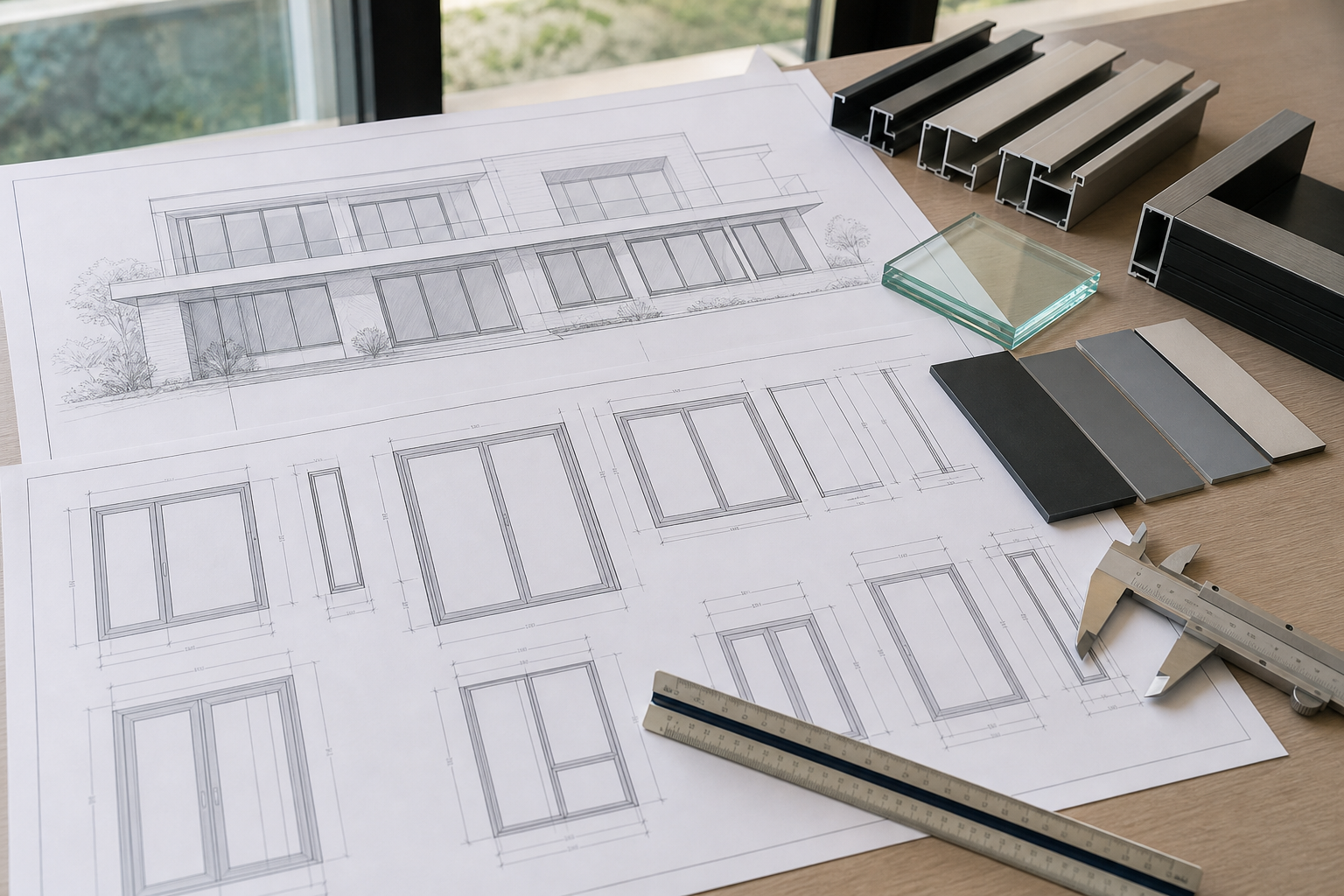
- Identify the opening. Record room, elevation mark, dimensions, wall depth, sill height, interior use, and exterior exposure.
- Draw both motions. Show the casement hinge and full swing; show the double-hung upper and lower sash travel.
- Trace user access. Mark handle, crank, meeting-rail lock, lift points, screens, shades, furniture, counters, and safe cleaning positions.
- Compare like with like. Align frame material, glass, finish, size, ratings, screens, installation scope, and warranty assumptions.
- Resolve exceptions. List projection conflicts, difficult reach, screen removal, safety devices, code questions, and service access.
- Approve one answer per mark. Place the chosen operator type, handing, configuration, and evidence reference on the opening schedule.
If the project includes many openings, repeat the worksheet for representative conditions and every exception. A living-room answer may not fit a kitchen counter, bedroom requirement, upper-level fall condition, basement well, porch, or narrow side yard. Link the worksheet to the Forge replacement measurement handoff when field conditions control the choice.
Frequently Asked Questions
Which is better, casement or double-hung?
Neither operating type is better for every opening. Compare exterior projection, vertical sash travel, handle reach, cleaning method, screens, shades, opening proportions, performance labels, installation scope, and maintenance. The better option is the documented configuration that fits the specific room and wall condition.
Are casement windows always more energy efficient?
No. The operating principle can support tight gasket compression, but actual performance depends on the whole product, size, glass, frame, seals, hardware, manufacturing, installation, and condition. Compare certified U-factor, solar heat gain coefficient, air-leakage information, and other relevant ratings for the exact alternatives.
Are double-hung windows easier to clean?
Some double-hung products have inward-tilting sashes, but that feature is not universal. Casement glass access also varies with opening angle, hardware, screen, floor level, and product design. Request written cleaning and sash-release instructions, then test the intended method without defeating safety devices.
Can casement and double-hung windows be mixed on one house?
Yes, if the elevation, frame sightlines, colors, glass appearance, screens, performance requirements, and installation details are coordinated. Use opening-specific marks so the operator type follows room and site needs while the exterior composition remains deliberate.
Conclusion
For casement windows vs double-hung, begin with the opening rather than a universal winner. Document movement, projection, reach, screens, cleaning, ratings, and installation for each mark. Then compare equivalent proposals and approve the operator type that works in the actual room, wall, and exterior condition.