 2026-09-10
Short answer: Casement and double-hung windows solve different daily-use problems. Casements usually open outward on hinges and can direct airflow across an opening; double-hungs move vertically and keep the operating path inside the frame. The better choice depends on ventilation, cleaning, screens, reach, weather exposure, and the room layout.
Key takeaways
- Compare the operating motion before comparing appearance or nominal size.
- Casements can offer a broad opening but need exterior and interior clearance.
- Double-hungs keep the sash travel in the frame but require access to both sashes for cleaning and operation.
- Neither style is automatically better; the opening, occupant, and maintenance plan decide.
In this guide: Operating motion · Daily-use comparison · Project constraints · Decision checklist
How the two window styles operate
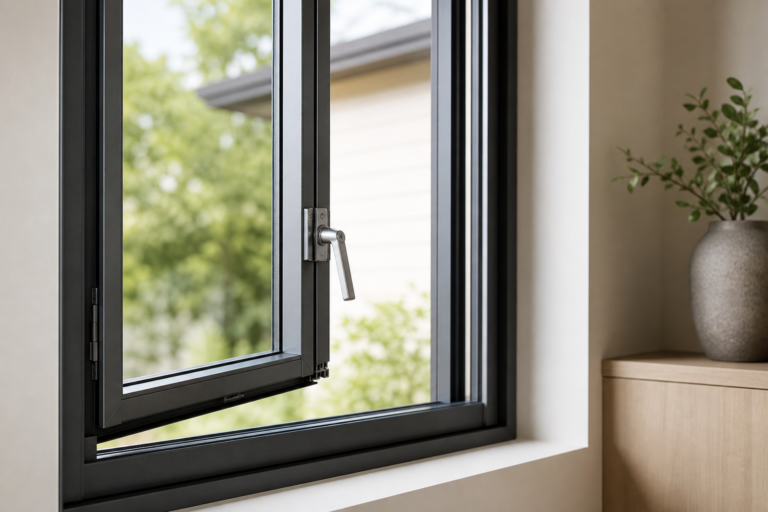
A casement sash is hinged at one side and operated by a handle, crank, or operator. When open, the sash projects beyond the frame, so the exterior path and the interior furniture layout both matter. A double-hung has upper and lower sashes that slide vertically. The sashes remain within the frame’s general footprint, but the meeting rail, balances, screens, and access to both sashes affect use.
For terminology, see Forge Windows’ casement parts and motion guide. The goal is not to choose a winner in the abstract; it is to match the movement to the way the room is occupied.
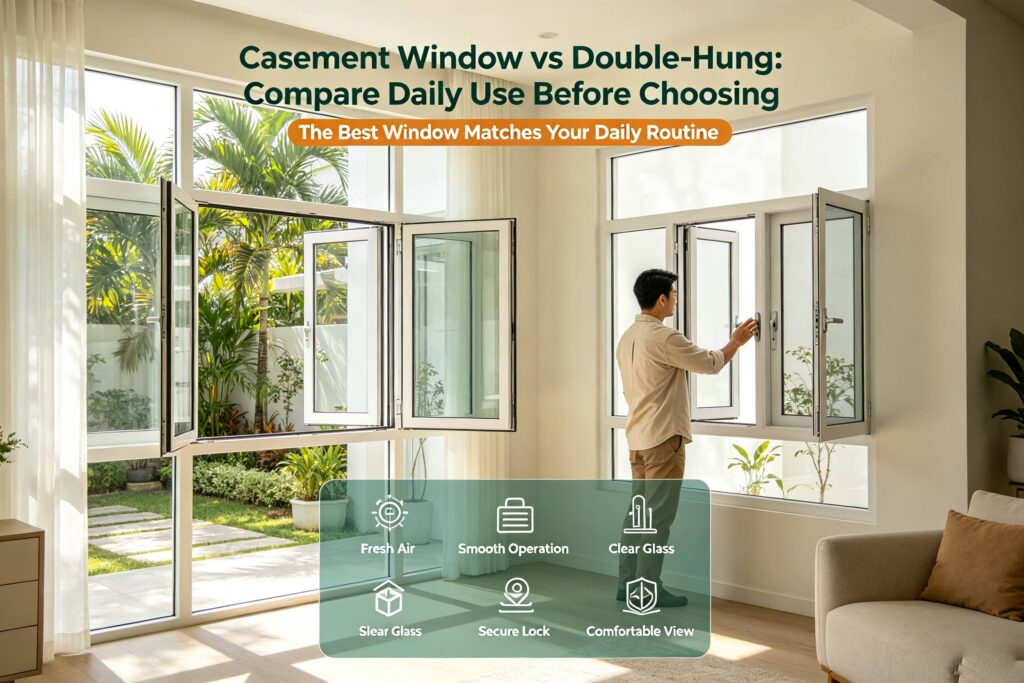
Casement window vs double-hung for daily use
| Decision factor | Casement tendency | Double-hung tendency |
|---|---|---|
| Ventilation direction | Can direct airflow through the opening, subject to wind and sash position. | Creates an opening at the top, bottom, or both sash positions. |
| Operating path | Sash swings outward and needs clearance. | Sashes travel vertically inside the frame. |
| Cleaning | Exterior glass may be reachable from inside only with suitable hardware and access. | Both sashes may tilt or move, depending on the design; verify the actual product. |
| Screens | Screen type and placement must suit an outward-opening sash. | Screen and sash movement must work together within the frame. |
| Handle reach | Handle height and crank reach affect operation. | Balance, lift force, and sash reach affect operation. |
| Weather exposure | Check seals, hardware, drainage, and the open sash’s exposure. | Check meeting rails, balances, seals, and drainage details. |
This comparison is a planning tool, not a performance promise. The final result depends on the selected system, glass, installation, drainage, and maintenance. The U.S. Department of Energy’s windows and doors guidance explains why orientation, glazing, and installation all influence energy performance.
Project constraints that should decide the style
Furniture and circulation
A casement sash can conflict with a walkway, exterior planting, a balcony, or a neighbouring opening. A double-hung avoids an outward swing but can still conflict with blinds, a desk, or a deep sill. Draw the open position, not just the closed elevation.
Ventilation goals
If the goal is to direct air across a room, a casement may be useful when the opening and wind conditions support it. If the room benefits from a low opening, a high opening, or both at once, a double-hung layout may be more flexible. Treat this as a room-specific decision rather than a universal rule.
Cleaning and maintenance
Ask who will clean the exterior glass and service the hardware. A beautiful configuration is a poor choice if the operator, balance, hinge, or screen cannot be reached safely. Forge Windows’ opener-maintenance checklist illustrates why hardware access should be decided early.
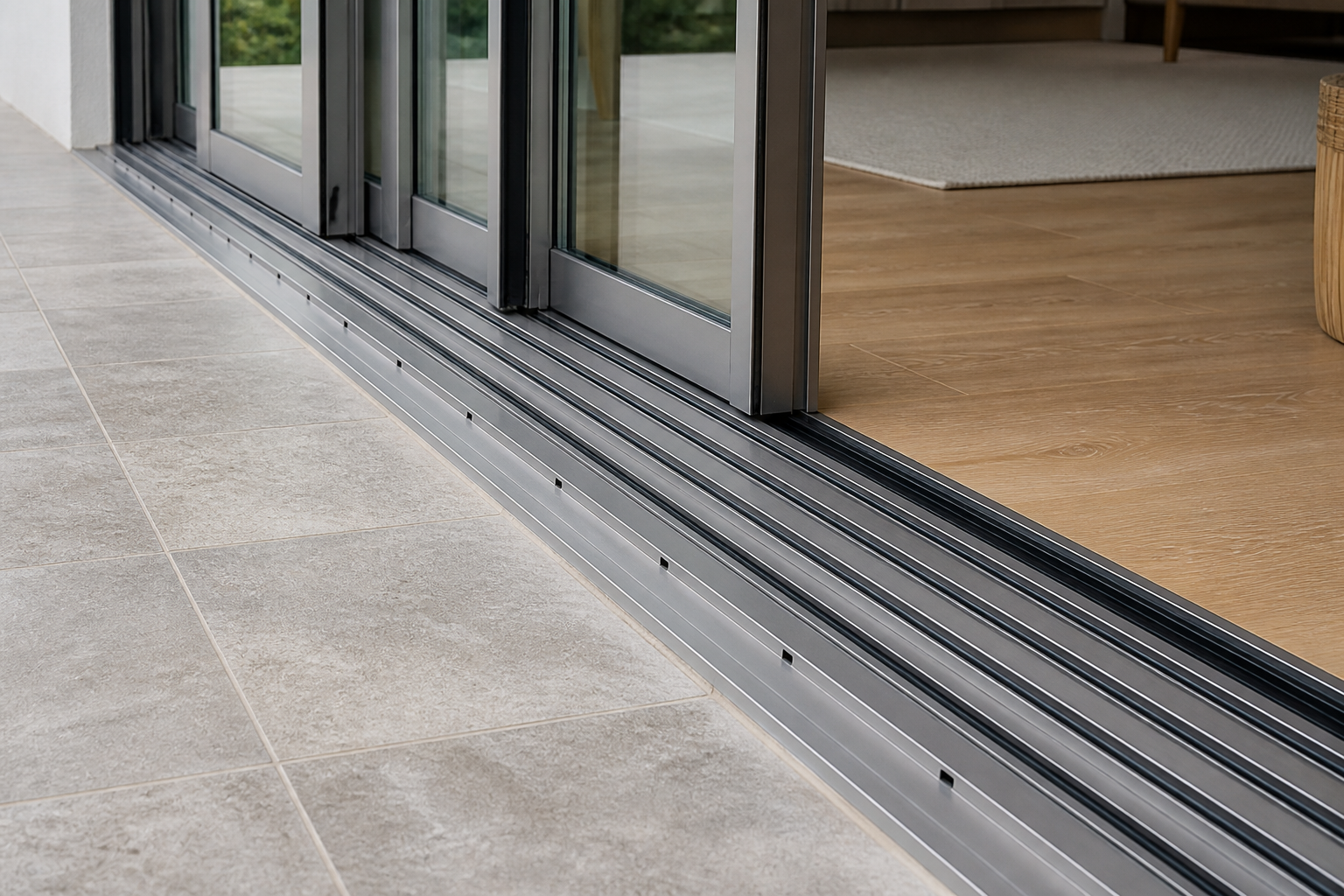
Threshold height, track count, drainage, and finished floor transitions must be coordinated together.
Reach, safety, and occupants
Consider children, older occupants, wheelchair users, and anyone who will operate or clean the window. Handle height, lift force, opening restrictors, and emergency requirements may change the preferred style. Local code and project professionals should confirm any egress or safety requirement.
A practical decision checklist
- Draw the opening and the full operating path at the planned frame size.
- List the room’s ventilation goal: cross-flow, low opening, high opening, or occasional purge.
- Mark furniture, curtains, screens, trim, planting, balconies, and neighbouring openings.
- Confirm who can reach the handle, sash, screen, and exterior glass.
- Ask the supplier to document frame, glazing, hardware, drainage, and installation assumptions.
- Compare maintenance access and replacement parts, not just initial appearance.
For a new build or replacement, keep the decision tied to the measured opening and the installation sequence. The water-managed installation guide is a useful reminder that a window style cannot compensate for a poor wall interface.
For independent context, review the U.S. Department of Energy’s windows and doors guidance and the National Fenestration Rating Council’s homeowner resources. Use them to understand documented ratings and installation considerations, not to assume that one operating style is automatically more efficient.
Frequently asked questions
Which gives more ventilation, casement or double-hung?
Neither wins in every room. Casements can direct air through a broad opening, while double-hungs can open at different vertical positions. Wind, opening area, screens, and room layout determine the result.
Are casements harder to clean?
They can be, depending on height, hinge travel, and whether the hardware allows safe interior access. Confirm the actual product’s cleaning method before ordering.
Are double-hungs safer around a walkway?
They avoid an outward-swinging sash, but still need safe operation and maintenance access. Furniture and blind clearance remain important.
Does window style determine energy efficiency?
No. Glazing, frame design, orientation, air sealing, drainage, and installation all affect performance. Compare documented system information rather than style labels alone.
Final recommendation
Choose casement when its airflow direction and outward swing suit the site; choose double-hung when vertical movement, in-frame operation, or a particular room layout offers a better daily experience. Verify the complete system and installation details before treating a style comparison as a product decision.
Before approval, ask for a simple operating sketch and a maintenance note. It should show the open position, handle reach, screen location, cleaning access, and the assumptions behind the frame and glazing selection. This small handoff makes the comparison useful to the installer and to the person who will live with the window every day.
{“@context”:”https://schema.org”,”@type”:”BlogPosting”,”headline”:”Casement Window vs Double-Hung: Compare Daily Use Before Choosing”,”description”:”Compare casement and double-hung windows by ventilation, cleaning, screens, operation, weather exposure, and project constraints before selecting a style.”,”datePublished”:”2026-09-10T10:20:00+08:00″,”dateModified”:”2026-09-10T10:20:00+08:00″,”mainEntityOfPage”:{“@type”:”WebPage”,”@id”:”https://www.forgewindows.com/casement-window-vs-double-hung-daily-use/”},”author”:{“@type”:”Organization”,”name”:”Forge Windows”}}
{“@context”:”https://schema.org”,”@type”:”FAQPage”,”mainEntity”:[{“@type”:”Question”,”name”:”Which gives more ventilation, casement or double-hung?”,”acceptedAnswer”:{“@type”:”Answer”,”text”:”Neither wins in every room. Casements can direct air through a broad opening, while double-hungs can open at different vertical positions.”}},{“@type”:”Question”,”name”:”Are casements harder to clean?”,”acceptedAnswer”:{“@type”:”Answer”,”text”:”They can be, depending on height, hinge travel, and whether the hardware allows safe interior access.”}},{“@type”:”Question”,”name”:”Are double-hungs safer around a walkway?”,”acceptedAnswer”:{“@type”:”Answer”,”text”:”They avoid an outward-swinging sash, but still need safe operation and maintenance access.”}},{“@type”:”Question”,”name”:”Does window style determine energy efficiency?”,”acceptedAnswer”:{“@type”:”Answer”,”text”:”No. Glazing, frame design, orientation, air sealing, drainage, and installation all affect performance.”}}]}