 2026-09-10
Short answer: A casement window opener that feels stiff usually needs diagnosis, not force. Check the sash clearance, track or hinge condition, fasteners, and operator alignment first. Clean and lightly lubricate only the correct moving points, then record the operator shape and fixing pattern before ordering a replacement.
- “Opener” may mean the handle, operator arm, crank mechanism, or the complete hardware assembly.
- Binding can come from sash load, hinge friction, debris, loose screws, or an incorrectly aligned frame.
- Measure and photograph the existing hardware before selecting a replacement.
- Never keep increasing force when a handle, arm, or hinge begins to flex.
In this guide: What the opener includes · A safe diagnosis · Maintenance steps · Replacement handoff
What does “casement window opener” mean?
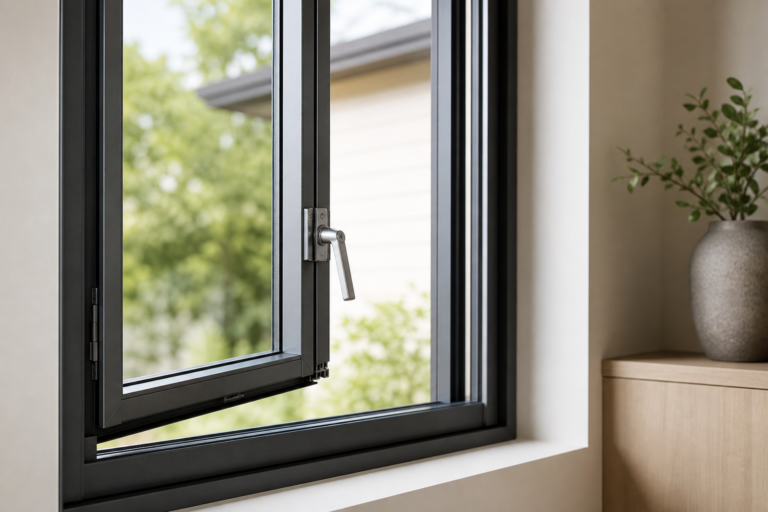
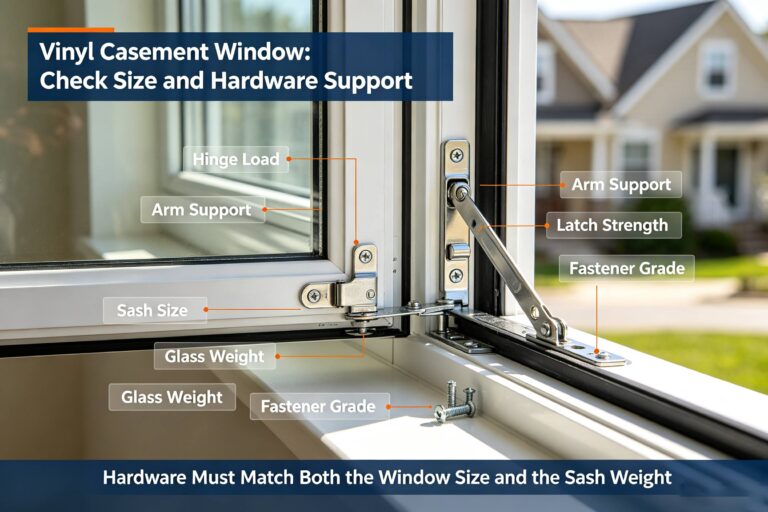
Homeowners use “opener” for several parts. The handle is the hand contact point; the operator or crank converts rotation into movement; an arm or slide transfers that movement to the sash; and hinges carry the sash load. A replacement must match the complete operating arrangement, not just the visible handle.
That distinction matters because a handle can feel hard to turn when the real fault is a dragging sash or a hinge under load. It can also feel loose when the operator screws have backed out. Forge Windows’ casement window parts guide is useful when you need to name the component before discussing a repair.

A safe diagnosis before touching the opener
Start with the sash closed and your hands clear of the hinge side. Do not use a pipe, pliers, or an improvised extension on the handle. Work through these checks in order:
- Observe the movement. Does the sash bind immediately, only near the last part of travel, or only when the window is under wind pressure? A repeatable point of resistance is useful evidence.
- Check the frame and sash. Look for paint, dirt, sealant, a shifted screen, or a loose fastener touching the moving path. Do not remove weather seals simply to make the window move.
- Inspect hinges and arms. Look for bent links, missing screws, elongated holes, corrosion, or a slide that is dry and contaminated. Photograph the hardware in the open and closed positions.
- Test the handle gently. If the handle flexes while the sash does not move, stop. That pattern points to a jammed or overloaded mechanism rather than normal friction.
- Compare another opening. A matching window in the same project can reveal whether the problem is a single hardware fault or a broader alignment issue.
Maintenance that reduces binding
Clean first. Use a soft brush or vacuum to remove grit from the operator track and hinge area, then wipe accessible metal surfaces with a dry cloth. Use a small amount of manufacturer-approved lubricant at the specified pivot or slide points; excess oil attracts dust and can contaminate weather seals. If the hardware has a maintenance label or product manual, follow it over a generic lubricant recommendation.
Next, check fasteners without overtightening. A screw that spins, pulls through, or sits at an angle is not fixed by adding force. The surrounding material may need repair, a backing solution, or a qualified installer. The installation sequence guide explains why frame alignment and water management should be treated as a system.
What to record before replacing an opener
Do not order from a keyword alone. Build a compact hardware handoff:
- Window location and room.
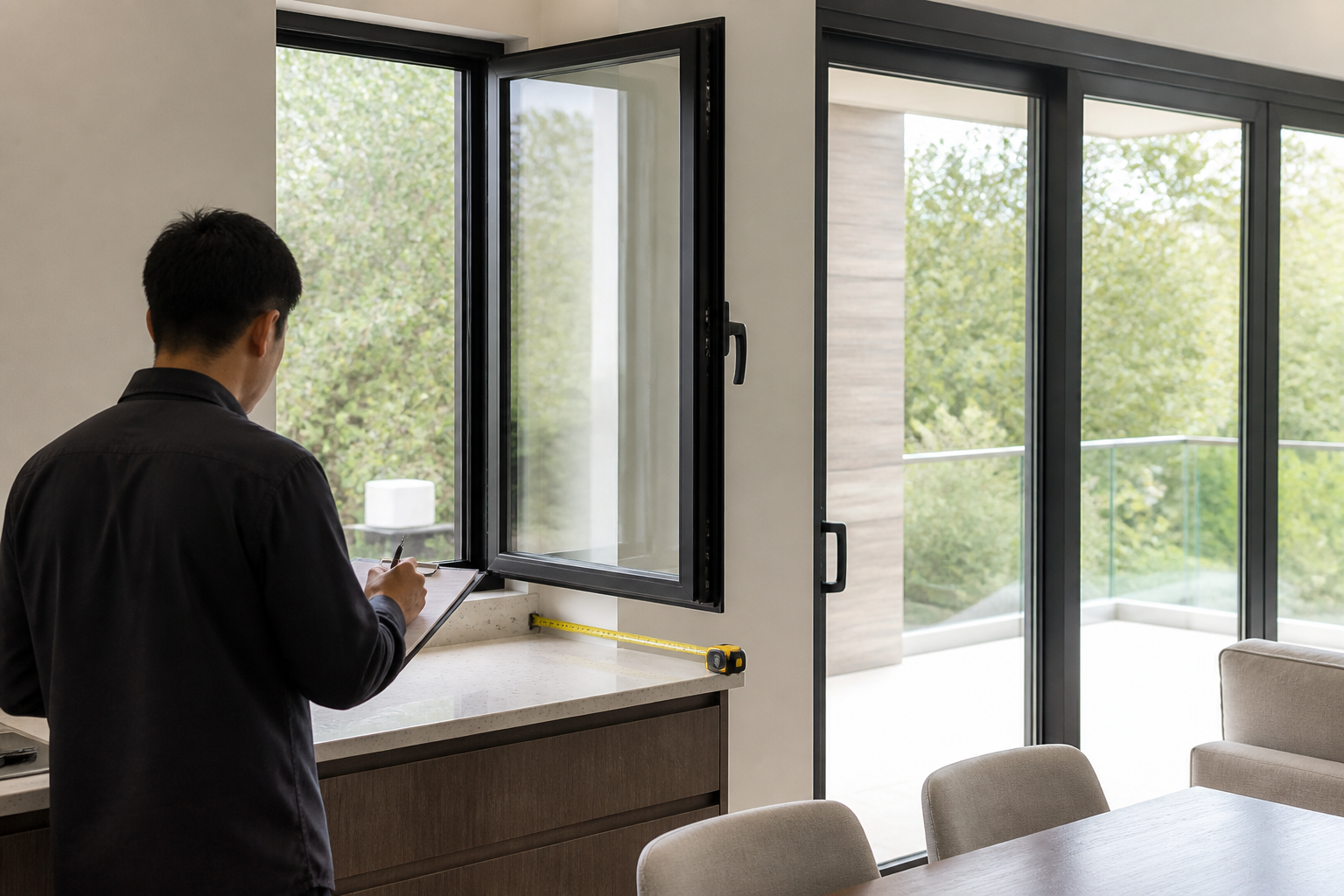
- Overall sash width and height, plus the opening direction.
- Handle position, operator body shape, arm length, and visible fixing pattern.
- Photos of the hardware, screw holes, hinge side, and the fully open sash.
- Any screen, trim, insect-control, or furniture clearance that limits travel.
- The symptom, when it occurs, and whether the frame or sash appears out of square.
A replacement operator should be checked against the actual clearance and load path. A similar-looking part can have a different arm reach, handedness, fixing pattern, or travel range. If the sash is large, heavy, or difficult to hold safely, have an installer inspect the opening instead of removing loaded hardware yourself.
For broader maintenance context, compare the manufacturer’s instructions with the U.S. Department of Energy’s windows and doors guidance and the National Fenestration Rating Council’s homeowner information. These sources help separate a hardware repair question from a whole-window performance claim.
When should you stop troubleshooting?
Stop and request professional help when glass or sash movement is uncontrolled, a hinge is bent, a screw has pulled out, the frame is damaged, the opening is above a difficult reach, or the operator is the only support holding the sash. For a new project, prepare a measured opening schedule and ask the supplier to confirm the hardware and clearances; Forge Windows’ opening-schedule example shows the kind of information that avoids guesswork.
Frequently asked questions
Can I spray lubricant into the handle?
Usually not as a first step. The handle may not be the source of friction, and spray can reach seals or finishes. Identify the moving pivot or slide and follow the hardware maker’s instructions.
Why does the opener bind only at the end?
End-of-travel resistance can indicate sash alignment, hinge load, a screen or trim collision, or an operator travel mismatch. Observe the exact contact point before changing parts.
Is an opener the same as a casement operator?
Not always. “Opener” is a broad homeowner term; an operator is the mechanism that converts handle movement into sash movement. Confirm the full assembly before ordering.
Should I replace the handle or the whole mechanism?
Replace only the verified failed component when compatible parts are available. If the mechanism is bent, loose, corroded, or mismatched, have the complete assembly and frame checked together.
Final checklist
Keep the window safe, identify the actual moving parts, clean without contaminating seals, document the fixing pattern, and verify clearance before ordering. That sequence prevents a common mistake: treating a loaded or misaligned sash as if it were only a stiff handle.
{“@context”:”https://schema.org”,”@type”:”BlogPosting”,”headline”:”Casement Window Opener Maintenance: Stop Binding Safely”,”description”:”Learn why a casement window opener binds, how to troubleshoot it safely, and what measurements to record before choosing a replacement operator.”,”datePublished”:”2026-09-10T10:00:00+08:00″,”dateModified”:”2026-09-10T10:00:00+08:00″,”mainEntityOfPage”:{“@type”:”WebPage”,”@id”:”https://www.forgewindows.com/casement-window-opener-maintenance-stop-binding/”},”author”:{“@type”:”Organization”,”name”:”Forge Windows”}}
{“@context”:”https://schema.org”,”@type”:”FAQPage”,”mainEntity”:[{“@type”:”Question”,”name”:”Can I spray lubricant into the handle?”,”acceptedAnswer”:{“@type”:”Answer”,”text”:”Usually not as a first step. Identify the moving pivot or slide and follow the hardware maker’s instructions.”}},{“@type”:”Question”,”name”:”Why does the opener bind only at the end?”,”acceptedAnswer”:{“@type”:”Answer”,”text”:”End-of-travel resistance can indicate sash alignment, hinge load, a screen or trim collision, or an operator travel mismatch.”}},{“@type”:”Question”,”name”:”Is an opener the same as a casement operator?”,”acceptedAnswer”:{“@type”:”Answer”,”text”:”Not always. Opener is a broad term; an operator is the mechanism that converts handle movement into sash movement.”}},{“@type”:”Question”,”name”:”Should I replace the handle or the whole mechanism?”,”acceptedAnswer”:{“@type”:”Answer”,”text”:”Replace only the verified failed component when compatible; otherwise have the complete assembly and frame checked together.”}}]}