 2026-08-24
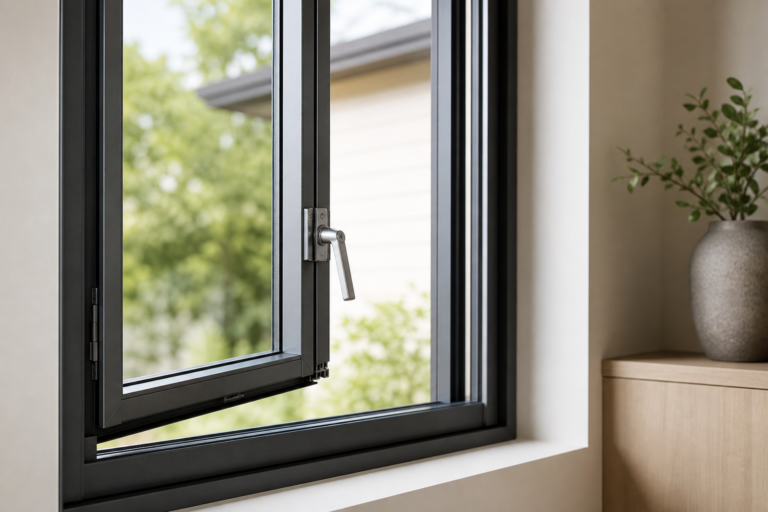
Most casement windows sold for U.S. homes open outward. The sash is hinged on one side and swings toward the exterior when you turn a crank or operate a push-out handle. That arrangement keeps the open sash out of the room and usually places the insect screen on the interior. Inward-opening side-hinged windows do exist, but they are a different product choice and can conflict with blinds, curtains, furniture, and interior screens. Before ordering, confirm the actual operation on the manufacturer’s drawings instead of relying on the word “casement” alone.
Which Way Do Casement Windows Normally Open?
A casement window is an operable window with a sash hinged along one vertical side. In the standard U.S. configuration, the sash opens outward to the left or right. Both Pella’s current casement guide and Andersen’s window comparison describe casements as outward-opening products.
The opening method is separate from the operating style. A cranked casement uses an operator arm to move the sash. A push-out casement uses a handle and manual push. Either can still be an outward-opening, side-hinged window. A fixed unit shaped to match a casement may be called a picture or stationary casement, but it does not open.
Do not confuse a casement with an awning window. An awning sash is hinged at the top and opens outward from the bottom. A tilt-turn window can tilt at the top or swing inward from the side. Those differences change screen placement, drainage details, hardware, and required clearance.
Why Is Outward Opening Common for U.S. Casement Windows?
An outward swing solves several practical problems at once. The moving sash does not occupy room space, so it is less likely to strike a countertop object, faucet, chair, or person. The insect screen can stay on the interior side, protected from direct weather and accessible for removal. The sash can also open across much of its area without needing an interior path.
| Planning issue | Outward-opening casement | Inward-opening side-hinged window |
|---|---|---|
| Room-side swing | No sash projects into the room | Sash needs an unobstructed indoor arc |
| Typical screen location | Interior side | Often exterior or integrated, depending on system |
| Exterior clearance | Required for the sash and hardware | Less exterior swing clearance |
| Window treatments | Must clear locks, crank, and screen access | Must also clear the full moving sash |
| Cleaning approach | Product-specific; some hardware brings the sash edge closer | Exterior glass may face indoors when open, depending on design |
Outward opening is not automatically better for every location. It simply moves the main clearance requirement outside. A good specification considers the wall, walkway, roof overhang, landscaping, screen, handle, and maintenance access as one system.
What Clearance Does an Outward Casement Sash Need?
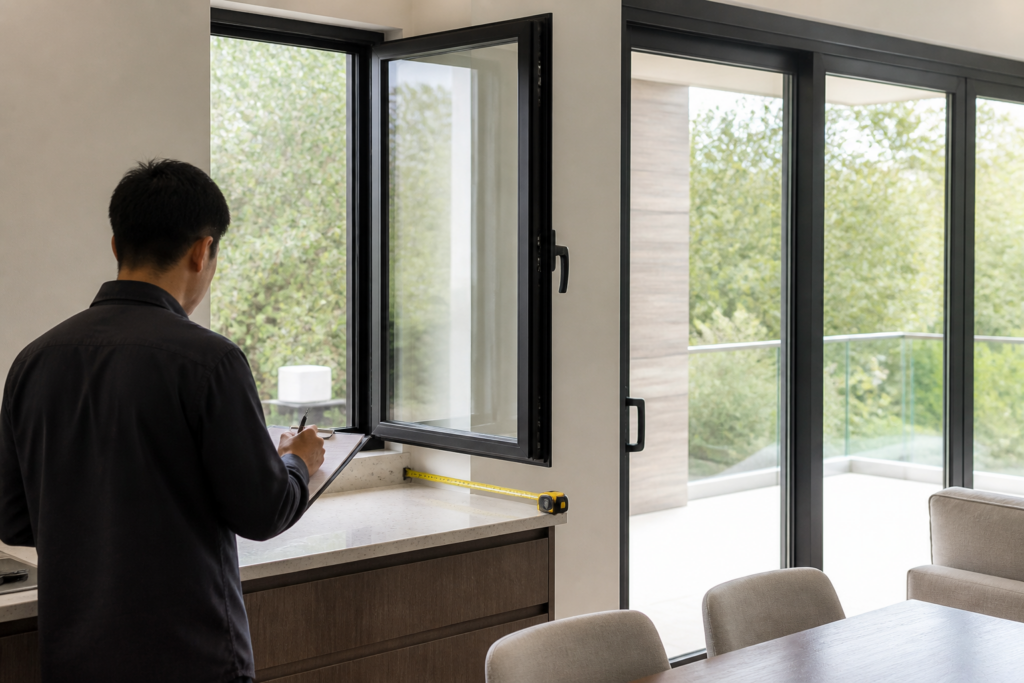
The sash needs a clear operating envelope beyond the exterior wall. The exact arc depends on the product size, hinge geometry, operator, opening limiter, and maximum opening angle. Ask for the manufacturer’s operation drawing rather than assuming a universal dimension.
Check these exterior conflicts
- Walkways and decks: An open sash should not project into a route where someone can walk into its edge.
- Roof and trim: Deep returns, projecting bands, gutters, downspouts, and low overhangs can restrict the swing.
- Landscaping: Shrubs and branches should not rub the sash, block operation, or prevent exterior service.
- Adjacent windows: Two outward-opening sashes near an inside corner can interfere with each other.
- Wind exposure: Hardware and opening controls must be used as designed; an open sash should not be treated as a wind brace.
Forge’s screen and operating-clearance guide explains how screen removal, handles, and nearby finishes affect usable access. For layouts with multiple units, the casement window styles and layout guide helps coordinate fixed and operable panels.
Plan the interior side too
Even though the sash opens outside, the room side is not clearance-free. The crank or handle needs hand space. Locks must remain reachable. An interior insect screen needs a removal path, and blinds should not press against the hardware. At a kitchen sink, verify that the operator can be used without leaning dangerously over a deep counter.
When Would an Inward-Opening Window Make Sense?
An inward-opening product can be useful where an exterior swing would be unsafe or impossible, such as a narrow balcony, a busy exterior passage, or an opening directly behind a railing. Tilt-turn windows may also appeal to buyers who want a separate tilt position for ventilation and an inward swing for access.
However, an inward sash demands disciplined room planning. It may interfere with shades, curtains, faucets, plants, shelving, and furniture. The screen solution must match the product. Water management and drainage are product-specific, so an inward-opening window should not be substituted into a casement detail without reviewing the complete installation instructions.
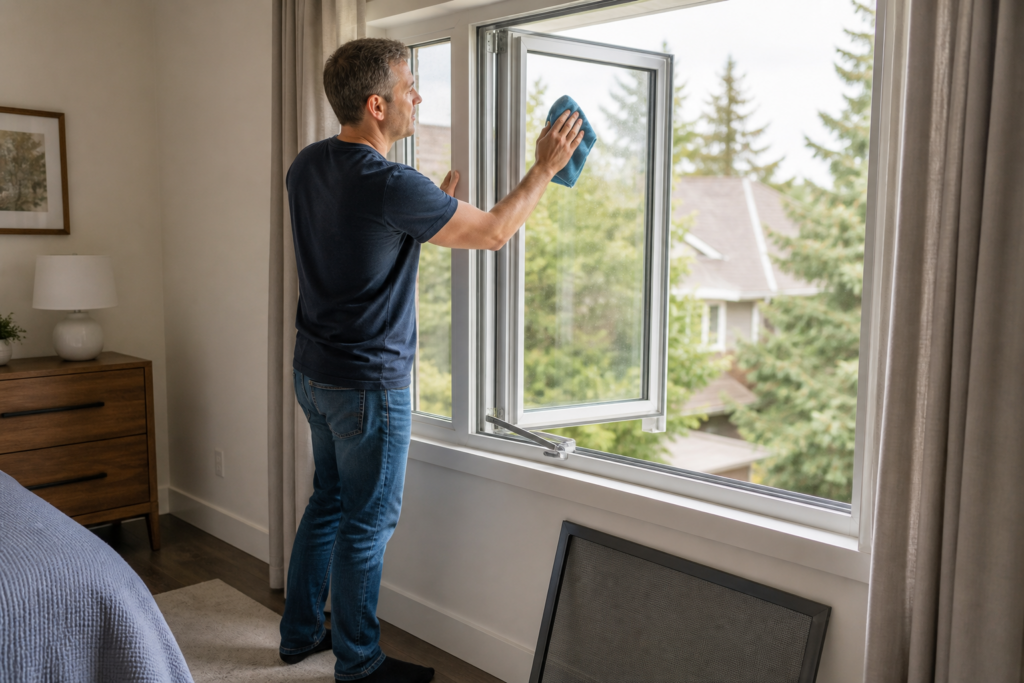
If easy glass access is the main goal, first review the actual cleaning features of the proposed outward-opening product. Some casement hardware allows the hinge side of the sash to move toward the center as it opens. Forge’s guide to cleaning a casement window safely from inside also explains when exterior access should be left to a professional.
Casement Windows Ordering Checklist
- Name the operation: Record casement, push-out casement, tilt-turn, awning, or fixed rather than using “operable window.”
- Confirm swing direction: Mark inward or outward on the elevation and operation schedule.
- Confirm handing: Identify the hinged side using the manufacturer’s stated viewing convention.
- Request an operation diagram: Review the sash arc, maximum opening, limiter options, and hardware position.
- Survey both sides: Check exterior obstructions and interior handles, screens, shades, counters, and furniture.
- Verify the screen: Record fixed, removable, retractable, or integrated screen type and removal direction.
- Review performance separately: Select glazing and ratings for the project climate; swing direction alone does not establish energy performance. Forge’s energy selection guide explains the labels to compare.
- Approve product-specific details: Follow the manufacturer’s installation, anchorage, flashing, and operating instructions.
Limitations and Safety Notes
This guide explains planning differences, not a universal installation detail. Building location, height, wind exposure, emergency-escape requirements, fall-protection rules, and local codes can change the acceptable opening and hardware. Do not remove limiters, stays, hinges, or screens to force a different operation. For an upper-story opening or a damaged sash, use a qualified window professional.
Frequently Asked Questions
Do all casement windows open outward?
No. Outward opening is typical for U.S. casement windows, but inward-opening side-hinged and tilt-turn products are available. Confirm the operation on the product data and shop drawings because terminology varies by market and manufacturer.
Where is the screen on an outward-opening casement window?
The insect screen is usually on the interior side because the sash moves outside. Screen type and removal method vary, so verify that locks, crank handles, shades, and nearby finishes leave enough access.
Can a casement window hit a person outside?
Yes, if its operating arc projects into a walkway, deck, balcony, or service area. Review the open-sash envelope before ordering and avoid locating an outward swing where its edge creates a foreseeable collision.
Does outward opening make a casement window energy efficient?
Not by itself. Energy performance depends on the complete tested window, including frame, glazing, spacers, seals, and installation. Compare the product’s applicable ratings for the climate and project rather than choosing by swing direction alone.
Conclusion
For most U.S. projects, casement windows open outward, with the screen on the room side. The right choice still depends on exterior clearance, interior hardware access, screen strategy, maintenance, and the exact product’s operation. Before approving an order, mark swing and handing on the drawings and review the manufacturer’s operating diagram. If you are coordinating custom aluminum openings, Forge Windows can review schedules and clearance questions against the selected window system without replacing the project designer or installer.
{
“@context”: “https://schema.org”,
“@type”: “FAQPage”,
“mainEntity”: [
{
“@type”: “Question”,
“name”: “Do all casement windows open outward?”,
“acceptedAnswer”: {
“@type”: “Answer”,
“text”: “No. Outward opening is typical for U.S. casement windows, but inward-opening side-hinged and tilt-turn products are available. Confirm the operation on the product data and shop drawings because terminology varies by market and manufacturer.”
}
},
{
“@type”: “Question”,
“name”: “Where is the screen on an outward-opening casement window?”,
“acceptedAnswer”: {
“@type”: “Answer”,
“text”: “The insect screen is usually on the interior side because the sash moves outside. Screen type and removal method vary, so verify that locks, crank handles, shades, and nearby finishes leave enough access.”
}
},
{
“@type”: “Question”,
“name”: “Can a casement window hit a person outside?”,
“acceptedAnswer”: {
“@type”: “Answer”,
“text”: “Yes, if its operating arc projects into a walkway, deck, balcony, or service area. Review the open-sash envelope before ordering and avoid locating an outward swing where its edge creates a foreseeable collision.”
}
},
{
“@type”: “Question”,
“name”: “Does outward opening make a casement window energy efficient?”,
“acceptedAnswer”: {
“@type”: “Answer”,
“text”: “Not by itself. Energy performance depends on the complete tested window, including frame, glazing, spacers, seals, and installation. Compare the product’s applicable ratings for the climate and project rather than choosing by swing direction alone.”
}
}
]
}