 2026-08-06
Aluminum window frames are strong, slim, and well suited to large areas of glass, but aluminum also conducts heat readily. A thermal break in windows interrupts that direct metal path, helping the interior side of the frame stay closer to the indoor temperature. For U.S. homeowners, architects, builders, and dealers, that can affect energy performance, surface temperature, comfort, and condensation risk.
Key Takeaways
- A thermal break is a low-conductivity separator between the exterior and interior aluminum profiles.
- It improves the frame, but glazing, spacers, seals, installation, window size, and climate still affect whole-window performance.
- Compare certified whole-product U-factor, solar heat gain coefficient (SHGC), visible transmittance, and air leakage where available.
- Use lower U-factor values when reducing heat transfer is the priority; choose SHGC for the climate, orientation, and shading plan.
- Ask for product-specific test data instead of assuming every thermally broken frame performs the same way.
What Is a Thermal Break in Windows?
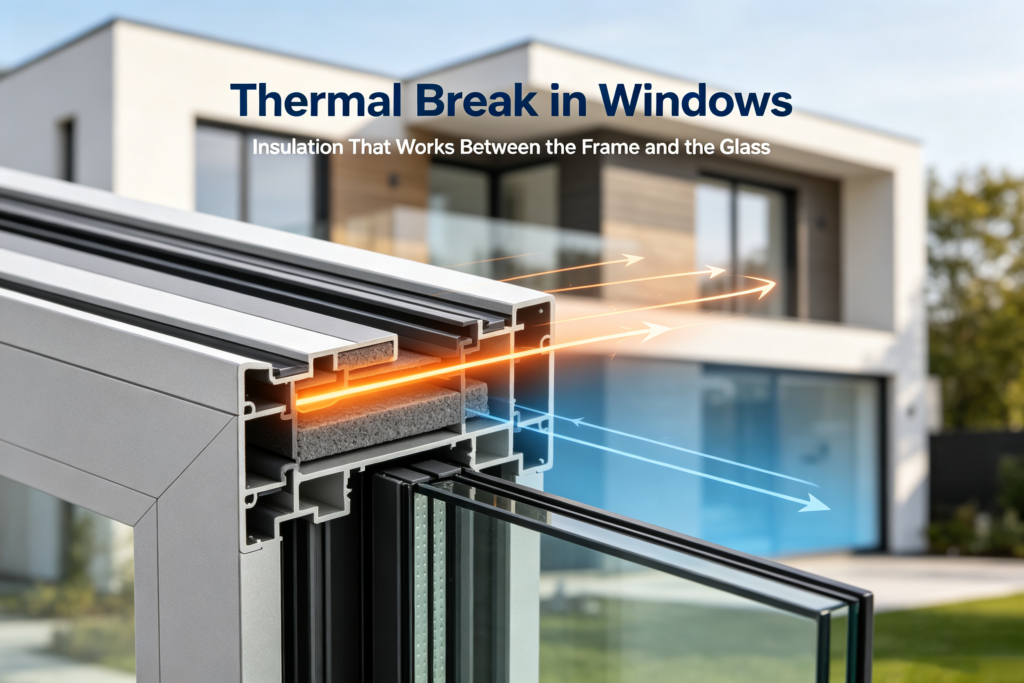
A thermal break is a continuous section of low-conductivity material placed between the exterior and interior parts of a metal window or door frame. It reduces direct heat flow through the aluminum while allowing the frame to retain its strength, slim sightlines, finish, and ability to support large insulated-glass units.
The break does not create a vacuum and it does not make aluminum nonconductive. It changes the path heat must follow. Instead of traveling directly through one continuous metal profile, heat encounters a material that conducts far less heat than aluminum.
In many architectural aluminum systems, the separator is a polyamide strip or another engineered polymer. For example, Forge Windows’ 65 Series thermal-break casement window lists a 65 mm frame system with PA66 thermal strips. That product detail is useful, but buyers should still request the whole-window rating for the exact frame, glass, spacer, size, and operating type being specified.
How Does a Thermal Break Work in an Aluminum Window?
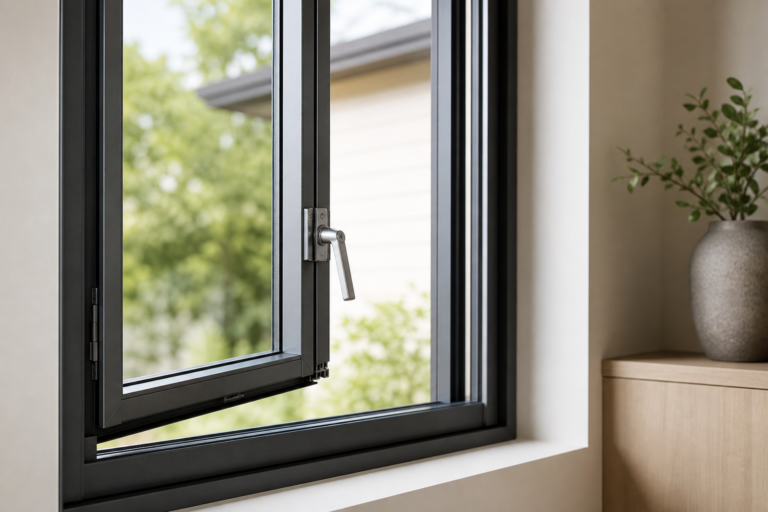
A thermally broken aluminum frame is usually built from separate interior and exterior aluminum profiles. The low-conductivity section mechanically joins them while limiting direct metal-to-metal heat transfer. The assembly must also control water, air, structural loads, and movement caused by temperature changes.
Think of the window as a chain. The frame is only one link. The final result also depends on:
- the width and geometry of the thermal barrier;
- the insulated-glass configuration and low-emissivity coating;
- the edge spacer between glass panes;
- gaskets, weather seals, drainage paths, and hardware;
- the ratio of frame area to glass area;
- whether the unit is fixed, casement, awning, sliding, or a door;
- opening size, installation details, and jobsite air sealing.
This is why two windows that both use the words “thermal break” can have different U-factor, condensation resistance, air leakage, and water performance.
Four Benefits of Thermally Broken Aluminum Windows
1. Lower heat transfer through the frame
The thermal barrier reduces the direct conductive path between outdoors and indoors. In heating climates, that helps limit heat loss through the frame. In cooling climates, it helps reduce heat moving inward through sun-heated exterior aluminum. The effect should be judged through whole-product ratings rather than a frame-only claim.
2. Warmer interior frame surfaces in winter
When the inside aluminum surface stays warmer, occupants near the window may experience less cold-surface discomfort. Warmer surfaces can also reduce the chance of condensation, although no frame can eliminate condensation under every condition. Indoor humidity, outdoor temperature, glass edge temperature, air movement, and installation all matter.
3. Slim profiles for large glass openings
Aluminum’s structural properties allow narrow sightlines and large openings. A thermal barrier helps pair that architectural goal with improved frame performance. For large openings, compare the thermal design with glass weight, panel size, track design, drainage, and operating force. Forge’s 105–161 Medium Narrow Sliding Door, for example, lists 1.8–2.0 mm 6063-T5 aluminum and a 5+20A+5 double-glazed configuration.
4. More options for climate-responsive design
Thermally improved frames give project teams more flexibility when balancing glass area, daylight, solar gain, heating demand, cooling demand, and exterior durability. They are not a substitute for climate analysis. A south-facing window in a cold climate may need a different SHGC strategy from a west-facing opening in a hot climate.
Thermal Break Windows: Ratings U.S. Buyers Should Compare
The National Fenestration Rating Council (NFRC) label is designed to compare the energy performance of the complete window, door, or skylight. It is more useful than comparing one frame component in isolation.
| Rating | What it measures | How to read it |
|---|---|---|
| U-factor | Heat transfer through the whole product, commonly expressed in Btu/h·ft²·°F in the United States | Lower means better resistance to heat flow |
| SHGC | The fraction of incident solar heat admitted through the product | Values run from 0 to 1; lower admits less solar heat |
| Visible Transmittance (VT) | The fraction of visible light transmitted | Higher generally means more daylight, subject to glazing and frame area |
| Air Leakage | Air passing through the assembly under defined test conditions | Lower is better when values are reported on the same basis |
The U.S. Department of Energy’s Guide to Energy-Efficient Windows also advises using U-factor and SHGC when selecting windows. Lower U-factor indicates better insulating performance. The preferred SHGC depends on whether useful winter solar gain or reduced summer heat gain is the larger design priority.
Do not compare a center-of-glass value from one supplier with a whole-window value from another. Confirm the product size, operator type, glass package, frame, spacer, and certification basis behind each number.
How to Choose Thermally Broken Aluminum Windows
Step 1: Define the climate and orientation
Record the project location, elevation, design temperatures, humidity conditions, window orientation, exterior shading, and nearby wind exposure. For projects in cold northern states, see Forge Windows’ guide to insulating large-format aluminum sliding doors.
Step 2: Set whole-product performance targets
Specify U-factor, SHGC, VT, air leakage, water penetration resistance, and structural performance as the project requires. Confirm which values are certified, tested, simulated, or supplier-reported. Do not replace a measurable target with a general phrase such as “energy efficient.”
Step 3: Match the operating type to the opening
Casement windows can use compression seals, while sliding systems require tracks, interlocks, drainage paths, and movable-panel seals. Large doors also carry more glass weight and may need reinforced profiles. For wide openings, compare the 130–195 Heavy-duty Sliding Door with narrower-frame options based on panel size, track count, exposure, and project loads.
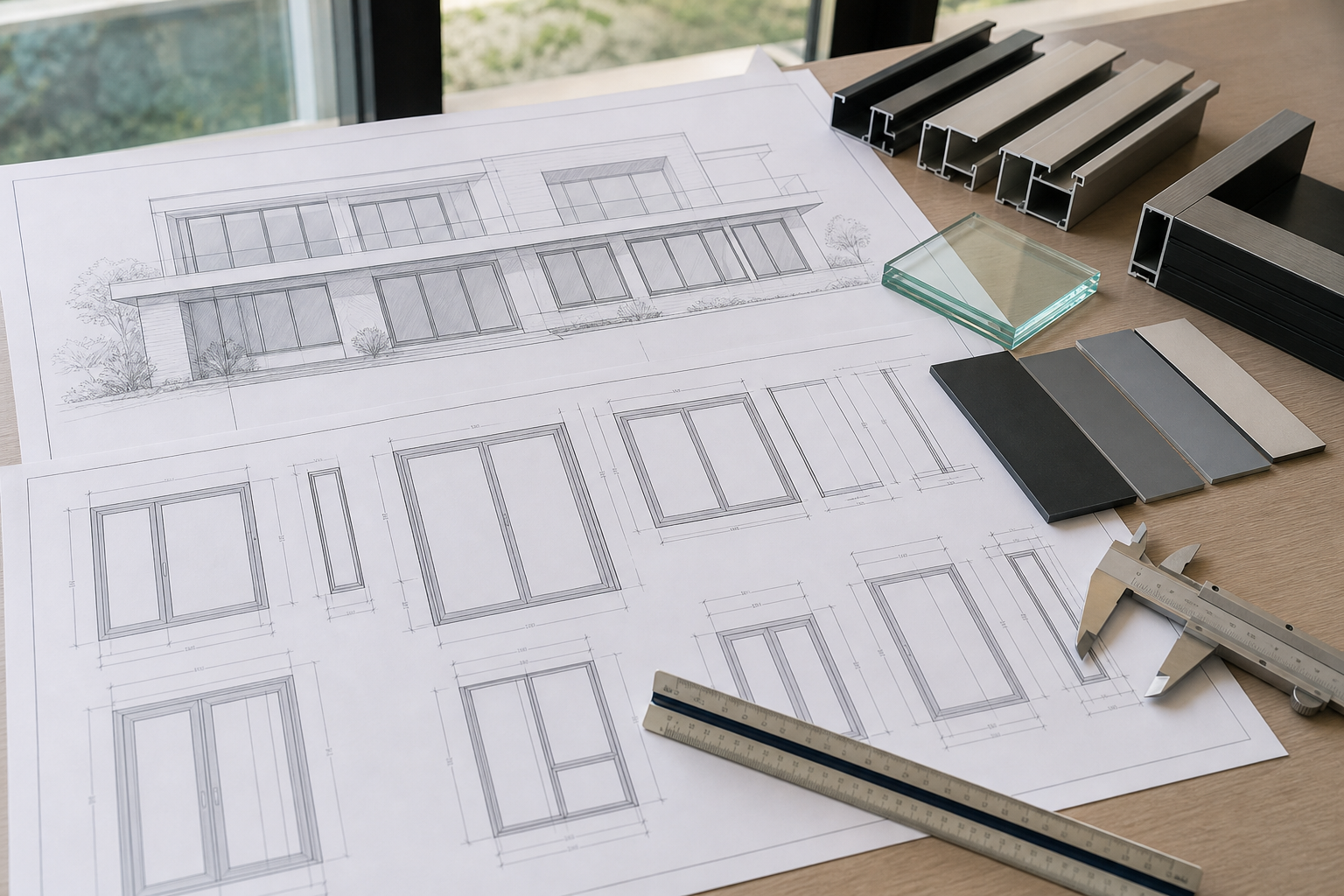
Step 4: Review drawings and sample corners
Ask for a frame cross-section, glass make-up, thermal-barrier dimensions, gasket locations, drainage details, finish specification, hardware schedule, and a sample corner when practical. Verify that the proposed thermal break continues around the frame and that installation details do not introduce avoidable conductive bridges.
Step 5: Confirm installation responsibilities
A rated window can underperform when the rough opening, flashing, perimeter insulation, sealant, or anchors are poorly detailed. Define who supplies shop drawings, who checks openings, who installs sill pans or flashing, and who documents final water and air sealing.
Specification Checklist
- Project location, climate, orientation, and exposure recorded
- Whole-product U-factor and SHGC target stated
- Frame series, operating type, dimensions, and panel count confirmed
- Thermal-barrier material and geometry documented
- Insulated-glass make-up, coating surface, gas fill, and spacer confirmed
- Air, water, and structural criteria listed where required
- NFRC or other applicable certification evidence reviewed
- Shop drawings, samples, installation details, and warranty reviewed
Frequently Asked Questions
Are thermally broken aluminum windows energy efficient?
They can be, but the thermal break alone does not determine energy performance. Compare the whole-window U-factor, SHGC, glazing, spacer, seals, size, and installation. A certified rating for the exact product configuration is stronger evidence than a general claim about aluminum or a thermal-barrier material.
Does a thermal break stop condensation?
No. A thermal break can raise the interior frame surface temperature and reduce condensation risk, but condensation still depends on outdoor temperature, indoor humidity, glazing edge temperature, air movement, and installation. Building operators may also need to manage indoor moisture during very cold weather.
What is the difference between thermal-break and non-thermal-break aluminum windows?
A non-thermal-break frame has a more direct aluminum path between indoors and outdoors. A thermally broken frame separates the interior and exterior profiles with a lower-conductivity material. The practical difference should be checked through whole-product U-factor, surface-temperature analysis, and project-specific performance requirements.
Is a wider thermal break always better?
Not necessarily. Width is one variable, but shape, material, frame cavities, glass edge, seals, product dimensions, and operator type also influence results. Compare tested or certified whole-product values for the proposed configuration instead of ranking systems by barrier width alone.
Should every U.S. project use the lowest possible SHGC?
No. Lower SHGC reduces admitted solar heat and may help cooling-dominated buildings, especially on exposed east- and west-facing openings. Some heating-dominated designs may benefit from controlled winter solar gain. Orientation, shading, glass area, energy modeling, and local code requirements should guide the target.
Plan Your Aluminum Window or Door System
A thermal break makes modern aluminum frames more suitable for demanding building envelopes, but good selection still depends on complete product data. Start with the climate, set whole-product targets, verify the proposed configuration, and coordinate installation details.
If you are planning a residential, hospitality, multifamily, or commercial project, send Forge Windows your opening sizes, drawings, glass requirements, climate location, and performance targets. The project team can then match the frame series, glazing, hardware, and test documentation to your application.