 2026-08-25
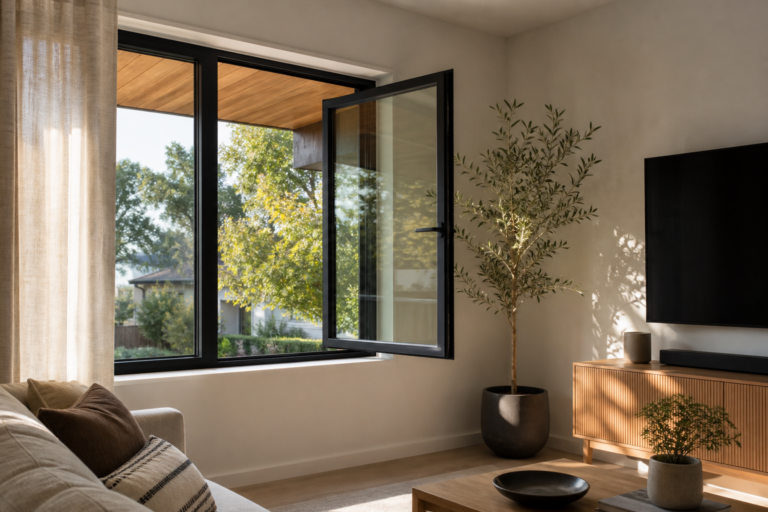
Direct answer: A casement window is an operable window with a sash hinged along one side. It opens inward or outward, depending on the system, and usually closes against perimeter seals with a handle, crank, or push-out mechanism. Its clear opening, screen position, hardware, and swing must be checked for the room.
Key Takeaways
- “Casement” identifies side-hinged operation, not one frame material.
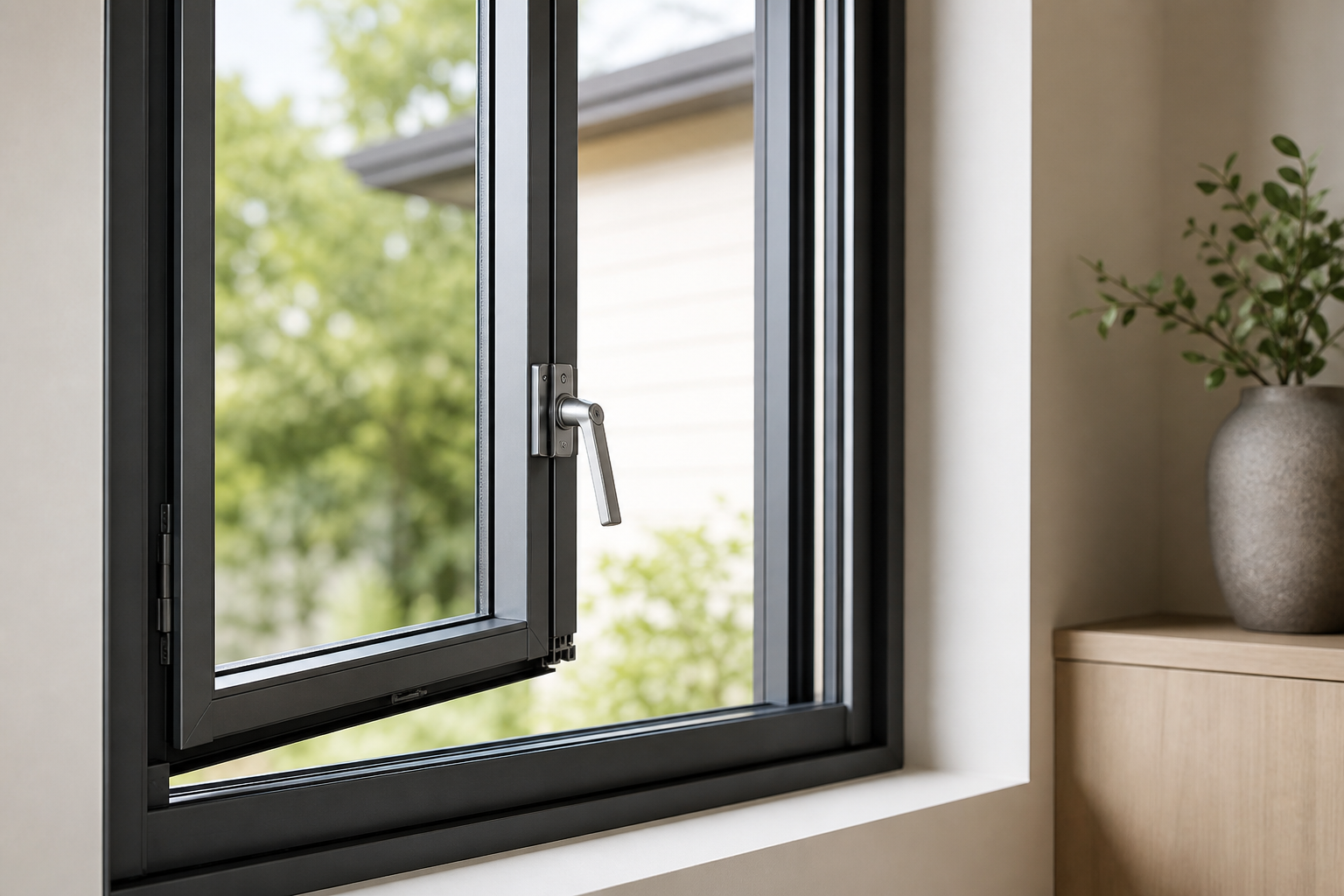
- The frame, sash, hinges, operator, locks, seals, glass, and screen form one operating assembly.
- Handing and viewing side must be stated to avoid left/right ordering errors.
- Projecting sash clearance, safe reach, cleaning, and local code need separate review.
- Compare whole-window ratings for the exact configuration.
What Is a Casement Window?
A casement window has one or more sashes hinged at a vertical side. Many residential versions open outward, though inward-opening and push-out designs also exist. A single unit may be left-hinged or right-hinged; paired French casements can open from the center. Fixed panes may be combined with casements but do not become operable casements themselves.
The U.S. Department of Energy classifies casements by their side-hinged operation and explains that projecting hinged windows can have lower air leakage than sliding types because the sash closes by pressing against the frame. That is a general operating-type observation, not a promise for every product. Review Window Types and Technologies (accessed August 25, 2026) and compare the exact rated window.
What Are the Main Parts of a Casement Window?
| Part | Function | What to verify |
|---|---|---|
| Frame | Connects the window assembly to the wall opening | Material, dimensions, drainage, anchorage, finish |
| Sash | Holds the glass and moves on hinges | Size, weight, handing, glass, clearance |
| Hinges | Support and guide the sash | Location, capacity, opening angle, service access |
| Operator or handle | Moves the sash | Reach, travel, replacement parts, user sequence |
| Locks and keepers | Secure the closed sash at designed points | Alignment, engagement, multipoint sequence |
| Weatherseals | Manage operable-joint air and water paths | Profile, compression, corners, replacement method |
| Glass and spacer | Provide view and part of thermal/solar performance | Makeup, safety locations, coatings, ratings |
| Screen | Provides insect control when specified | Position, mesh, removal, operator access |
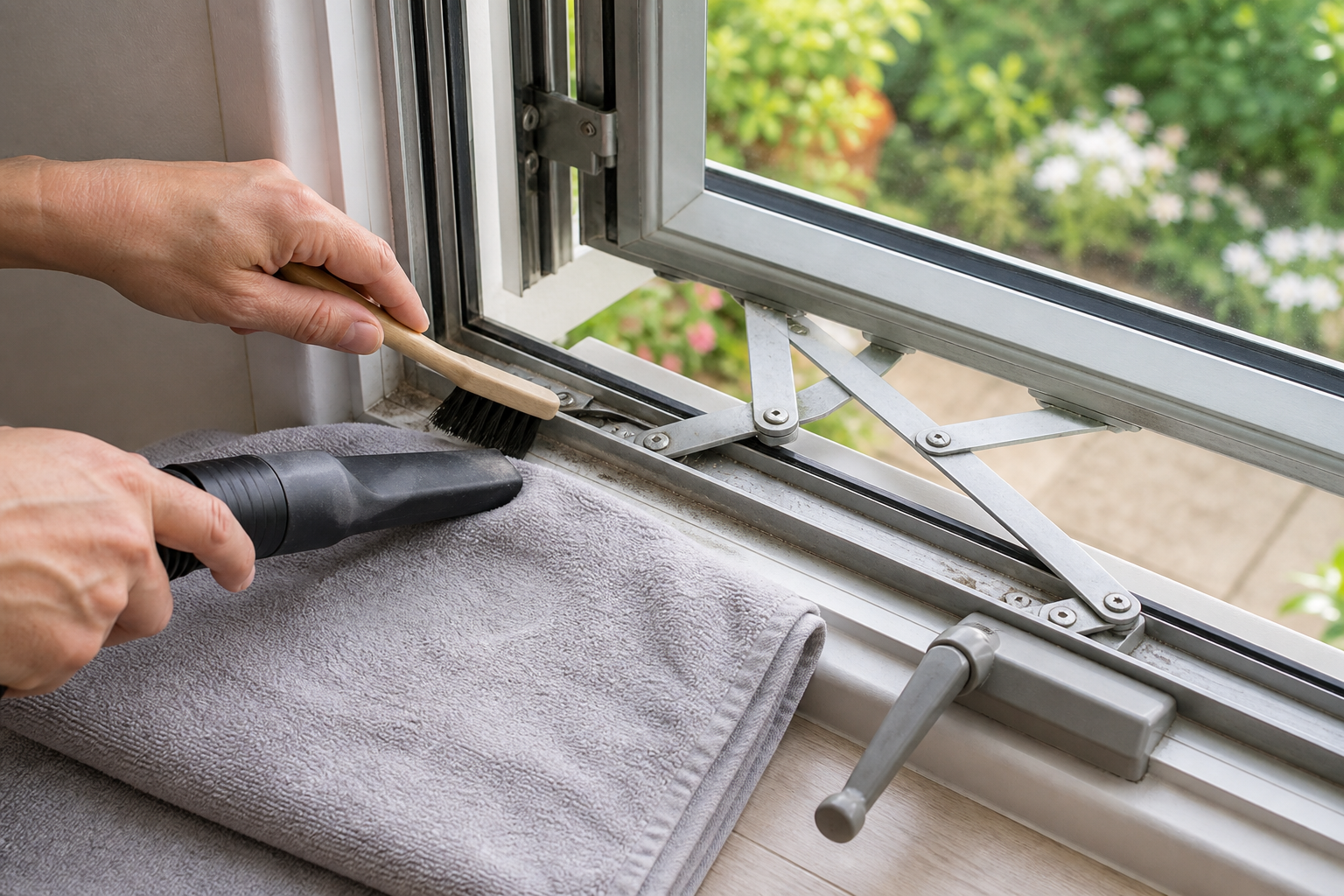
These parts interact. A handle that is hard to turn may indicate operator damage, but it can also reflect debris, hinge resistance, sash alignment, seal interference, or a frame that is out of square. The Forge Windows operator and lock troubleshooting guide offers a safe observation sequence before parts are ordered.
How Does a Casement Window Open and Close?
- Release the lock or locking handle according to the product instructions.
- Use the crank, lever, or push-out handle to move the sash through its approved range.
- Keep hands, curtains, screens, and objects clear of hinges and pinch points.
- Return the sash to its normal closed position without forcing it.
- Engage the lock only after the sash reaches the designed closed position.
Do not use the lock to pull a misaligned sash through heavy resistance. Do not continue cranking after the sash stops. If operation changes, note where resistance begins and inspect visible debris, contact points, seals, arms, and hinges without disassembling the system. Product-specific instructions should control adjustment and replacement work.
Handing requires a stated viewing position. “Left-hand casement” can be ambiguous unless the supplier defines whether the observer stands inside or outside and whether the label refers to hinge side, lock side, or opening direction. Draw each sash swing on the opening schedule. Forge’s guide on choosing left- or right-handed casement windows explains a documentation method.
Where Do Casement Windows Work Well?
Casements can suit rooms that need an operable sash, clear view, controlled opening, and reachable hardware. Kitchens often use them where a crank is easier to reach than lifting a sash, but counter depth and faucet position must be checked. Bedrooms require a separate emergency-escape and rescue review when the window is intended to serve that function. Living areas need curtain, furniture, screen, and exterior-swing coordination.
The open sash projects beyond the frame, so walkways, balconies, rails, trees, roof overhangs, and adjacent windows may conflict. Draw the fully open position instead of checking only the closed elevation. The Forge Windows screen and clearance guide covers these relationships.
For a reliable comparison, place each proposed casement on the same opening schedule and record its frame size, visible glass, ventilation opening, operating force, screen arrangement, and maintenance access. That prevents one attractive feature from obscuring a room-specific limitation.
Casement vs. sliding and double-hung windows
| Feature | Casement | Sliding or double-hung |
|---|---|---|
| Movement | Projects on side hinges | Moves within frame tracks |
| Exterior clearance | Usually required for outward-opening sash | Normally no projecting sash |
| Operation | Crank, lever, or push-out hardware | Sash slides horizontally or vertically |
| Screen location | Often interior on outward-opening systems | Varies by series and moving sash |
| Decision | Best where swing, reach, and hardware suit the room | Best where in-frame movement suits the opening |
Energy performance should be compared using whole-product ratings. ENERGY STAR explains that certified residential windows are independently tested, certified, and verified by the National Fenestration Rating Council and must meet climate-zone criteria. Review the current buying guidance (accessed August 25, 2026), then match the proposed configuration to the quote and label.
Casement Window Preorder Checklist
- Opening ID, room, rough opening, and wall construction are recorded.
- Frame material, finish, glass, spacer, hardware, and screen are specified.
- Inward/outward direction and left/right handing use a defined viewing side.
- Interior reach and exterior swing clearances are drawn.
- NFRC or other required performance documents match the exact configuration.
- Safety glazing, emergency escape, fall protection, and local approvals are reviewed separately.
- Installation, flashing, drainage, sealant, anchorage, and handover responsibilities are assigned.
Frequently Asked Questions
What is the simplest casement window definition?
A casement window is an operable window with a sash hinged along one vertical side. It opens inward or outward and closes against the frame using a handle, crank, or push-out mechanism. The term describes operation, not a particular frame material, glass package, or performance level.
Do casement windows always open outward?
No. Many U.S. residential casements open outward, but inward-opening and push-out configurations also exist. Confirm the exact product drawing, screen position, operator, hinge side, clearances, and cleaning method rather than applying a general rule to every system.
Can a casement window have a screen?
Yes, when the product is designed for one. On many outward-opening systems the screen sits toward the room side, but arrangements vary. Verify mesh, frame, attachment, removal direction, operator access, and whether the screen affects any required clear opening.
Is a casement window good for a bedroom?
It may be, but a bedroom window intended for emergency escape must meet the locally adopted code using the actual net clear opening, opening operation, sill height, window well, and hardware. Nominal frame or glass dimensions do not prove compliance.
Conclusion
Understanding what a casement window is starts with side-hinged operation, then expands to the parts, handing, screen, glass, ratings, clearances, safety, and installation details. Use a room-by-room opening schedule and configuration-specific documents before ordering. Forge Windows can review marked drawings and project requirements to help identify suitable casement options without substituting a product name for technical approval.