 2026-08-25
Direct answer: Casement window replacement can mean replacing a handle, operator, lock, glass unit, sash, insert window, or the entire frame. Choose the smallest scope that corrects the verified problem without leaving damaged frame-to-wall, drainage, structural, or safety conditions hidden behind the new work.
Key Takeaways
- Diagnose operation, glass, sash, frame, wall, and water conditions before ordering.
- Hardware or glass work is not the same as sash, insert, or full-frame replacement.
- Insert replacement depends on a sound, suitable existing frame and correct dimensions.
- Full-frame work exposes the window-to-wall connection but requires more finish restoration.
- Pre-1978 painted properties need lead-safe planning before surfaces are disturbed.
What Does Casement Window Replacement Include?
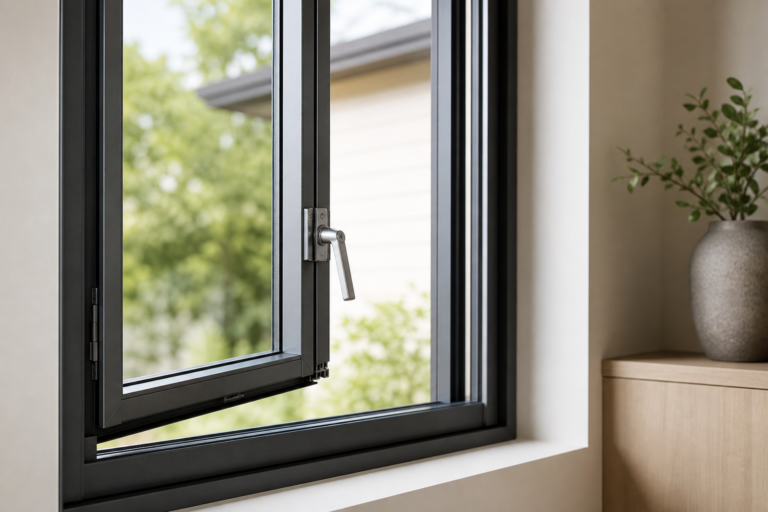
Casement window replacement is not one procedure. It ranges from replacing approved operating parts to removing the frame and rebuilding the wall connection. The correct scope depends on the cause of failure, what remains serviceable, the available compatible parts, the intended performance, and conditions hidden by trim or finishes.
| Scope | Typical reason | What remains | Main caution |
|---|---|---|---|
| Hardware service | Failed handle, operator, hinge, lock, or keeper | Glass, sash, frame, wall connection | Misalignment may imitate a hardware failure |
| Glass-unit replacement | Broken glass or insulating-glass seal failure | Sash, frame, wall connection | Glass size, thickness, safety type, weight, and retention must match |
| Sash replacement | Damaged sash with compatible frame | Existing frame and wall connection | Compatibility, handing, hardware, seals, and finish must be verified |
| Insert replacement | New complete window inside a suitable existing frame/opening | Some existing frame and finishes | Reduced opening and hidden frame condition |
| Full-frame replacement | Damaged frame, poor fit, leakage path, or changed opening needs | Wall structure where serviceable | Flashing, drainage, trim, and wall repair become part of the project |
Do not order an operator because the handle is difficult to turn until the sash, hinges, seals, lock, frame, and installation have been observed. Forge Windows’ operator and lock troubleshooting guide separates these symptoms. If the issue is perimeter seal contact, also review the weatherstrip inspection guide.
How Should an Existing Casement Window Be Surveyed?
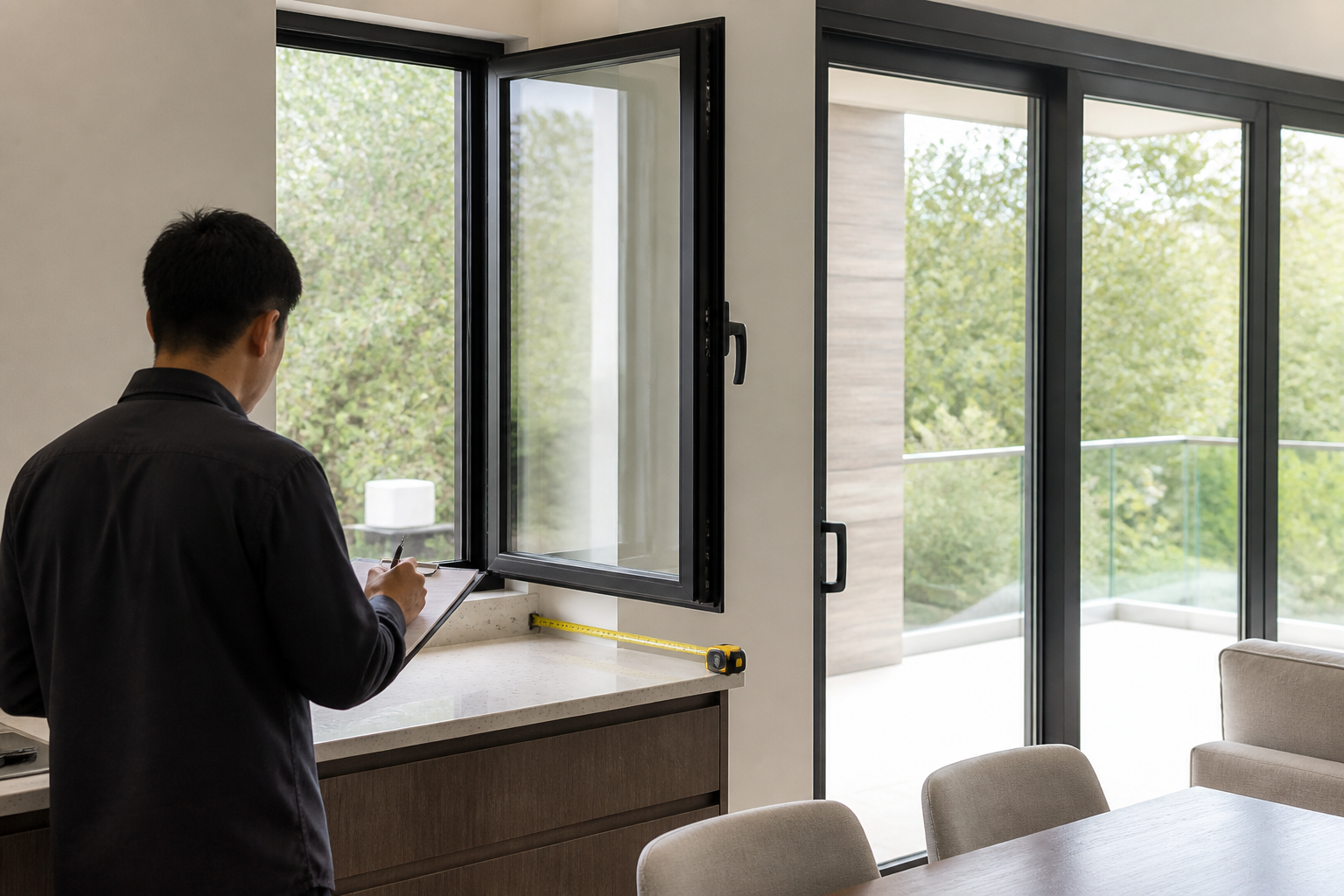
- Record the symptom. Note drafts, condensation location, water staining, glass damage, soft material, corrosion, scraping, resistance, lock failure, or visible gaps.
- Identify the assembly. Photograph labels, frame and sash profiles, hinges, operator, locks, glazing beads, seals, screen, and exterior.
- Test gently. Observe where resistance begins without forcing the crank, lock, sash, or hinges.
- Check surrounding conditions. Review interior trim, exterior cladding, sill, flashing clues, drainage, sealant joints, and wall movement.
- Measure for diagnosis, not fabrication. Record opening and frame dimensions, then require the responsible supplier or installer to perform final field verification.
A photograph cannot rule out concealed decay, corrosion, missing flashing, hazardous coatings, structural movement, or an indirect water path. Staining near a window does not prove that the window itself is the source. If wall or moisture damage is suspected, involve a qualified building-envelope professional before selecting a narrower scope.
When Is Insert or Full-Frame Replacement Appropriate?
An insert approach may be considered when the retained frame and wall connection are sound, square enough for the new system, compatible with the installation method, and able to provide the required opening and drainage. The installer must document how the new unit is anchored, sealed, flashed where applicable, insulated, drained, and finished. The remaining clear glass and ventilation area may decrease, so compare them before approval.
Full-frame replacement is often the more defensible scope when the existing frame is damaged, distorted, poorly integrated with the wall, or unsuitable for the new window. It also permits direct work at the rough opening. It does not automatically correct every water problem: flashing sequence, drainage plane, sill support, fasteners, sealant geometry, and cladding transitions still need a project-specific detail.
When the diagnosis is uncertain, price the investigation separately from fabrication. A controlled trim removal or opening probe can reveal retained-frame and wall conditions before a nonreturnable unit is ordered. Record what was opened, what was observed, and who accepted the resulting scope.
The Forge Windows article Insert vs. Full-Frame Casement Replacement provides a focused comparison. Use it as a planning aid, then require the installer and project designer to confirm the actual wall and opening.
Lead-safe planning for older properties
Window replacement can disturb painted surfaces. The U.S. Environmental Protection Agency states that its Renovation, Repair and Painting requirements generally cover paid renovation work that disturbs paint in pre-1978 housing and child-occupied facilities, including window replacement. Review the EPA’s RRP guidance for consumers (accessed August 25, 2026) and applicable state rules before work starts. Do not begin demolition and investigate afterward.
What Belongs in the Replacement Order and Installation Handoff?
- Opening ID, room, address, exposure, photographs, and measured condition.
- Approved replacement scope and explicit list of retained components.
- Final field dimensions, tolerances, and the party responsible for verification.
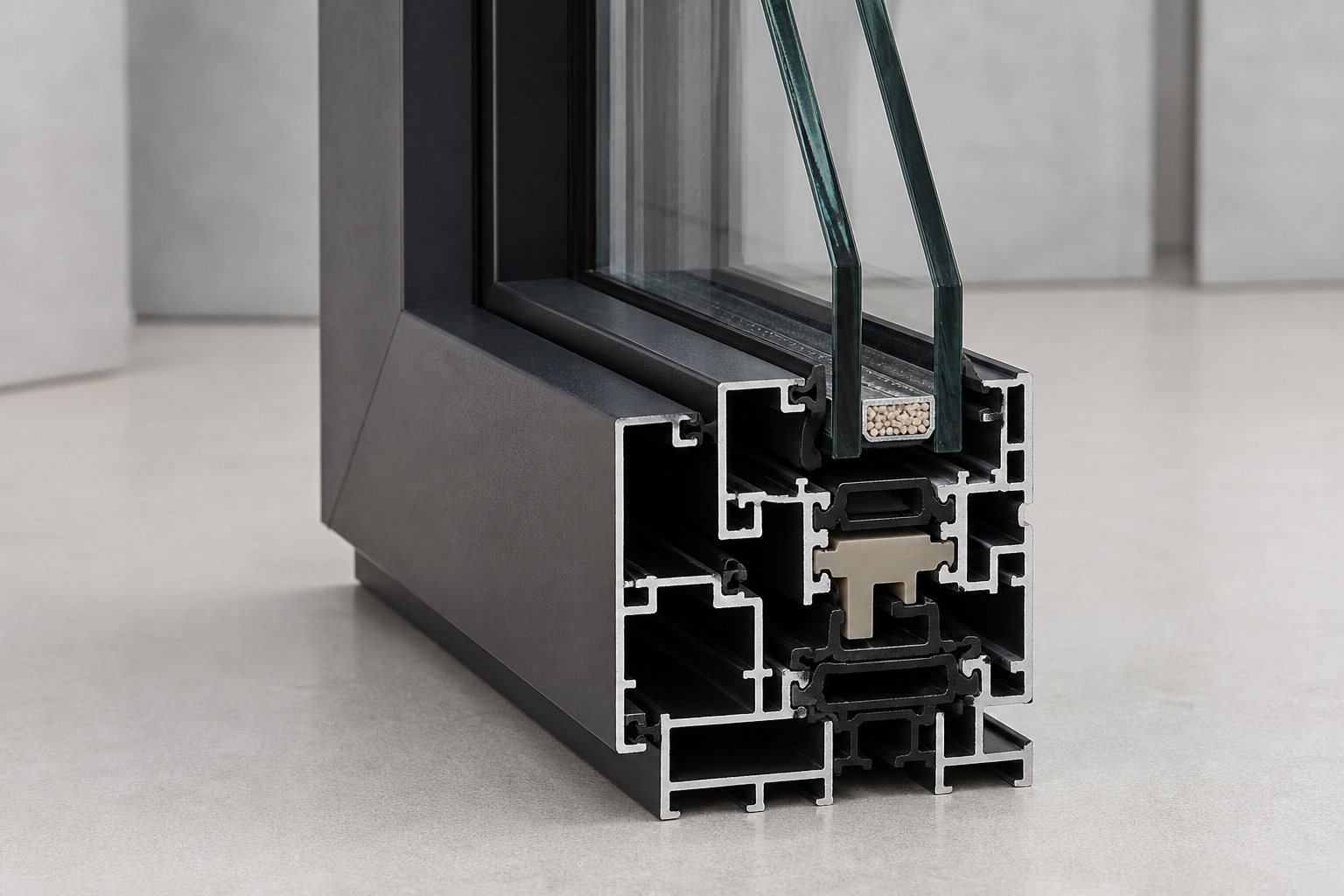
- Frame material, profile, color, handing, operator, hinges, locks, screen, and opening limits.
- Glass makeup, safety-glazing locations, coatings, spacer, and configuration-specific ratings.
- Anchorage, shimming, sill support, flashing, drainage, insulation, sealant, trim, and finish details.
- Lead-safe, occupant protection, waste, access, weather, and temporary-closure plans.
- Final operation, locking, seal contact, water-management, cleaning, label, and owner-document checks.
ENERGY STAR advises buyers to compare certified products for their climate zone and save ENERGY STAR and NFRC labels as documentation. Review its residential window buying guidance (accessed August 25, 2026). A label describes a product configuration; it does not certify the field installation or diagnose the old wall.
Frequently Asked Questions
Can only the crank on a casement window be replaced?
Sometimes, if the approved part is available and the operator is the verified cause. First check sash alignment, hinges, locks, seals, fasteners, and frame condition. Installing a new crank or operator will not correct a distorted sash, blocked travel, or an out-of-square opening.
Can only the glass be replaced?
Often the insulating glass unit can be replaced while retaining a serviceable sash and frame, but the exact glass thickness, size, edge support, safety type, coatings, spacer, weight, and glazing method must be confirmed. Broken sash or retention components may require a wider scope.
Does an insert replacement always cost less?
It often involves less finish disturbance, but price depends on access, dimensions, retained-frame preparation, hazardous-material controls, trim, repairs, product, and labor. A lower initial scope is poor value if it leaves a damaged frame, blocked drainage, or unresolved wall connection in place.
Who should measure a replacement casement window?
The party accepting fabrication responsibility should perform or formally approve final field measurements. Homeowner dimensions can support early budgeting, but the order should state the measuring method, reference points, tolerances, opening condition, and who is responsible if the unit does not fit.
Conclusion
A sound casement window replacement begins with diagnosis, not a catalog selection. Separate hardware, glass, sash, insert, and full-frame options, then match the scope to verified conditions and applicable safety requirements. Send Forge Windows the opening record, photographs, intended scope, dimensions, and performance goals so the proposed unit can be discussed against a clear project brief.