2026-09-11
Short answer: A useful casement window configuration combines the right number of operable sashes and fixed panels for the room’s airflow, view, daylight, and clearance needs. Decide the operating direction, mullion positions, handle reach, and furniture conflicts first; then give the fabricator a labelled schedule rather than a single overall width.
- Configuration is the relationship between operable sashes, fixed lights, mullions, and opening direction.
- More operable area is not automatically better if it creates collisions or difficult cleaning.
- Paired sashes can balance ventilation, while fixed panels protect views and clearances.
- Record each unit separately so hardware and glazing are not guessed from an elevation.
In this guide: Configuration parts · Useful patterns · Room planning · Measured handoff
What makes a casement window configuration?
A configuration is more than the outer frame. It describes which sections open, which remain fixed, where mullions divide the view, and how each sash is hinged and operated. Two windows with the same overall width can behave very differently if one uses a single wide sash and the other uses paired sashes beside a fixed centre panel.
Start by naming the intent: ventilation, a clear view, daylight, a safe reach, or a combination. Forge Windows’ casement parts guide helps separate a sash, frame, operator, and hinge before you draw the arrangement.
Configuration patterns and what they solve
Single operable sash
A single sash keeps the hardware and opening direction easy to understand. It can suit a narrow room or a location where one clear opening is enough. Check the sash projection against a walkway, planting, balcony, or neighbouring opening.
Paired casement sashes
Paired sashes can distribute ventilation across a wider opening and make each sash narrower than one large leaf. Confirm the meeting stile, handle positions, hinge handing, and whether both sashes can open without striking each other or nearby trim.
Operable sash beside a fixed panel
A fixed panel can preserve a broad view while the smaller operable section supplies ventilation. This pattern is useful where a full-width swing would collide with furniture. Mark the fixed-to-operable ratio and the exact mullion location in the schedule.
Fixed panels with high or low ventilation sections
A high operable section can support purge ventilation while a lower fixed panel protects a desk, bath, or kitchen worktop. The right arrangement depends on handle reach, privacy, screens, and the person who will maintain the window.
Plan the configuration in the actual room
Draw the closed elevation and the open plan. In a kitchen, test the sash against taps, cabinets, splashbacks, and the person standing at the worktop. In a bedroom or office, mark beds, desks, curtains, and monitor glare. In a living room, check furniture circulation and whether an outward swing reaches a balcony or path.
Cleaning is part of the configuration decision. A fixed panel may reduce operating hardware but increase the importance of safe exterior-glass access. An outward-opening sash may need a restrictor or a reach strategy at an upper level. Local code and qualified professionals should confirm any egress or safety requirement.

Create a fabrication-ready handoff
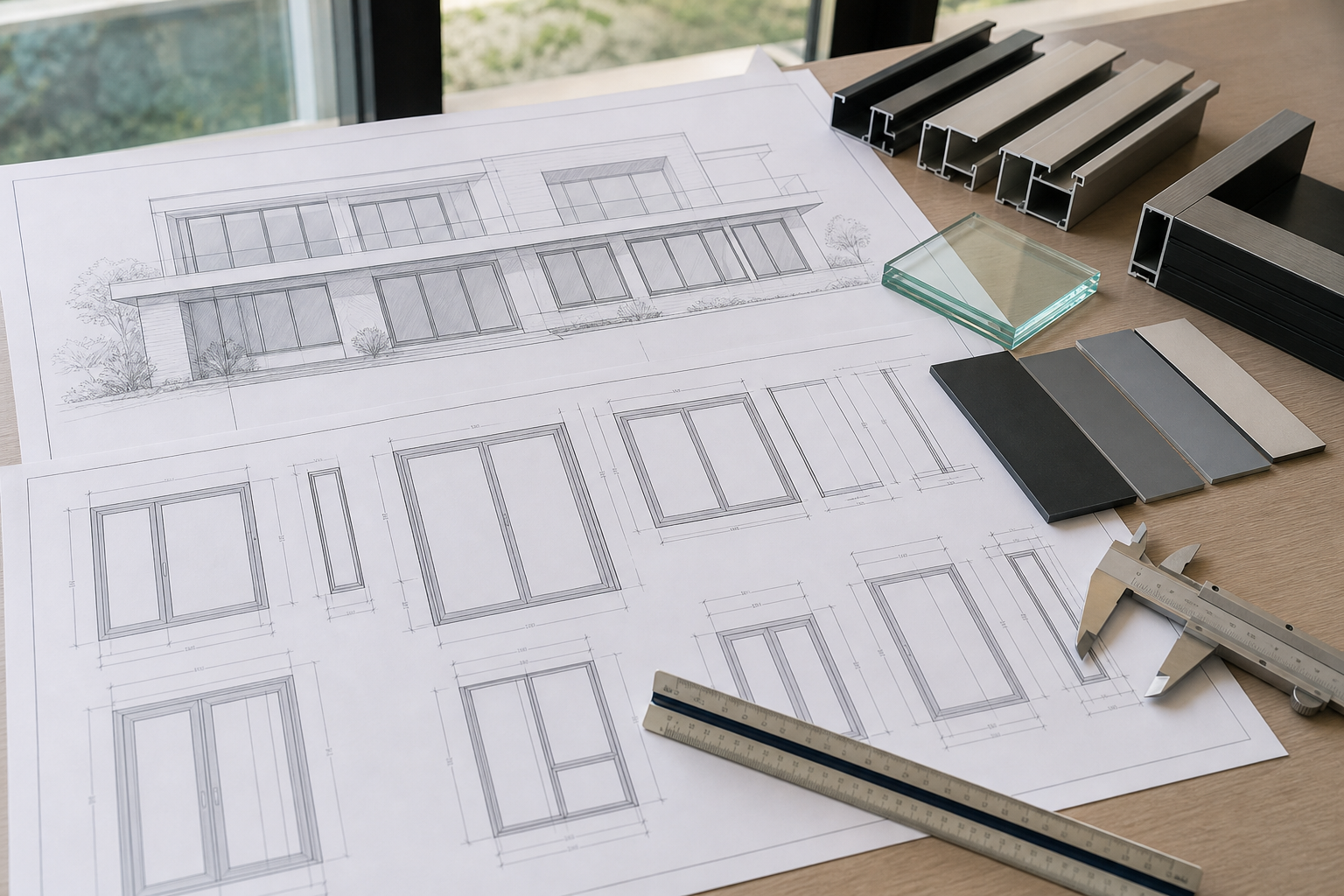
- Give every section a mark such as W1-A, W1-B, or W1-Fixed.
- Record frame width and height, proposed clear opening, and the hinge/handle side.
- Show mullions, transoms, sill conditions, trim, screens, and adjacent doors.
- Attach interior and exterior photos with obstacles visible.
- List the desired ventilation behaviour and who will operate and clean the window.
- Ask the supplier to confirm hardware travel, glass build-up, drainage, and installation clearances.
The operating-clearance review is a useful companion when a sash must pass a deep reveal, furniture edge, or screen. For a new build, keep the same marks on plans, elevations, schedules, and the order confirmation.
Common configuration mistakes
One frequent mistake is drawing every section as operable because the elevation looks balanced. That choice can add handles, hinges, screens, and maintenance tasks without improving the room’s actual airflow. Another is placing a mullion where a desk, sink, or view axis makes it visually awkward. A third is selecting paired sashes without checking whether the meeting stile and handles remain reachable when furniture is installed.
Configuration should also account for the wall interface. A wide opening may need a different support, sill, flashing, or drainage detail than a narrow opening. Confirm these items with the fabricator and installer before treating the sketch as an order. If the opening is a replacement, document the existing frame, trim, and sealant so the proposed fixed and operable sections are not based on an idealised plan.
For independent context on glazing and whole-window performance, consult the U.S. Department of Energy’s windows and doors guidance and the National Fenestration Rating Council’s homeowner resources. These references support decisions about documented performance; they do not replace a project-specific configuration review.
Frequently asked questions
Is a fixed panel still part of a casement window configuration?
Yes. The configuration can combine fixed glazing and one or more operable casement sashes, provided the schedule labels each section clearly.
Are paired casement windows always better for ventilation?
Not always. Paired sashes can spread airflow, but hardware reach, screens, wind exposure, and clearance determine whether the arrangement works in the room.
How do I show configuration on a quote request?
Provide a marked elevation, each section’s dimensions, opening direction, hinge/handle side, photos, and the required clear opening. Ask the supplier to confirm the final hardware and mullion layout.
Can I decide the mullion position after ordering?
Usually it is safer to decide before ordering because mullions affect glazing, hardware, structure, and sightlines. Treat any change as a revised design review.
Final checklist
Choose a casement window configuration from room use and operating paths, then document each fixed and operable section. A clear schedule protects the view, ventilation goal, hardware choice, and installation handoff.
{“@context”:”https://schema.org”,”@type”:”BlogPosting”,”headline”:”Casement Window Configuration: Pairing, Fixed Panels, and Venting”,”description”:”Plan casement window configurations with paired sashes, fixed panels, mullions, ventilation goals, clearances, and a measured handoff for fabrication.”,”datePublished”:”2026-09-11T10:00:00+08:00″,”dateModified”:”2026-09-11T10:00:00+08:00″,”mainEntityOfPage”:{“@type”:”WebPage”,”@id”:”https://www.forgewindows.com/casement-window-configuration-pairing-fixed-panels/”},”author”:{“@type”:”Organization”,”name”:”Forge Windows”}}
{“@context”:”https://schema.org”,”@type”:”FAQPage”,”mainEntity”:[{“@type”:”Question”,”name”:”Is a fixed panel still part of a casement window configuration?”,”acceptedAnswer”:{“@type”:”Answer”,”text”:”Yes. A configuration can combine fixed glazing and one or more operable casement sashes when each section is labelled.”}},{“@type”:”Question”,”name”:”Are paired casement windows always better for ventilation?”,”acceptedAnswer”:{“@type”:”Answer”,”text”:”Not always. Hardware reach, screens, wind exposure, and clearance determine whether the arrangement works.”}},{“@type”:”Question”,”name”:”How do I show configuration on a quote request?”,”acceptedAnswer”:{“@type”:”Answer”,”text”:”Provide a marked elevation, each section’s dimensions, opening direction, hinge/handle side, photos, and the required clear opening.”}},{“@type”:”Question”,”name”:”Can I decide the mullion position after ordering?”,”acceptedAnswer”:{“@type”:”Answer”,”text”:”It is safer to decide before ordering because mullions affect glazing, hardware, structure, and sightlines.”}}]}