2026-09-14
After rain, inspect exterior concertina doors by recording where water appears, when it arrives, and whether the panels were fully closed and locked. Photograph the condition before wiping it away. Water on glass, inside a sill channel, and on the room-side floor requires different follow-up.
This guide helps owners prepare a useful service request after wet weather. It does not diagnose a leak from a photograph or establish that a particular sill may safely retain water. The manufacturer’s drainage detail and the installer’s wall interface both matter.
Start with evidence
- Locate moisture precisely rather than reporting only “the door leaks.”
- Keep intended drainage outlets clear according to the product instructions.
- Stop operating a damaged or binding assembly and arrange inspection.
First confirm these are exterior concertina doors
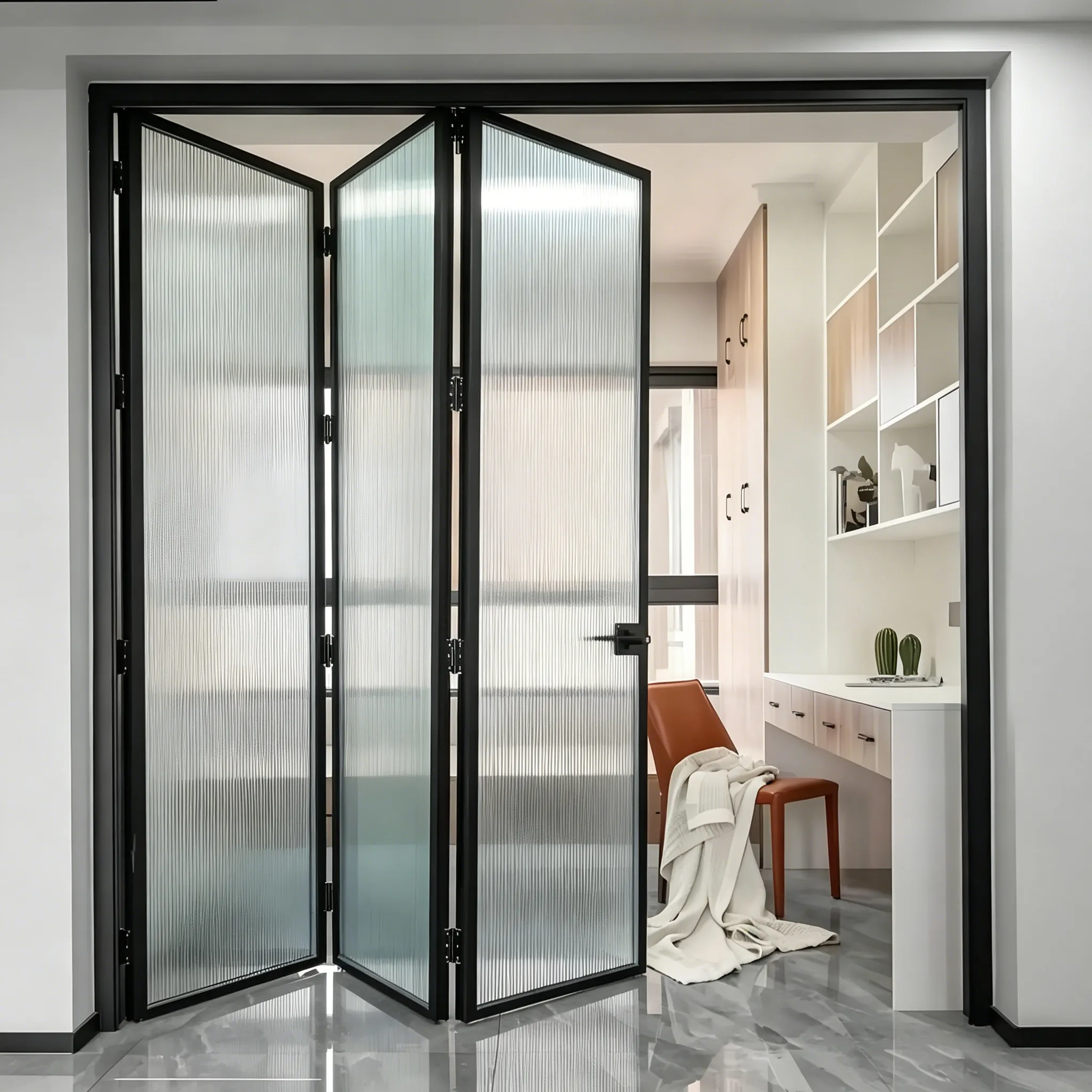
Concertina describes the folding motion, not a weather rating. An internal partition and a glazed exterior folding system can move in a similar way while serving very different roles. Check the product identification and the original specification before applying exterior maintenance advice.
The illustration below compares folding and sliding arrangements. It is useful for identifying panel movement, but it does not certify drainage, wind resistance or weather performance. If the intended use was never documented, ask the supplier to resolve that question before spending money on sealants or replacement hardware.

Describe exactly where the moisture is
| Observation | What to record | What still needs checking |
|---|---|---|
| Droplets on the inside glass surface | Room conditions, weather and which panes are affected | Condensation or another moisture source |
| Water in an exterior sill channel | Channel location and visible outlets | The intended drainage path for that sill |
| Water reaching the interior floor | Entry point, affected area and time | Door, sill and surrounding wall interface |
| Staining above a door corner | Height, spread and nearby wall details | Whether water originates above the door |
These observations are not diagnoses. A wet interior floor deserves prompt attention even when a track also contains water. Keep people away from a slippery area, protect belongings, and document the condition for the installer. Avoid removing trim or opening concealed construction yourself to chase the source.
Check the closed position without forcing the mechanism
From a safe position, note whether every leaf sits in its normal closed alignment and whether the operating sequence was completed. Record any leaf that resists movement, any visibly displaced seal, and any change from how the door behaved at handover. A handle that is hard to turn is a reason to ask for service, not to apply more force.
Keep drainage and air sealing as separate questions. The U.S. Department of Energy’s rough-opening guidance explains why gaps between a frame and the surrounding opening require an air seal. That guidance does not mean the door’s intended water outlets should be filled. Ask the installer to identify the air-seal line and drainage route on the actual detail.
A useful example is water appearing only at one end of the sill during wind-driven rain. Photograph that end and the exterior immediately outside it; note the wind direction if known. Do not conclude that the nearest visible seal is necessarily the entry point. Water can travel before it becomes visible.
Do not confuse an interior folding panel with an exterior system
Likewise, an energy rating answers a different question from a water test. The Department of Energy’s purchasing guidance discusses thermal performance and solar heat gain. A low U-factor does not, by itself, resolve a rain-entry complaint. Ask for the performance documentation that addresses the actual concern and exact assembly.
Before a future replacement, review exterior folding-door planning. For an existing assembly, the owner handover checklist can help locate the records that should explain operation and maintenance.
Send a service request that can be acted on
Include an overall photograph, close views of each affected point, the date and weather conditions, whether the door was shut, and any recent building or landscaping work nearby. Add the product reference, installer details and the first date you noticed the issue. Describe any temporary protective action you took.
Ask who will inspect the door and surrounding construction, what evidence they need, and whether a controlled diagnostic test is appropriate. A professional investigation may be needed to separate product, installation and adjacent-building causes. Avoid improvised hose tests or pressure washing, which can create conditions unrelated to normal rain exposure.
The next step for exterior concertina doors after rain is a documented inspection, followed by a repair that addresses a confirmed cause. Keep the before-and-after photographs and the service report together so a recurrence can be compared with the original condition.
Questions and answers
Is water in the track always a leak?
Not every visible channel has the same purpose. Ask the manufacturer or installer which parts of the exact sill are designed to collect and drain water. Water reaching the interior floor or surrounding finishes should be documented and investigated, not dismissed as normal.
Should I seal every opening along the sill?
No. Some openings may be intentional drainage outlets. Follow the product-specific maintenance instructions and have the installer identify any questionable gap. Filling an outlet without understanding its function may interfere with drainage.
Does replacing weatherstripping solve every rain problem?
No. A displaced or damaged seal is one possible issue, but water can also involve alignment, the sill, installation interfaces or construction above the opening. Ask for a diagnosis before authorizing a parts-only repair.