 2026-08-28
Direct answer: A double casement window places two casement sashes in one coordinated opening. For daily use, approve more than the outside frame size: define which sash opens first, how both handles work, whether a center member remains, and how screens, shades, furniture, and exterior paths clear each sash.
- “Double” can describe several center and operating arrangements.
- Identify the active sash, passive sash, and opening sequence on the drawing.
- Test both swing paths against inside and outside obstacles.
- Verify ratings and clear-opening data for the exact paired configuration.
- Commission both leaves together; one misaligned sash can affect closing and locking.
What Does “Double Casement Window” Mean?
The phrase generally means two side-hinged sashes in a shared framed opening. One design uses a fixed vertical mullion between independently operating sashes. Another design may use an active and passive sash that meet at the center without a fixed mullion when open. Product naming is not consistent enough to establish the construction.
A fixed center member can provide a continuous jamb for each sash and let either sash operate independently, subject to the product design. A center-opening arrangement can create a more open view when both leaves are released, but the passive leaf may depend on bolts or a prescribed sequence. Neither arrangement is universally better; select from required opening, view, hardware, structure, weather performance, and service access.
For a focused explanation of fixed-mullion and French layouts, read Forge Windows’ double casement window configuration guide. This article addresses what happens after the layout is selected: daily operation, clearance, and commissioning.
| Condition to approve | Fixed-center pair | Center-opening pair |
|---|---|---|
| Opening sequence | Sashes may operate independently if designed that way | Active sash usually opens before passive sash |
| Center when open | Vertical member remains | No fixed center member in the intended design |
| Locking | Each sash engages its own frame interfaces | Passive leaf may secure with top and bottom bolts |
| Screen | Often separate or product-specific panels | May require one coordinated frame or separate panels |
| Approval evidence | Section through mullion and each sash | Meeting-stile, bolt, and opening-sequence details |
Define the Active and Passive Sash Sequence
The active sash is the leaf intended for normal first operation. In some center-opening pairs, opening the active leaf exposes bolts or controls that release the passive leaf. Closing reverses the sequence: secure the passive leaf fully, then close and lock the active leaf. The actual method varies, so the project should use the manufacturer’s drawing and instructions.
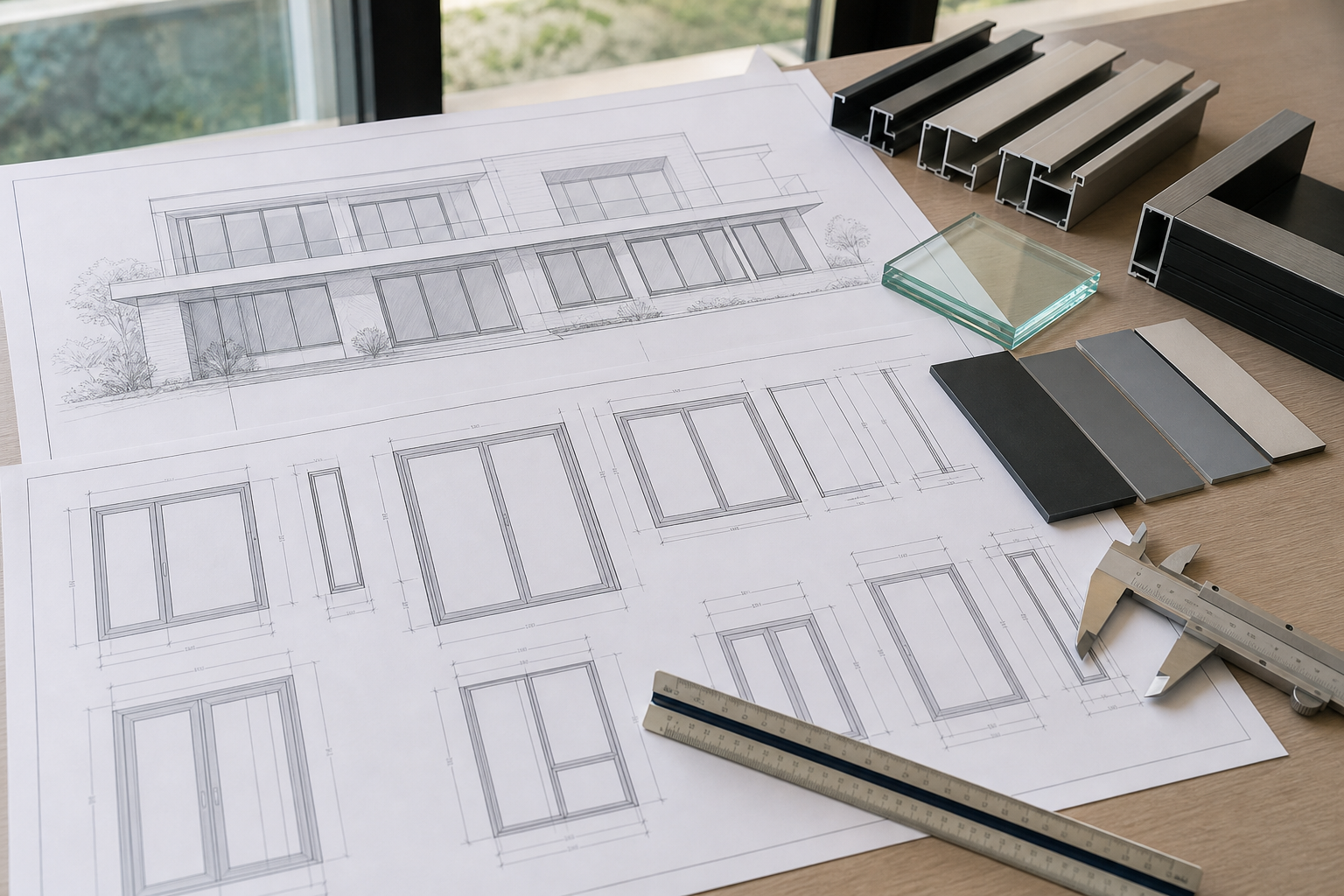
Label handles, locks, shoot bolts, restrictors, and hinge sides from a stated viewing position. Show arrows for both leaves. If the schedule says “left active” but the drawing is viewed from outside while the installer reads it from inside, the delivered unit can be reversed. A clear inside-view diagram prevents that ambiguity.
Do not force a leaf that resists. Resistance can come from an engaged bolt, incorrect sequence, debris, damaged weatherstrip, frame distortion, hinge adjustment, or a sash contacting an obstacle. The Forge Windows operator and lock troubleshooting guide separates observation from repair and advises using product-specific procedures.
Coordinate Two Swing Paths With the Room
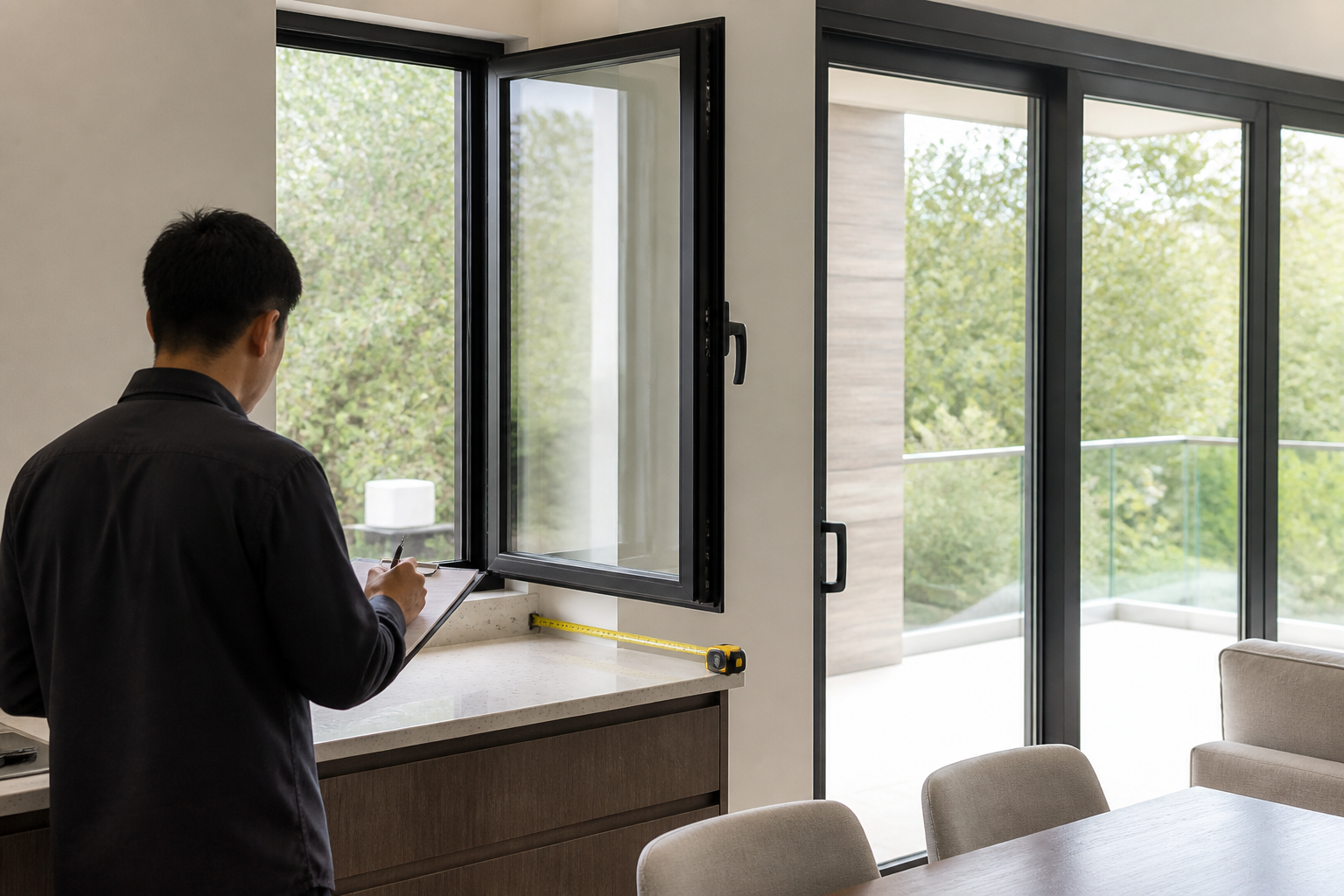
Draw each leaf closed, partly open, and at the maximum permitted angle. Outside, check paths, balconies, guards, eaves, screens, planting, adjacent windows, and maintenance access. Inside, check handles, screens, shades, curtain stacks, faucets, counters, furniture, and wall controls. The two leaves can create conflicts that are not visible on a closed elevation.
For ventilation, a pair gives operating flexibility, but two open leaves do not guarantee twice the airflow. Wind direction, opening angle, screen resistance, exterior pressure, and an outlet elsewhere in the room matter. The U.S. Department of Energy’s Building Science Education resource explains cross-ventilation and stack effect at the building scale.
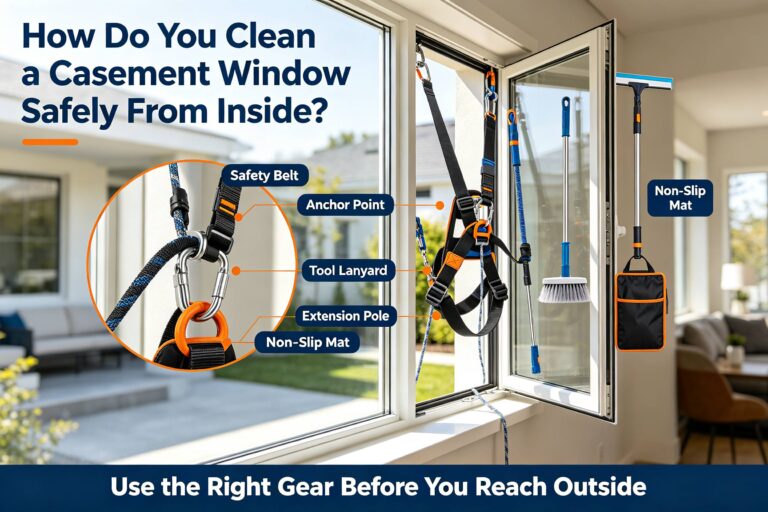
Cleaning and screen removal also require a planned sequence. Users should keep both feet on the floor, open only as the manufacturer permits, and avoid releasing hardware or leaning outside. If exterior surfaces are not safely reachable, use qualified access. A screen controls insects; it is not a guard or fall-arrest system.
Verify the Complete Paired Configuration
The U.S. Department of Energy describes casements as side-hinged windows whose compression closure generally helps reduce air leakage compared with sliding types. See its operating-type guidance. That does not prove a paired unit’s rating, because the center condition, size, glass, spacer, seals, hardware, frame, and installation all affect performance.
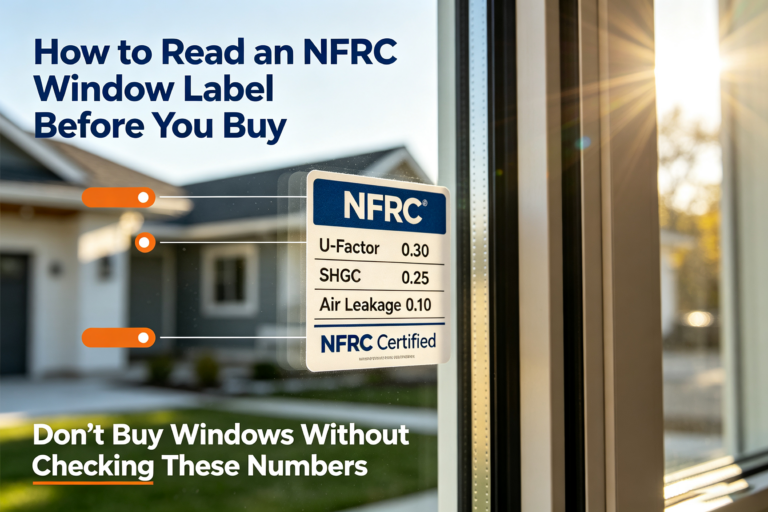
Use the National Fenestration Rating Council label or certified record to compare whole-window U-factor, solar heat gain coefficient, visible transmittance, and air leakage when reported. Match the record to the manufacturer, series, operator type, paired layout, size, and options. Do not borrow a rating from a single sash or fixed lite.
ENERGY STAR’s residential window buying guidance organizes criteria by climate zone and recommends retaining the ENERGY STAR and NFRC labels. Climate-zone qualification is one input; orientation, shading, room use, water exposure, structure, acoustics, and maintenance remain project decisions.
The installation handoff should show rough opening, sill support, anchorage zones, flashing, drainage, perimeter sealants, interior air seal, finish interfaces, and tolerance strategy. A paired frame that is racked or bowed may produce uneven gaps, excessive operating force, or poor lock engagement. Installers should verify frame geometry before using hardware adjustment to mask an opening problem.
Nine-Step Double Casement Commissioning Checklist
- Confirm the opening ID, inside/outside viewing convention, and approved drawing revision.
- Inspect frame level, plumb, square, support, and consistent perimeter gaps.
- Verify hinge side, active leaf, passive leaf, and intended opening order.
- Open the active sash through its permitted range without binding.
- Release and operate the passive sash only by the specified method.
- Check both swing paths against fixed and movable obstructions.
- Close in the required sequence and confirm bolts, locks, and seals engage without forcing.
- Inspect screen fit, removal access, shade clearance, drainage, and visible seals.
- Record defects, approved adjustments, final operation, labels, and care instructions at handoff.
Do not promise a universal operating-force number or adjustment interval without the exact product instructions. Wind, sash size, hardware, restrictors, seals, and installation geometry affect use. When a paired window is intended for emergency escape, obtain manufacturer clear-opening data and local approval for the exact operating position.
Frequently Asked Questions
Do both sashes of a double casement window open?
They may, but the phrase alone is not proof. A fixed-center pair can have two operable sashes, while other layouts can combine operable and fixed areas. Request the dimensioned operating drawing and identify every active, passive, and fixed element.
Which sash opens first on a double casement window?
On a center-opening active/passive pair, the designated active sash commonly opens first and the passive sash follows by its specified release. Fixed-center pairs may differ. Follow the exact manufacturer sequence and label it on the project drawing.
Does a double casement window need one screen or two?
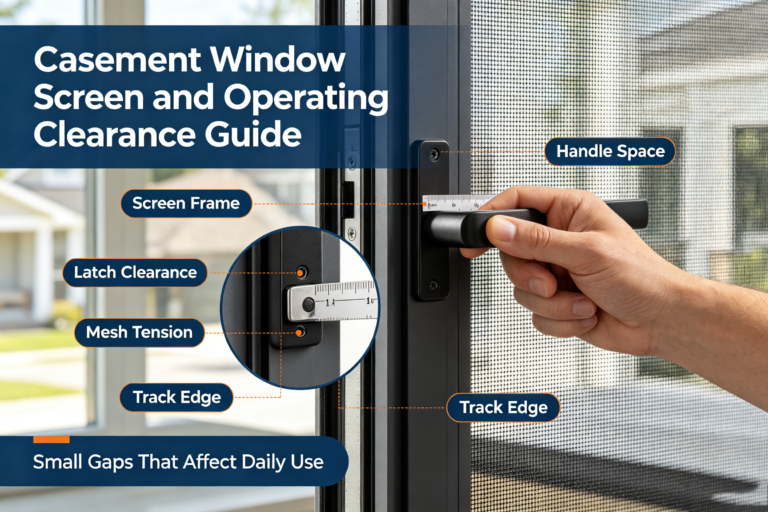
Screen arrangement depends on the frame and opening design. The product may use separate panels, one coordinated frame, or an integrated system. Confirm screen location, mesh, latches, removal direction, handle clearance, and replacement part identification.
Is a double casement better for ventilation than a single?
It offers more operating choices, but useful airflow depends on wind, opening geometry, screens, obstacles, and an air path through the room. Compare the actual open area and room plan rather than assuming two sashes double ventilation.
Conclusion
A double casement window works smoothly only when the paired leaves are treated as one coordinated assembly. Define the center condition, active/passive sequence, both swing paths, screens, ratings, installation tolerances, and commissioning steps before ordering. Send Forge Windows the approved plan, elevation, schedule, and performance requirements for a configuration-specific review.