 2026-08-08
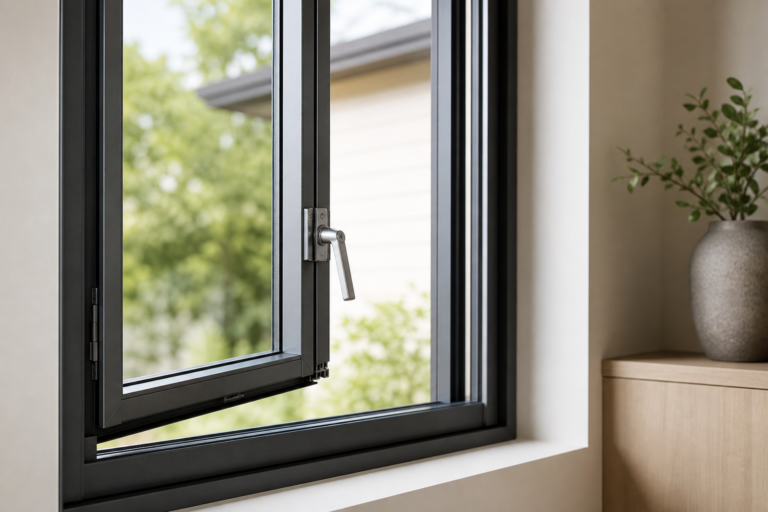
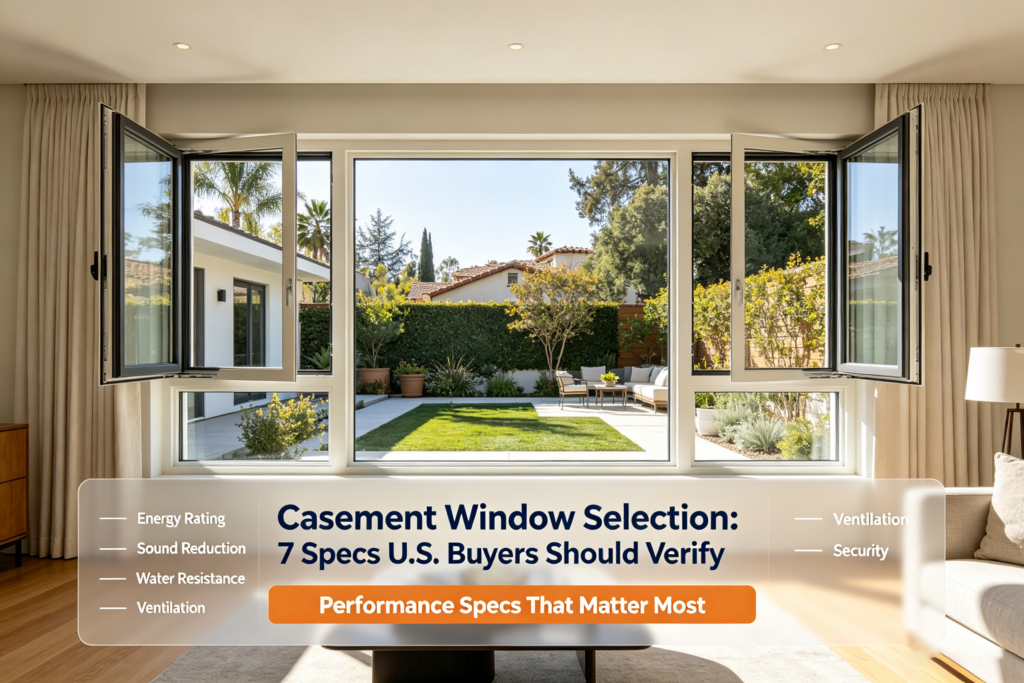
A casement window is a side-hinged sash that opens outward or inward with a crank, handle, or direct-push mechanism. For a U.S. project, the right choice is not simply the model with the narrowest frame or the biggest glass area. Buyers should compare the exact operating configuration, whole-product energy ratings, glazing, frame design, air and water documentation, hardware, and installation requirements.
This guide is for homeowners, architects, builders, dealers, and purchasing teams preparing a residential or light-commercial window schedule. It explains what to request before approving a product, without treating a catalog claim as proof of project performance.
Key Takeaways
- Compare a complete, tested window configuration rather than a center-of-glass value.
- Use the NFRC U-factor and solar heat gain coefficient (SHGC) to compare energy performance.
- Match the sash direction, hinge side, screens, locks, and opening clearance to the room.
- Ask for documents tied to the proposed size, glass package, frame, and hardware.
- Coordinate perimeter flashing, sealants, anchorage, and drainage before the order is released.
Table of Contents
- Operation and clearance
- Energy ratings
- Glazing and frame design
- Air, water, and structural documentation
- Hardware and service
- Installation coordination
- Submittal checklist
1. Confirm How the Casement Window Operates
Start with a plan-view drawing. Confirm whether the sash opens to the left or right, inward or outward, and whether a crank limits the opening. Check for conflicts with walkways, roof overhangs, shrubs, exterior screens, interior shades, faucets, and furniture. A window that performs well on paper can still be awkward if the sash crosses a circulation path or the handle cannot be reached.
Ventilation goals also matter. A projecting sash can help direct breezes, but the useful opening depends on the hinge, restrictor, screen, and hardware geometry. If the window may serve an emergency escape or rescue opening, have the design professional and local authority verify the applicable code, clear opening, sill height, and operating requirements; do not assume that the nominal frame size equals the clear opening.
2. Compare Whole-Product Energy Ratings
The U.S. Environmental Protection Agency states that ENERGY STAR certified windows, doors, and skylights are independently tested, certified, and verified by the National Fenestration Rating Council (NFRC). The program’s criteria vary by climate zone. Use the ENERGY STAR residential windows, doors, and skylights guide and its current product criteria to understand the label and climate-zone process.
For a casement window, ask for the NFRC label or a certified product record for the exact product line. U-factor describes heat transfer through the complete assembly; a lower number indicates less heat flow. SHGC describes the fraction of incident solar energy admitted through the product. Visible transmittance addresses daylight, while air leakage and condensation information may be available for certain products.
NFRC explains that its residential program evaluates U-factor, SHGC, visible transmittance, air leakage, and condensation index through standardized procedures. Its residential product certification page also distinguishes simulation-based ratings from physical testing requirements. A glass-only value, a frame depth, or a thermal-break width is not a substitute for the whole-product rating.
3. Match Glazing and Frame Design to the Project
Define the glass make-up in the schedule: pane count, glass thicknesses, insulating-space dimensions, coatings, gas fill if specified, safety glazing where required, spacer, tint, and any laminated layer. Each choice affects weight, daylight, solar gain, thermal behavior, acoustics, appearance, and hardware demand. Larger sashes can place more load on hinges and operators, so the proposed glass package must be checked with the proposed sash size.
Aluminum frames may use a thermal break to reduce direct heat conduction through the metal. Forge Windows offers several casement product families, including the Z75X casement window page and a 65 Series thermal-break casement window page. Treat these pages as the start of a product discussion. Request current drawings and project-specific performance documents before using any listed value in a specification.
4. Request Air, Water, and Structural Documentation
A compression seal can be one reason buyers consider a casement configuration, but the operating type alone does not establish air, water, or structural performance. Frame joints, weatherstripping, locking points, sash stiffness, glass support, fabrication tolerances, and installation all affect the assembly. Ask which test standard, specimen size, pressure, configuration, and pass/fail criteria apply to the offered window.
| Document | What to match | Why it matters |
|---|---|---|
| Product drawing | Frame, sash, mullions, vents, and dimensions | Confirms the offered configuration |
| Energy record | Product line and glass option | Supports U-factor and SHGC comparison |
| Air/water report | Size, locks, sill, and test pressure | Shows the tested specimen and conditions |
| Structural report | Design pressure, size, and anchorage assumptions | Helps the design team assess project exposure |
| Installation instructions | Opening, flashing, fasteners, sealants, and shims | Coordinates field work with the product |
5. Review Hardware, Locks, and Service Access
List the operator, hinge type, number and location of locking points, opening limiter, handle finish, screen, and replacement parts. Ask how the sash is adjusted after installation and how weatherstripping can be replaced. For large or frequently operated units, confirm the finished sash weight and the hardware manufacturer’s approved range.
Hardware should be evaluated as a system, not as isolated components. More locking points do not automatically mean better performance if the frame is out of square or the gaskets are not compressed evenly. Include an operation check, lock check, and perimeter seal inspection in the project closeout list.
6. Coordinate the Rough Opening and Water Path
NFRC’s consumer FAQ notes that product ratings do not account for installation quality. That boundary is important: a rated window can underperform when the opening is uneven, the frame is twisted, flashing is incomplete, or perimeter joints are poorly sealed. Coordinate the wall’s water-resistive barrier, pan or sill flashing, jamb and head flashing, drainage path, fasteners, shims, backer rod, and sealant compatibility.
Forge Windows’ guide to reading an NFRC window label can help a purchasing team organize rating questions, while its article on thermal breaks in aluminum windows explains why the frame is only one part of whole-window performance.
7. Use This Casement Window Submittal Checklist
- Room, opening number, quantity, and rough-opening dimensions
- Hinge side, opening direction, operator, limiter, screen, and locks
- Frame series, finish, mullions, and drainage details
- Complete glass make-up and safety-glazing locations
- NFRC U-factor, SHGC, visible transmittance, and available air-leakage data
- Air, water, and structural reports applicable to the proposed configuration
- Anchorage, flashing, sealant, shim, and perimeter-joint instructions
- Warranty scope, replacement hardware, adjustment procedure, and care guide
Frequently Asked Questions
Is a casement window always more airtight than a sliding window?
No. A casement sash can use compression weather seals, but operating style does not guarantee a rating. Compare test data for the exact size and configuration, then review frame joints, locks, gaskets, installation, and field adjustment. A tested result and a correctly installed opening must work together.
Which rating matters most for a casement window?
There is no single rating for every project. U-factor addresses heat transfer, SHGC addresses solar heat gain, visible transmittance addresses daylight, and air leakage addresses airflow through the tested product. Climate, orientation, shading, glass area, comfort goals, and local requirements determine the useful combination.
Can I compare windows by glass U-value alone?
No. Glass-only values exclude frame, sash, spacers, seals, and other parts of the assembly. Use a certified whole-product value when available. Confirm that the record matches the product line and glass package offered for the project rather than a different option from the same catalog.
What should I ask Forge Windows for before ordering?
Send the opening schedule, location, exposure, drawings, operation, size, finish, and glass requirements. Ask Forge Windows to identify a proposed product and provide current drawings, rating records, applicable test reports, installation instructions, hardware information, and exclusions for that exact configuration.
Conclusion
A successful casement window selection connects seven items: operation, energy ratings, glazing, frame design, weather-performance documents, hardware, and installation. Build the request around the actual opening instead of a generic product image. Then ask Forge Windows to respond with an exact configuration and the documents needed for design-team review.
Sources accessed August 8, 2026: U.S. EPA ENERGY STAR residential windows, doors, and skylights; ENERGY STAR product criteria; NFRC Residential Product Certification.