
 2026-08-10
Direct answer: A Drift window should not reach site with its name serving as the specification. Because “Drift window” is not a recognized U.S. performance rating, the buyer, supplier, architect, and installer should agree on the exact operating type, drawings, glass, frame, tracks, seals, drainage, ratings, and acceptance steps before fabrication. This handoff guide turns an ambiguous product label into a clear project record.
Key Takeaways
- Define the actual operation in words and drawings; do not depend on a marketing term.
- Match every performance document to the exact size and configuration being supplied.
- Coordinate tracks, sill drainage, screens, handles, and cleaning access before site work.
- Photograph rough openings and verify dimensions before fabrication begins.
- Use a written acceptance checklist for movement, locking, seals, drainage, and documents.
Table of Contents
- Define the Drift window
- Preorder handoff
- Site readiness
- Acceptance checks
- Frequently asked questions
Define the Drift window Before Anyone Prices It
Teams may use “Drift window” to describe different products, including a floating sliding arrangement, a suspended sliding sash, or another specialty movement. The name alone does not state how the sash is supported, how many tracks are used, what locks it, or how water leaves the sill. Put the intended movement on a plan, elevation, and section so every party is discussing the same assembly.
Forge Windows has a 128 series floating sliding window and a separate T128 six-track suspended sliding window page. Their different names illustrate why the generic term requires clarification, not why either product is automatically suitable for a project. The earlier Drift window meaning guide explains the terminology question in more detail.
Write a one-sentence operating definition
Start the schedule with a plain-language sentence describing which panel moves, its direction of travel, its support location, and the final closed position. Add a diagram showing interior and exterior, panel numbers, track numbers, and locking points. If the motion cannot be understood without a video, attach the video to the submittal but keep the controlling requirements in the written documents.
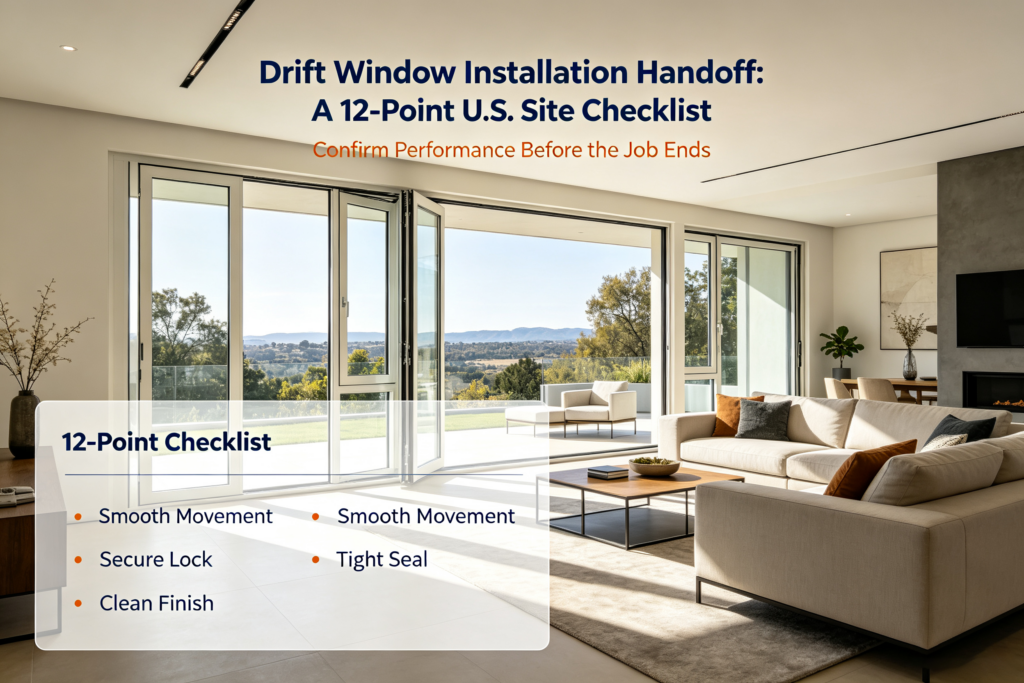
The 12-Point Drift window Preorder Handoff
The following list is intended for design and procurement coordination. It does not create a performance claim or replace the project professional’s review. Assign an owner and due date to each item, then do not release the order until open questions are closed.
- Opening ID: Match the window to one plan and elevation reference.
- Operation: Show every moving and fixed panel, travel direction, and support point.
- Dimensions: State frame size, rough opening basis, tolerances, and required field measurements.
- Glass: Record glass makeup, safety treatment where required, coatings, tint, and edge conditions.
- Frame and finish: Identify the exact system, color, sheen, exposed surfaces, and approved sample.
- Tracks and sill: Show recesses, track count, finished floor relationship, and cleaning access.
- Water path: Coordinate sill pans, flashing, weeps, drainage outlets, and adjacent waterproofing.
- Air and weather seals: Identify replaceable seals and their contact points without promising an unverified rating.
- Hardware: Confirm handles, locks, stops, anti-lift features, and replacement access.
- Screens and guards: Define type, removal direction, storage, and any separate safety review.
- Performance documents: Match ratings, test reports, or certifications to the exact quoted configuration.
- Installation and warranty boundaries: State who supplies anchors, sealants, flashings, adjustments, maintenance documents, and closeout support.
Do not accept family-level data as configuration proof
NFRC says its labeling program gives buyers verified product information and that ratings are produced under consistent conditions. Its consumer FAQ advises buyers to look for the NFRC labels and explains that NFRC does not sell, fix, install, or recommend a manufacturer. Accessed August 10, 2026. Ask which exact record applies to the size, glass, frame, and operating arrangement in the proposal.
The NFRC Certified Products Directory lets users search certified windows, doors, and skylights by product type and features. Accessed August 10, 2026. If a seller cites an NFRC certification, record the directory information or label details in the approval package rather than relying on a general brochure statement.
Prepare the Opening Before the Drift window Arrives
Site readiness begins with measurement, substrate, and water-management coordination. Photograph the rough opening with a visible identifier and measuring reference, then compare actual conditions with approved drawings. Confirm that the supporting construction can receive the specified anchors and that the sill area allows the intended pan, flashing, drainage, and interior finish sequence.
Coordinate the floor and sill together
A low-profile appearance can affect recess depth, waterproofing, finish transitions, debris collection, and access for service. Draw the complete sill section with structural substrate, membranes, track, exterior drainage path, and both finished surfaces. If the detail changes after fabrication, require a written review instead of trimming or packing components without approval.
Protect the system during construction
Tracks and seals can be damaged or clogged by mortar, metal filings, paint, and general construction debris. Define who protects the opening, who removes protection, and when final adjustment occurs. Do not use moving panels as temporary access equipment or allow unapproved cleaners on finished frames and glazing.
Use a Repeatable Site Acceptance Check
Acceptance should confirm the installed condition against the approved submittal, not compare it with a showroom impression. Test every moving panel through its full intended path and confirm that locks, stops, handles, and seals engage as documented. Record issues by opening ID and include photos so adjustments can be traced.
| Check | What to record | Reason |
|---|---|---|
| Identity | Opening ID, product reference, glass marking, finish | Confirms the installed unit matches the approved package |
| Movement | Travel path, operating force concern, rubbing, unusual noise | Creates a baseline for adjustment |
| Locking | All locking points and stops engage | Confirms the intended closed position |
| Seals | Continuous contact, damage, displacement, missing pieces | Finds visible installation or handling problems |
| Drainage | Weeps and outlets are open; surrounding path is complete | Confirms the designed water path is not visibly blocked |
| Closeout | Drawings, ratings, care instructions, spare parts list, contacts | Supports ownership and future service |
ENERGY STAR states that certified windows, doors, and skylights are independently tested, certified, and verified by NFRC and must meet its applicable efficiency criteria. See the current ENERGY STAR key product criteria. Accessed August 10, 2026. Do not call a Drift window ENERGY STAR certified unless the exact product and configuration can be verified.
For supplier coordination, the Forge Windows service page outlines design, drawing, production, logistics, and support categories. Use those categories to identify responsible parties and required deliverables, not as evidence of a project-specific outcome. A clear responsibility matrix should accompany the final order.

Frequently Asked Questions
Is Drift window an official U.S. window classification?
No recognized U.S. performance rating is established by that phrase alone. Treat it as a product or marketing term until the supplier defines the operating type and provides project-specific drawings and documents. Ratings such as U-factor or air leakage must be verified separately through the relevant source.
What drawing is most important for a Drift window?
The sill and operating section is usually the best place to start because it can show panel support, tracks, seals, drainage, floor relationships, and anchors. It should be paired with a plan and elevation that identify panel travel, fixed areas, locks, screens, and viewing direction.
Should the installer approve final fabrication dimensions?
The contract should name the party responsible for field measurement and final dimensions. Many projects benefit from a documented field-verification step before fabrication, especially when openings or finishes are incomplete. Record actual dimensions, tolerances, date, opening ID, and the person who approved release.
Can I verify performance from a product-family brochure?
A family brochure can guide questions, but it may not prove the performance of the exact proposed unit. Match any rating, certificate, or test report to the operating configuration, size, frame, glass, and other conditions represented. Ask for clarification whenever the scope of the document is unclear.
Conclusion: Make the Drift window Handoff Specific
A Drift window order becomes manageable when the team replaces an ambiguous name with drawings, configuration-specific documents, clear responsibilities, and recorded acceptance steps. Complete the 12-point checklist before fabrication and use the same opening IDs through delivery and closeout. Contact Forge Windows with your project drawings and requirements to clarify the intended system and required submittals.