 2026-08-08
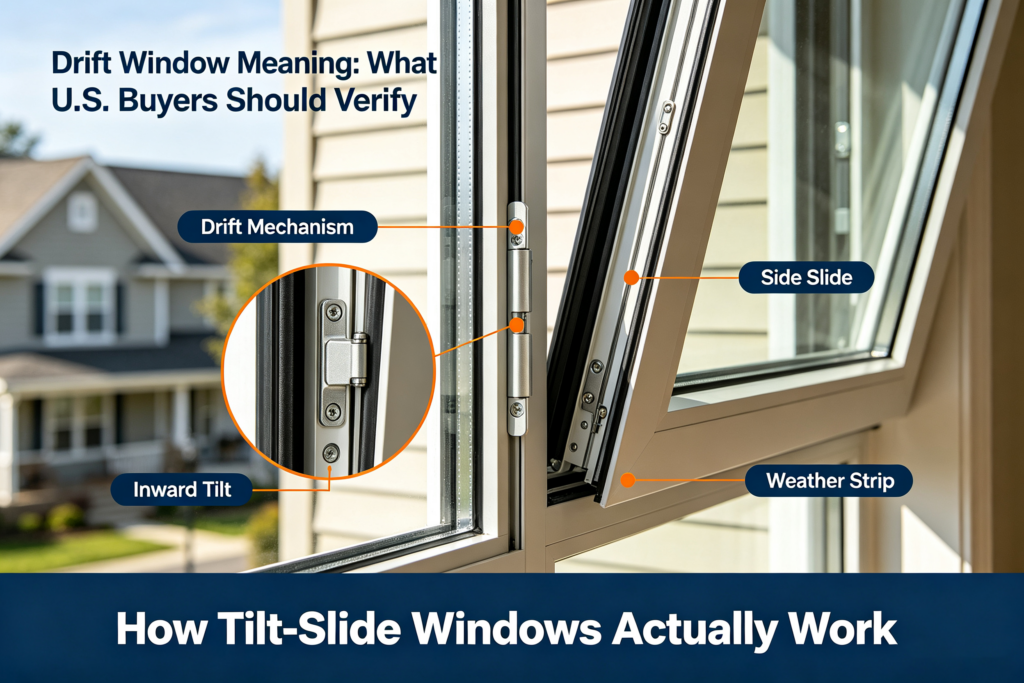
Drift window is not presented as a standard window operating type or energy-performance rating in the ENERGY STAR and National Fenestration Rating Council (NFRC) consumer resources reviewed on August 8, 2026. In a product listing, translation, or sales conversation, the phrase may be intended to describe a sash that slides, floats, or travels along a track. A buyer should not approve it until the supplier defines the movement, frame, track, seals, glass, and tested performance in plain English.
This terminology guide is for U.S. homeowners, architects, builders, dealers, and import teams comparing a product labeled “drift window.” It turns an unclear keyword into a practical request for information.
Key Takeaways
- Treat “drift window” as an undefined seller term unless a drawing and test record establish its meaning.
- Ask whether the sash slides horizontally, moves vertically, projects, pivots, or uses a suspended track.
- Separate the operating description from U-factor, SHGC, air leakage, water, and structural data.
- Use the same product name, model, size, glass, and configuration across the quote, drawings, reports, and order.
- Write an accepted definition into the contract documents before fabrication.
Table of Contents
- Define the term
- Identify the operating type
- Match documents
- Compare energy ratings
- Coordinate installation
- Use clear purchase language
What Does “Drift Window” Mean?
The phrase does not define a recognized rating. It also does not tell the buyer which sash moves, which direction it moves, how the sash is supported, or how the perimeter is sealed. A searchable product term can be useful for discovery, but it is not enough for a specification, permit set, purchase order, or installation plan.
Ask the seller to replace the phrase with a functional sentence. For example: “The active sash travels horizontally on bottom rollers within a two-track frame,” or “The panel is supported by head-mounted carriers and guided at the sill.” The sentence should agree with a labeled plan, elevation, and section.
Identify the Window by Its Actual Movement
Use familiar operating descriptions when possible. A horizontal slider moves left or right. A single-hung or double-hung window moves vertically. A casement window is side-hinged, an awning window is top-hinged, and a hopper window is bottom-hinged. A fixed window does not open. Product-specific terms such as floating, suspended, or multi-track should be followed by an explanation of the load path and guides.
| Term on a quote | Question to ask | Drawing needed |
|---|---|---|
| Drift window | What moves, in which direction, and on what support? | Plan, elevation, and section with active panels marked |
| Floating window | Is “floating” a model name, a suspended carrier, or a visual description? | Head, jamb, interlock, and sill details |
| Sliding window | How many tracks and active sashes are included? | Panel sequence and drainage path |
| Suspended window | Does the head carry sash weight, and how is the sill guided? | Carrier, header, guide, and service-access details |
Forge Windows lists a 128 Series floating sliding window, a T128 six-track suspended sliding window, and a 128 six-track thermal-break sliding window. These names show why the model and operating explanation must accompany the broad keyword. They should not be treated as interchangeable products.
Match Every Document to One Configuration
Create a configuration identity before comparing claims. Record the manufacturer, series, model, frame depth, number of tracks, active and fixed sashes, overall size, glass package, screen, locks, drainage, finish, and hardware. Give the configuration a project code, then place that code on the schedule and submittal review.
Next, compare the quote, shop drawings, product data, energy record, laboratory reports, installation instructions, and warranty. A report for a smaller window, different glass, different interlock, or different sill may not support the proposed unit. Ask the supplier to state the relationship rather than assuming one report covers every variation.
Configuration Identity Checklist
- Project opening number and room
- Series and model name in English
- Overall frame width and height
- Track count and active-panel sequence
- Glass make-up and safety-glazing locations
- Frame, interlock, weather seals, locks, and rollers or carriers
- Sill profile, weeps, drainage route, and cleaning access
- Applicable energy, air, water, and structural records
A Drift Window Name Does Not Replace Energy Ratings
ENERGY STAR explains that certified windows are independently tested, certified, and verified, and that the correct product depends on climate zone. Review the ENERGY STAR residential windows guide when the project has an energy target. The label process is separate from a seller’s operating-style name.
NFRC’s Residential Product Certification page identifies U-factor, SHGC, visible transmittance, air leakage, and condensation index as performance information used in its program. Use the NFRC Certified Products Directory to search certified products, then confirm the exact product and option with the supplier. Do not infer certification from the presence of an energy-related phrase on a webpage.
U-factor addresses heat transfer through the complete product. SHGC addresses admitted solar energy. Visible transmittance addresses daylight. Air leakage concerns airflow through a tested assembly. These values answer different questions, and none tells you how a “drift” sash travels or drains.
Check the Track, Drainage, and Rough Opening
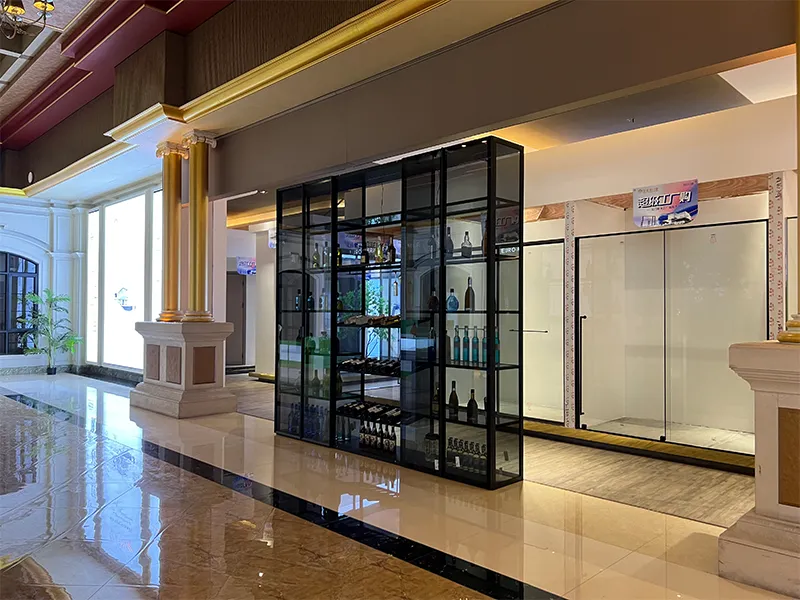
A moving sash needs a stable, level, square frame. The installation review should identify shim locations, fasteners, allowable frame movement, perimeter joints, sill support, and the connection to the wall’s water-resistive barrier. For a bottom track, ask how debris is removed and how water reaches the exterior. For a head-supported system, ask who verifies the supporting structure and how carriers are serviced.
Keep product testing and field installation in separate columns. NFRC’s consumer FAQ states that its ratings do not account for how the product is installed. A rated unit still needs the manufacturer’s instructions, compatible flashing and sealants, correct anchorage, and final adjustment.
Use Clear Purchase-Order Language
The following wording can prevent a terminology dispute:
“Drift window” is used only as a search or catalog reference. The supplied product shall be identified by manufacturer, series, model, operating direction, track count, active-panel sequence, overall dimensions, glass make-up, finish, hardware, sill, drainage, and accepted shop drawings. Performance claims shall be supported by documents applicable to the offered configuration.
Add a submittal hold point: fabrication begins only after the drawing, schedule, glass, finish, hardware, and document list are approved. For a Forge Windows inquiry, use the company’s service overview to frame drawing and technical-support questions, then send the configuration checklist with the request.
Frequently Asked Questions
Is “drift window” the same as “sliding window”?
Not automatically. “Sliding window” describes a sash that moves along a track, while “drift window” may be a translation, catalog keyword, or model-specific phrase. Ask the supplier for an operating description and labeled drawings. Use “sliding window” only if the proposed sash movement and support match that definition.
Can a drift window be ENERGY STAR certified?
A product may qualify only if the exact window is independently certified and meets the applicable ENERGY STAR criteria; the marketing term itself creates no qualification. Check the label, climate-zone qualification, NFRC record, manufacturer, product line, and glass option. Ask for documentation tied to the offered configuration.
What is the fastest way to compare two offers?
Give both suppliers the same opening schedule and configuration checklist. Compare drawings first, then glass, operation, ratings, reports, installation, warranty, and service. If one quote still says only “drift window,” treat it as incomplete until the seller states the product identity and active-panel sequence.
Should the term appear in construction drawings?
It may appear as a cross-reference, but the drawing should use a defined operating description and model. Mark active panels, movement arrows, tracks, screens, locks, and drainage. A reviewer should be able to understand the unit without relying on an unexplained product nickname.
Conclusion
For a U.S. purchase, Drift window should begin a clarification process, not end one. Define the movement, establish one configuration identity, match every report to that configuration, and coordinate the track and installation. Forge Windows can then respond to a precise request instead of an ambiguous keyword.
Sources accessed August 8, 2026: U.S. EPA ENERGY STAR residential windows, doors, and skylights; NFRC Residential Product Certification; NFRC Certified Products Directory.