2026-09-12
A folding door is a door made from connected panels that fold together as the opening is cleared. The name describes its movement, not its material or performance. Before buying, identify whether you need a closet bifold, an interior partition, or a weather-rated exterior folding system.
What does “folding door” actually describe?
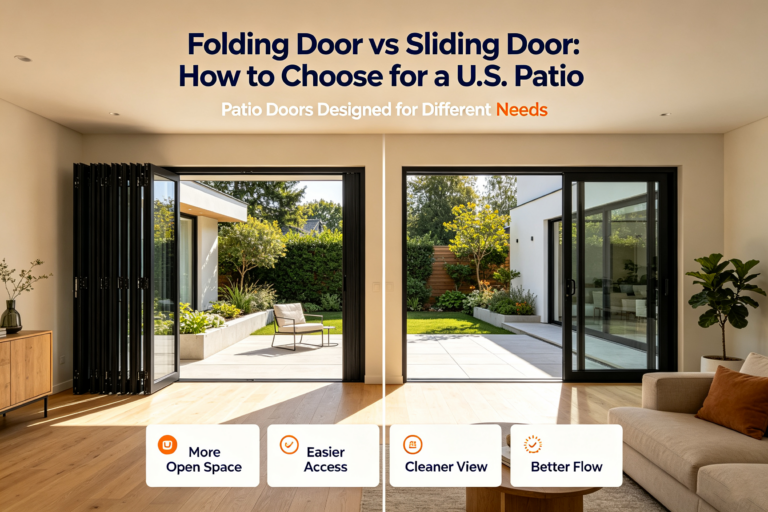
Watch the panel edges as the door opens. On a folding system, adjacent panels change angle at their connecting joints. On a sliding system, panels generally stay parallel while moving along tracks. This simple distinction is more useful than a product photograph taken with the door closed.
Names overlap between suppliers. Bifold often means paired rigid panels, while accordion or concertina may refer to a series of narrow folding sections. A large glazed folding wall belongs to the same broad movement family, but it is not interchangeable with a lightweight closet door. Ask for an operating drawing or video of the exact model.
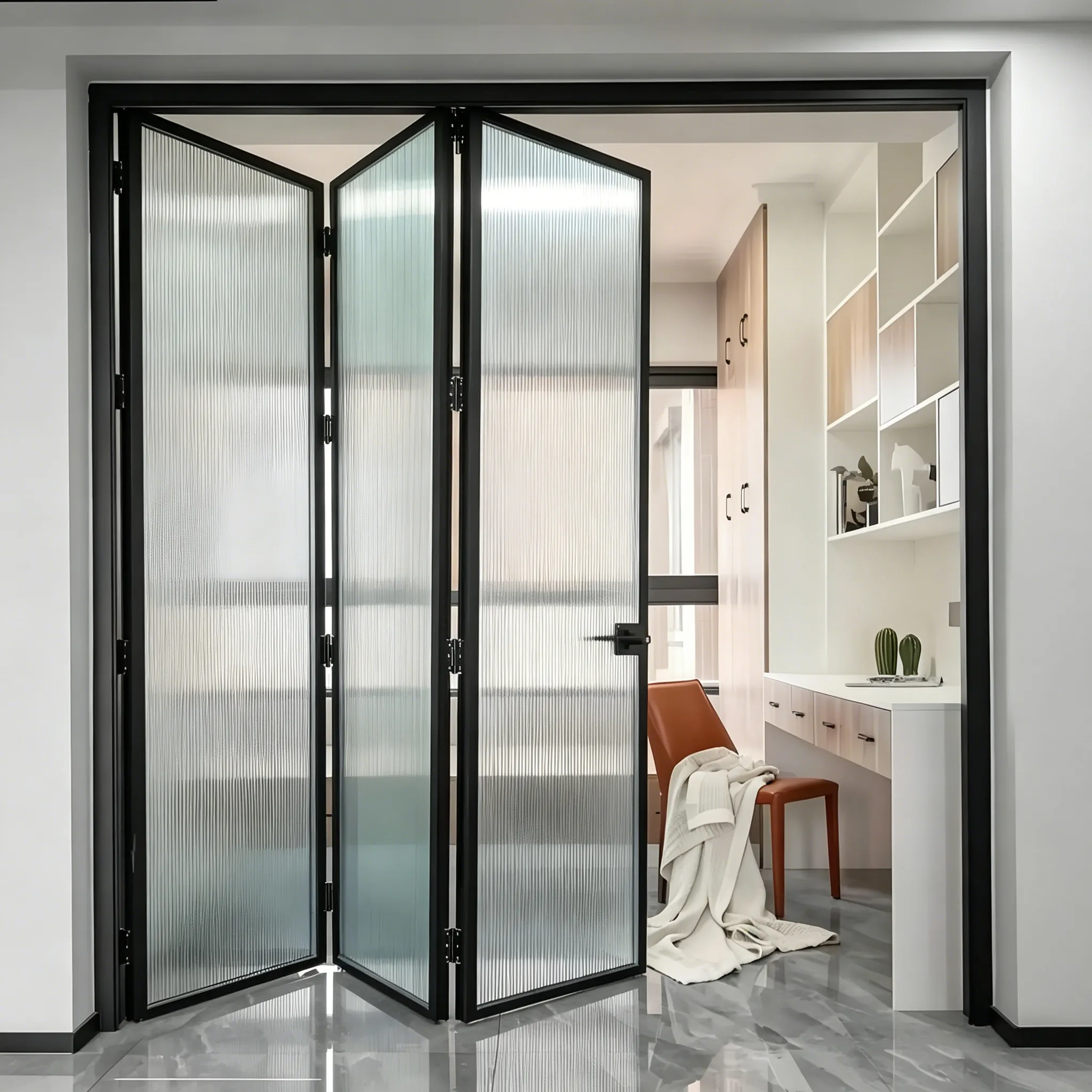
Match the door family to the job
| Application | Information to request | Common misunderstanding |
|---|---|---|
| Closet or pantry | Finished opening, access width, pivot and track details | The labelled size is always the actual panel size |
| Interior room divider | Stack position, privacy, operating clearance | A closed partition automatically blocks sound |
| Exterior opening | Whole-system weather performance, threshold and installation details | Any glass folding door can be used outdoors |
Manufacturer terminology is worth checking: JELD-WEN’s interior-door overview describes folding panels that travel and stack together. That explains the movement; the technical documents for the selected model determine where it can be installed.
Read a quote as a complete door assembly
Ask whether the quoted item includes the frame, panels, hinges, carriers, track, handles and locking hardware. For glazed doors, record the glass specification. For a replacement, identify who removes the old frame and finishes the surrounding wall and floor. A low panel-only price is not directly comparable with a complete installed assembly.
Specify the viewed side when describing left or right stacking. A short note such as “viewed from the hallway, panels park on the left” prevents an avoidable misunderstanding. Then request the residual passage width when the panels are fully stacked. For wider openings, our panel-count and stacking guide explains the layout decisions in more detail.
Five questions to send before ordering
- What is the exact system name and intended interior or exterior use?
- Which dimensions describe the opening, frame and actual panels?
- Where do panels park, and how far do they project?
- Which components, installation work and finishing are included?
- Which performance claims have documentation for this configuration?
Frequently asked questions
Is every folding door a bifold?
No. Bifold is commonly used for paired panels, while folding door is a broader description. Confirm the number of panels and their movement instead of relying on the name.
Can an interior folding door replace a patio door?
Only if the exact system is suitable for that exterior application. Appearance does not establish weather resistance, security or installation suitability.
What should I send for a quote?
Send opening photographs, preliminary dimensions, room use and the desired stacking direction. Ask the supplier to confirm the final survey requirements before fabrication.
Choosing a folding door starts with identifying the system. Use this checklist alongside the folding-door hardware guide to turn a general search into a clear buying brief.