2026-09-12
To secure a sliding door, first make sure it closes correctly and the primary lock engages. Then ask a qualified installer or locksmith to check anti-lift protection and compatible secondary locking. Use the door’s approved hardware, keep it serviceable, and preserve a quick exit for the people inside.
Start with the door you already have
Identify the manufacturer and model if possible. Photograph the handle, lock edge and frame labels without dismantling the assembly. A suitable improvement for one sliding system may not fit another, even when their handles look similar.
With the door closed normally, operate the lock and gently check that the panel stays shut. The handle moving into its locked position does not by itself show that the latch has engaged properly. If the door needs lifting, slamming or unusual pressure to lock, arrange a service inspection before buying accessories. Our sliding-door repair guide covers operation problems separately.
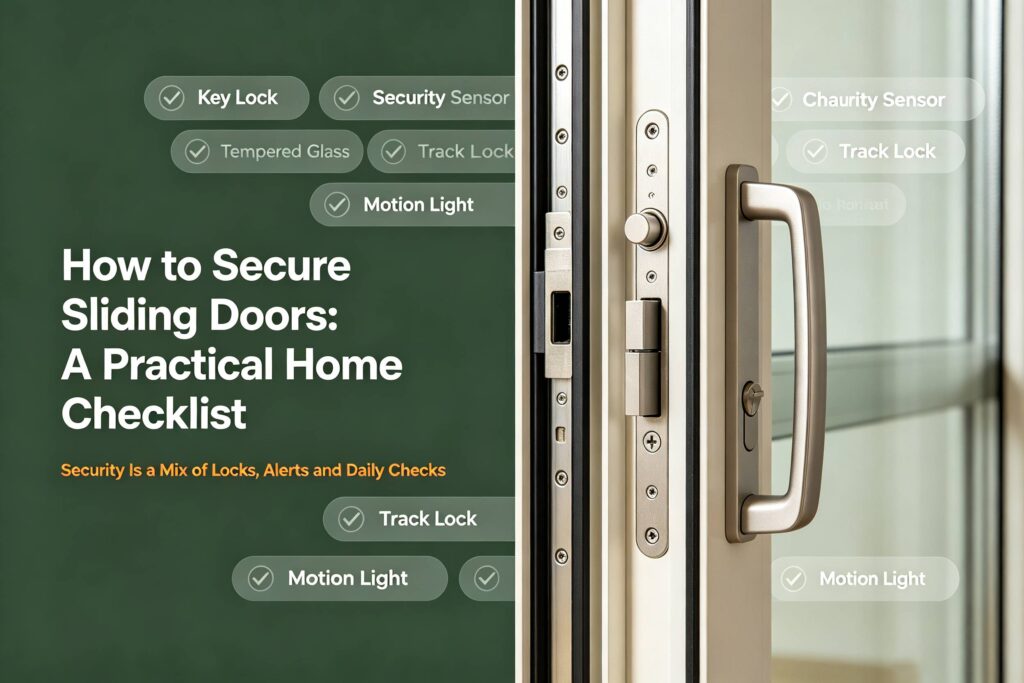
How to secure sliding doors with compatible protection
Police.uk recommends checking sliding patio doors for anti-lift devices. Ask the manufacturer or a qualified professional whether the existing door has the intended components and whether they are correctly fitted. Do not remove a glazed panel to investigate it yourself.
Discuss a purpose-designed supplementary lock where appropriate. West Yorkshire Police’s door and window advice also discusses dedicated patio-door locks. These are UK crime-prevention references, not a claim that a particular product satisfies requirements in every country.
| Observation | Next action |
|---|---|
| Lock does not engage consistently | Have alignment and locking components inspected |
| Anti-lift protection is unknown | Request a model-specific check |
| Secondary lock is proposed | Confirm compatibility and release from inside |
| Frame or glass is damaged | Arrange professional assessment before adding accessories |
Avoid changes that create another problem
Do not drill into an unfamiliar glazed door frame, obstruct drainage or attach hardware where the manufacturer prohibits it. A generic device can interfere with moving components or affect warranty coverage. Ask for the approved fixing position and installation instructions in writing.
If the door forms part of an escape route, have the proposed change checked against the applicable local requirements. Make sure occupants understand the release procedure. An accessory that is difficult to remove during everyday use deserves attention before it becomes part of the routine.
Build a simple closing routine
- Close the moving panel fully and operate the primary lock.
- Check engagement gently instead of relying only on the handle position.
- Use any approved supplementary device as instructed.
- Report new stiffness, loose handles or inconsistent engagement promptly.
- Keep hardware identification and service records for future repairs.
Frequently asked questions
Is a security bar enough on its own?
It should not substitute for a functioning primary lock or a sound frame. Ask a professional how a compatible device fits into the complete door’s protection.
Should I replace the whole door?
Not automatically. Start with an inspection of the lock, alignment, frame and glazing. Repairability and the condition of the assembly should guide that decision.
Can a camera secure the door?
A camera does not correct faulty locking or damaged components. Treat monitoring as a separate layer from the physical door assembly.
For a replacement, use the sliding patio-door survey guide to document the opening and ask for security information for the complete proposed system.