 2026-08-24
Choose left- or right-handed casement windows by deciding which vertical side should carry the hinges, then confirm how the selected manufacturer names that handing. For many U.S. product lines, handing is identified from the exterior by the hinge side, but parts catalogs and sales tools may describe it from the interior lock side. Those views can describe the same unit with confusing language. The safe method is to mark the hinge, lock, opening direction, and viewing side on an elevation instead of ordering from “left” or “right” alone.
What Does Casement Window Handing Mean?
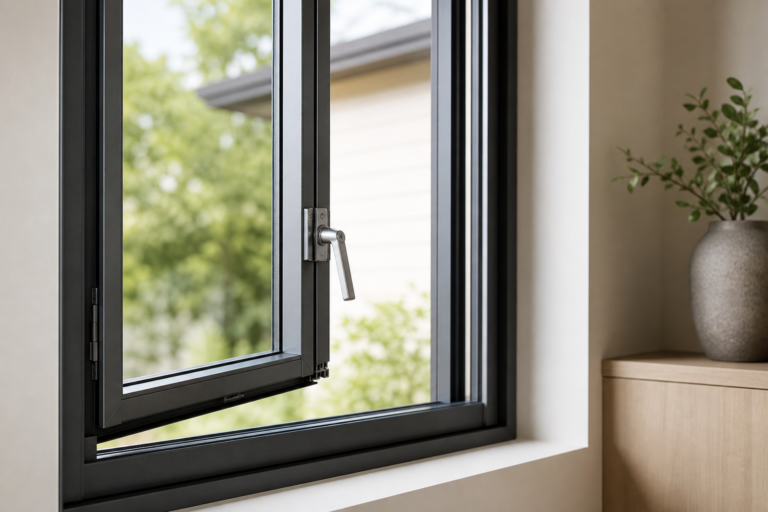
Casement window handing is the designation used to identify the side-hinge orientation of an operable sash. It helps the factory, installer, and parts supplier distinguish mirror-image units. Handing can affect the hinge set, operator, lock components, sash movement, and replacement parts.
The concept is simple, but the label is easy to misread. An exterior observer sees the hinge on one side and the lock side on the other. An interior observer sees the same physical sides reversed. A phrase such as “opens left” may refer to the hinge, the free edge, the lock, or the direction a person perceives the sash moving. That is why a drawing is more reliable than prose.
Andersen’s current handing guidance determines unit handing from the exterior hinge location and also explains how the interior lock location can be used. Product documents from other manufacturers may use their own codes. Never transfer a code from one brand or series to another without checking the relevant manual.
Why Do Left and Right Labels Cause Ordering Mistakes?
The most common error is a missing viewpoint. “Left-hand casement” is incomplete unless everyone knows whether left is viewed from inside or outside and whether the term follows the hinge or lock side. Replacement hardware adds another layer because a catalog may hand an operator by its arm geometry or by the lock-side convention used for that product family.
| Information on the order | Why it matters | Better documentation |
|---|---|---|
| “Left casement” only | Viewpoint and reference component are unclear | Mark hinge side on an exterior elevation |
| “Opens to the left” | Could mean hinge side or free-edge movement | Show swing arc and lock side |
| Copied product code | Code may belong to another series or manufacturer | Use the selected series’ current schedule |
| Interior photo only | Mirrored orientation can be misread | Add room name, exterior arrow, and hinge note |
| Hardware part number only | Part handing may not establish complete unit handing | Verify unit serial data and parts diagram |
Technical product literature often includes plan or elevation symbols for left-hand and right-hand vents. For example, the Pella Lifestyle Series architectural design manual shows separate left-hand and right-hand vent configurations. Use the current document for the actual product being specified, because available sizes and hardware can change.
How Should You Choose Left- or Right-Handed Casement Windows?
Start with the room and exterior conditions, not personal handedness. A right-handed person does not automatically need a right-handed window. The most useful orientation is the one that keeps the opening clear, makes the handle and lock practical to reach, and supports the intended airflow and view.
1. Check exterior swing clearance
Map the open-sash arc against walkways, balconies, roof returns, downspouts, adjacent walls, shrubs, and neighboring operable windows. At an inside corner, hinging the sash toward the corner may create interference. At a walkway, either handing may be unsuitable if the open edge enters the travel path.
2. Check interior access
Confirm that the crank, push-out handle, and locks can be reached without leaning over a hot surface, deep counter, or fragile object. Blinds and curtains should not cover the lock or prevent screen removal. Forge’s screen and operating-clearance guide provides a room-side review sequence.
3. Consider ventilation without promising a fixed result
An open casement sash can influence how a breeze enters, but actual airflow depends on wind direction, nearby buildings, landscaping, pressure differences, and other openings. If ventilation is important, review the complete room layout rather than assuming one handing will always “catch” wind. Forge’s room-by-room ventilation guide explains those dependencies.
4. Coordinate the view and composition
The hinge and open sash can affect sightlines from a favorite seat or work surface. On a street elevation, handing also influences how multiple open sashes look together. A symmetrical façade may use mirrored pairs, while a functional elevation may use repeated handing. Both approaches can work when shown deliberately.
5. Plan service and replacement parts
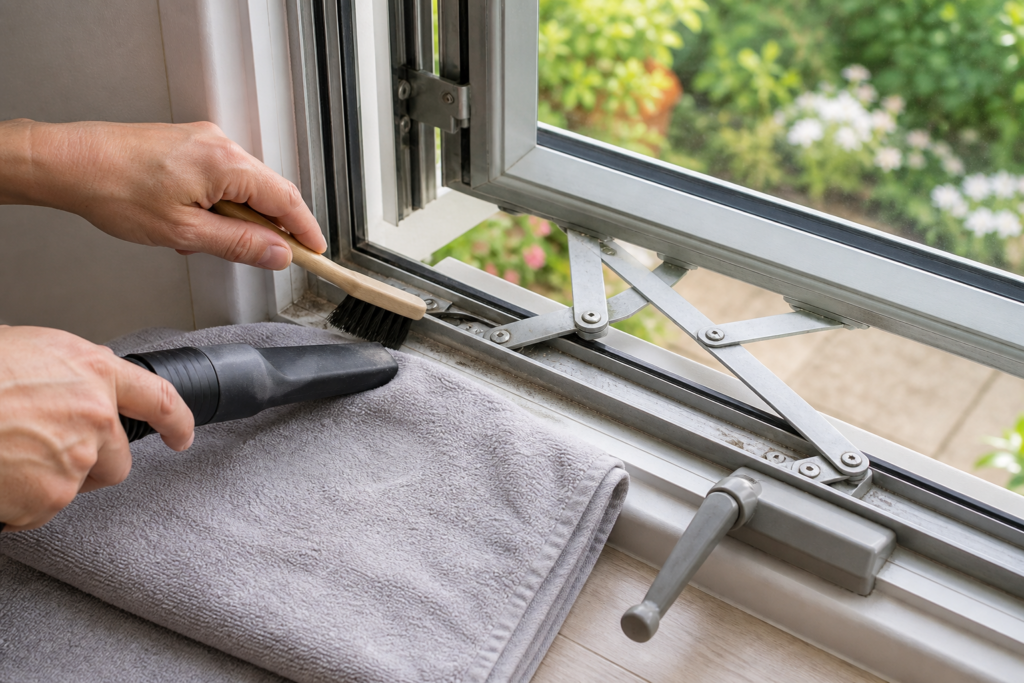
Operators, hinges, and locks may be handed. Keep the approved schedule, product series, order confirmation, and serial information with the building records. If an existing unit needs repair, use the unit identification and manufacturer’s parts diagram rather than guessing from appearance. Forge’s operator and lock troubleshooting guide helps separate adjustment symptoms from parts-selection questions.
How Do You Hand Paired and Grouped Casement Windows?
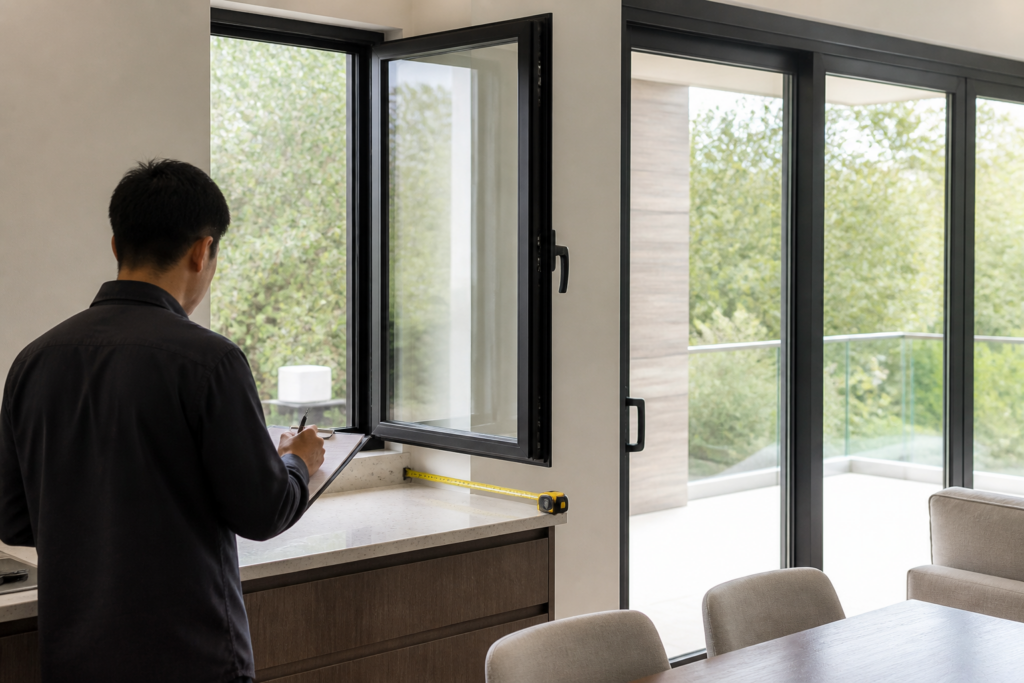
Two casements in one opening are often arranged as a mirrored pair, with hinges at the outer jambs and free edges meeting near the center. That can create a balanced appearance and a broad central view when both sashes are open. It is not the only option, and the mullion, screens, locks, wind exposure, and egress requirements must match the tested configuration.
In a casement-picture-casement group, the operable units may mirror each other on either side of the fixed center. In a row of several units, repeated handing may better suit room use or exterior clearance. Forge’s styles and layout guide compares single, paired, and combination arrangements.
For window schedules containing several types of windows, casement windows need an explicit handing mark at every operable opening. Do not assume that identical rough-opening sizes mean identical operation. A bedroom, kitchen, stair landing, and façade bay may each need a different configuration.
Preorder Handing Checklist
- Assign a unique window mark to every opening.
- Draw the unit from the exterior and label that viewpoint.
- Mark the hinge side, lock side, and open-sash arc.
- Record whether the window is crank-out, push-out, fixed, or another operating type.
- Check exterior conflicts at the full intended opening.
- Check interior reach, screen removal, shades, counters, furniture, and fixtures.
- Match the mark to the manufacturer’s current handing code and product series.
- Review emergency-escape, opening-control, safety-glazing, and local code requirements with the project professional.
- Have the buyer, designer, supplier, and installer approve the same marked schedule before production.
Limitations and Safety Notes
Handing does not determine whether a window complies with emergency escape, fall protection, wind, structural, or energy requirements. Clear opening depends on the complete tested unit, size, hardware, and opening angle. Do not reverse hinges, operators, or limiters in the field unless the manufacturer provides an approved conversion procedure. A damaged or upper-story sash should be assessed by a qualified professional.
Frequently Asked Questions
Is a left-handed casement window hinged on the left?
Often yes when the unit is viewed from the exterior, but conventions can vary by manufacturer and product document. State the viewpoint and mark the hinge on a drawing rather than relying on “left-handed” alone.
Should paired casement windows open away from the center?
Many paired units hinge at the outer jambs so the free edges meet near the center, but that arrangement is not mandatory. Verify the tested product configuration, mullion, screens, hardware, exterior clearance, and project requirements.
Can casement window handing be changed after delivery?
Do not assume it can. Sash machining, hinges, operators, locks, drainage, and hardware may be handed at the factory. Ask the manufacturer whether the exact series has an approved conversion; otherwise order the correct unit.
Does handing affect replacement hardware?
It can. Operators, hinges, and locks may have left- and right-hand versions. Identify the unit and product series, then follow the manufacturer’s parts diagram instead of buying a component based only on visual similarity.
Conclusion
The best way to choose left- or right-handed casement windows is to select the hinge side that fits the room, exterior clearance, ventilation plan, and composition—then document it using the manufacturer’s convention. A marked exterior elevation with hinge, lock, and swing is far safer than a standalone “LH” or “RH” note. Forge Windows can help coordinate custom aluminum window schedules against a chosen system, while the project designer and installer remain responsible for site conditions and code compliance.
{
“@context”: “https://schema.org”,
“@type”: “FAQPage”,
“mainEntity”: [
{
“@type”: “Question”,
“name”: “Is a left-handed casement window hinged on the left?”,
“acceptedAnswer”: {
“@type”: “Answer”,
“text”: “Often yes when the unit is viewed from the exterior, but conventions can vary by manufacturer and product document. State the viewpoint and mark the hinge on a drawing rather than relying on “left-handed” alone.”
}
},
{
“@type”: “Question”,
“name”: “Should paired casement windows open away from the center?”,
“acceptedAnswer”: {
“@type”: “Answer”,
“text”: “Many paired units hinge at the outer jambs so the free edges meet near the center, but that arrangement is not mandatory. Verify the tested product configuration, mullion, screens, hardware, exterior clearance, and project requirements.”
}
},
{
“@type”: “Question”,
“name”: “Can casement window handing be changed after delivery?”,
“acceptedAnswer”: {
“@type”: “Answer”,
“text”: “Do not assume it can. Sash machining, hinges, operators, locks, drainage, and hardware may be handed at the factory. Ask the manufacturer whether the exact series has an approved conversion; otherwise order the correct unit.”
}
},
{
“@type”: “Question”,
“name”: “Does handing affect replacement hardware?”,
“acceptedAnswer”: {
“@type”: “Answer”,
“text”: “It can. Operators, hinges, and locks may have left- and right-hand versions. Identify the unit and product series, then follow the manufacturer’s parts diagram instead of buying a component based only on visual similarity.”
}
}
]
}