 2026-08-31
Direct answer: A casement egress window must be evaluated through its complete emergency release sequence: approach the opening, operate normal locks and any control device from inside, remove or release permitted screens or guards, open the sash fully without a key or tool where required, and confirm that hardware does not reduce the qualifying clear opening.
This guide addresses release and operation, not the basic clear-opening calculation, basement well sizing, or a field measurement record. Those topics are covered in separate Forge Windows guides. Model-code numbers are not a project approval; the authority having jurisdiction must confirm the adopted code edition, amendments, room, opening, and device requirements.
Key Takeaways
- Test the opening using normal operation from the room side, not a dismantled display condition.
- List every lock, opening-control device, screen, bar, grille, cover, and sash stop in sequence.
- Do not add a keyed or tool-operated obstruction to a required escape route without code review.
- Measure the qualifying clear opening after the permitted release and full normal operation.
- Retest after installation, adjustment, hardware replacement, screen changes, or nearby finish work.
Table of Contents
- Map the emergency release sequence
- Separate locks, controls, and guards
- Build an operation record
- Run a room-side verification
- Control later changes
- Frequently asked questions
Map the Casement Egress Window Release Sequence
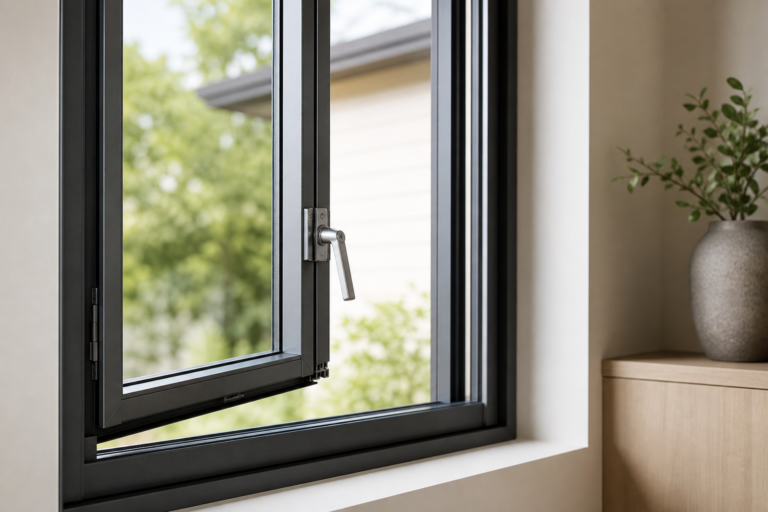
An emergency escape and rescue opening is an assembly, not a frame-size label. The person inside may need to reach the window, move a normal lock, release a window opening control device, handle a screen, and operate the casement sash to its allowed full-open position. Hardware, curtains, furniture, counters, wells, covers, bars, or landscaping can affect that path.
Write the sequence as numbered actions that a reviewer can observe. For example: reach the handle; move the normal lock; release the opening control; operate the sash; release the interior screen if the approved design requires it; verify the clear passage. Do not include removing screws, finding a loose tool, locating a separate key, disconnecting an operator arm, or lifting a sash from hinges unless the locally adopted rule explicitly permits that method.
The 2021 International Residential Code model provisions state that emergency escape and rescue openings must be operational from inside without keys, tools, or special knowledge. The official ICC Chapter 3 text also addresses controls, bars, grilles, covers, screens, wells, and replacement windows. Verify the adopted edition and local amendments rather than quoting the model text as a permit decision.

Separate Normal Locks, Opening Controls, Screens, and Guards
The normal lock secures the closed sash. A window opening control device limits routine opening and provides a defined release. A fall-prevention guard or device addresses window-fall risk. A screen controls insects but does not protect a child from falling. Bars, grilles, security devices, and window-well covers are separate obstructions that may have their own release requirements.
The U.S. Consumer Product Safety Commission advises that screens do not prevent falls and that window guards should allow an easy escape where fire egress is needed. Its childproofing guidance also recommends keeping at least one window in each room easily usable for escape when guards are present. That guidance supports a combined review of fall risk and escape, but it does not replace local code approval.
| Component | Normal purpose | Egress review question |
|---|---|---|
| Sash lock | Secure the closed sash | Can it be operated from inside as required? |
| Operator or handle | Move the sash | Does normal operation reach the qualifying position? |
| Opening control | Limit routine opening | Does the approved release permit full operation without reducing required clear area? |
| Insect screen | Limit insect entry | Does it remain, release, or obstruct the approved route? |
| Guard, bar, or grille | Fall or security function | Is inside release compliant and usable? |
| Well cover | Protect the below-grade well | Can it be released and does it leave the full route usable? |
Do not merge these terms in drawings or service records. A note that says “child lock” can refer to a simple keyed accessory, a restrictor, an ASTM F2090 device, or an improvised stop. Record the exact product, standard, release action, mounting, and project determination.
Build a Release and Operation Record
Assign the window an opening mark and record room, floor, finished-floor reference, frame and sash type, hinge side, normal locks, operator, control devices, screens, guards, exterior conditions, and adopted code reference. Include the manufacturer, series, configuration, labels, drawings, and device instructions where available.
The Forge Windows casement selection specification guide explains how to preserve operating configuration, hardware, evidence, and installation requirements. Add a separate operation sheet for release actions, required force or motion where applicable, parts that remain in the opening, and the name of the person who observed the test.
Photograph the window closed, each release control, the sash at the qualifying position, the remaining hardware envelope, and the route from the room. If below grade, photograph the complete well, ladder or steps, cover, drainage, and path above grade. The basement well clearance guide covers that exterior assembly in depth.
Run a Room-Side Verification Without Special Knowledge
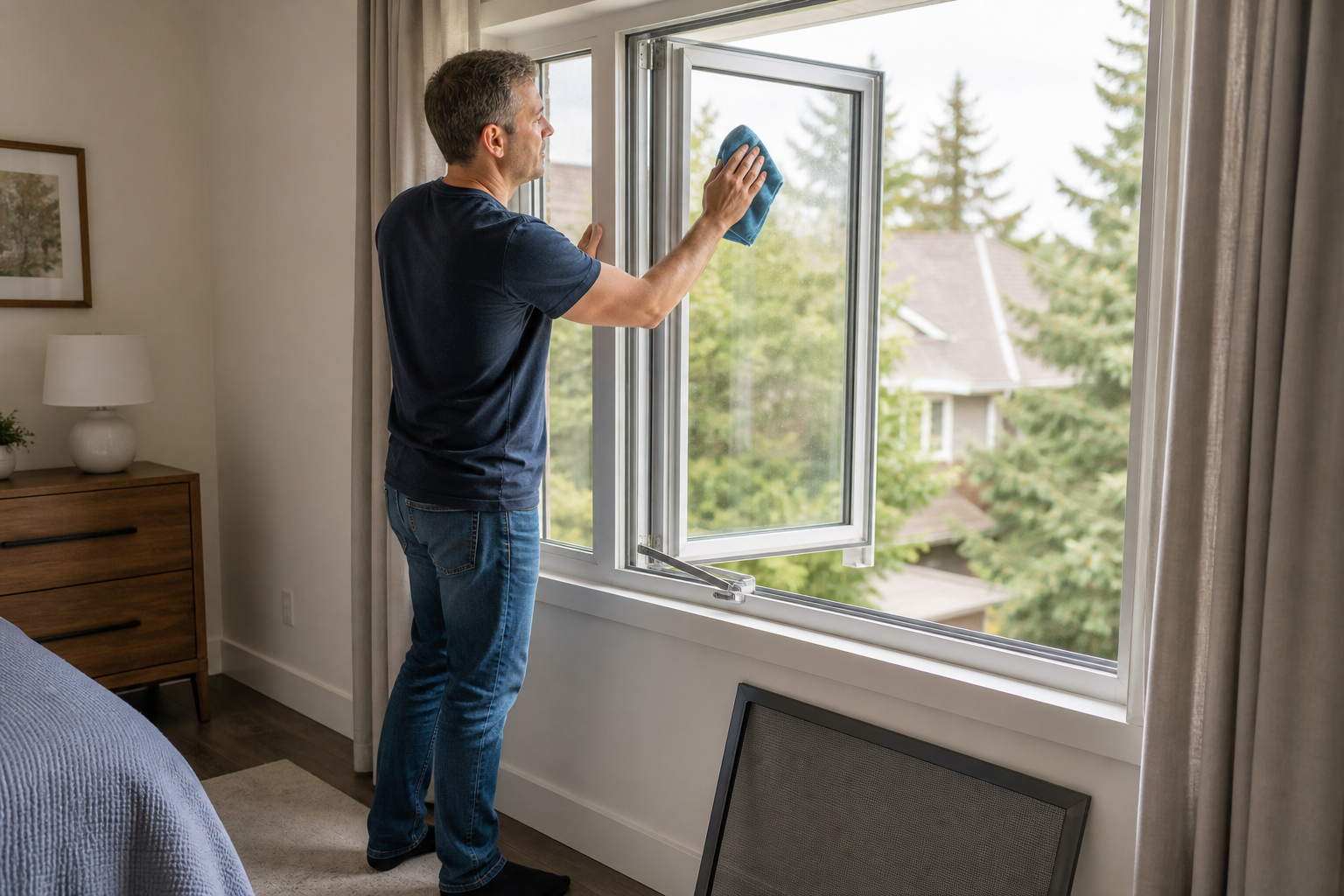
Test after the finished floor, trim, hardware, screens, guards, and nearby furnishings are in their intended conditions. Begin from the normal closed and locked state. Follow the written sequence using the controls available to an occupant. Do not loosen hardware, detach arms, remove fixed fasteners, or hold the sash beyond the manufacturer’s normal operating limit.
Observe whether the lock releases, the control device resets or releases as designed, the operator reaches the full normal position, the screen or guard follows its approved action, and the sash remains stable. Then measure the unobstructed opening left by the sash and hardware. The egress casement opening checklist separates net clear area, minimum width, minimum height, sill height, and normal operation so one passing value is not mistaken for complete compliance.
Stop the test if the sash requires abnormal force, a control will not release, a guard is damaged, hardware is loose, or the opening cannot be used safely. Record the failure condition and keep the opening out of acceptance until the responsible professional, supplier, installer, or authority resolves it. Do not improvise by removing a safety device or leaving a lock disabled.
For openings under decks, porches, cantilevers, or inside wells, continue the test through the exterior route. The model provisions include path and well requirements in addition to the window itself. A qualifying window can still be part of a blocked route if the sash conflicts with a ladder, cover, deck, stored item, or landscape element.
Retest After Hardware, Screen, and Interior Changes
A later lock replacement, operator adjustment, opening limiter, security bar, screen, blind, curtain, countertop, bed placement, or exterior cover can change the sequence. Treat each as a controlled change when the opening is intended for emergency escape. Keep product instructions and the approval record with the opening mark.
The casement operator and lock troubleshooting guide can help distinguish stiff operation, lock position, sash alignment, hinge, seal, or frame questions. Require written compatibility for replacements and retest both normal daily operation and the emergency release sequence after the work.
Include the sequence in owner handoff and inspection records. Occupants should know which opening serves the room and how its normal controls work, while children should not be trained to defeat protective devices. The responsible design and code team should define the appropriate communication for the building and users.
Frequently Asked Questions
Can an egress casement window have a lock?
Yes, normal locks are common, but the complete opening must remain operable from inside as required by the locally adopted code. Confirm whether any keyed lock, security device, opening control, screen, bar, or guard changes the approved release sequence.
Does an insect screen count against the egress opening?
It can affect the usable route and must be included in review. Whether it remains, releases, or is removed depends on the product and locally approved method. Do not measure a dismantled display condition that occupants cannot achieve through normal permitted operation.
Can a window opening control device be used on an egress window?
Model provisions address such devices and require the release to allow full opening without reducing the required clear area. Use a compliant, documented device and confirm the exact installation, release action, adopted code, and authority approval for the project.
When should the casement egress release sequence be retested?
Test at installation closeout and after changes to locks, operators, controls, screens, guards, trim, furnishings, well covers, or nearby obstructions. Also retest when operation becomes stiff, a part is replaced, or the authority or inspection program requires it.
Conclusion: Verify the Casement Egress Window From the Room Side
A casement egress window is ready only when its full release sequence, normal opening, unobstructed passage, and exterior route work together under the locally adopted rules. Document every control and obstruction, test from the normal closed condition, and repeat the check whenever hardware or surroundings change.