 2026-09-04
Direct answer: Approve black casement windows from a physical, project-labeled finish sample and a written record for substrate, exterior and interior color, color code, gloss, texture, coating system, hardware, grilles, screens, sealants, and adjacent materials. “Black” alone is not a complete finish specification.
Black Casement Windows Need a Surface-by-Surface Definition
Black describes appearance, not frame material. A black casement may be painted or coated aluminum, clad wood, fiberglass, vinyl with a manufacturer-approved color system, or another documented construction. Each substrate has its own available colors, textures, repair methods, dimensional limits, and warranty terms. Do not select a material or claim performance from color.
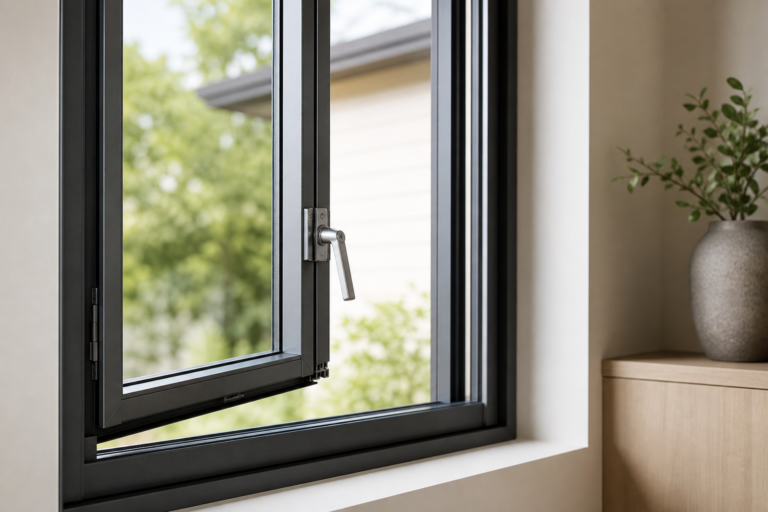
Mark every visible surface on interior and exterior elevations. Include frame, operating sash, fixed lites, mullions, glazing beads, hardware covers, handles, locks, hinges visible when open, grilles, screen frames, sill accessories, trims, flashing, and sealant. For a dual-color unit, show where the exterior color stops and the interior color begins at the sash edge, frame return, meeting condition, and open position.
Forge Windows’ custom casement configuration matrix helps coordinate operation, material, glass, finish, and hardware. The finish approval should become one controlled section of that record rather than a separate mood-board choice.
| Decision | Record this | Problem prevented |
|---|---|---|
| Color | Manufacturer name, finish name, code, batch or sample reference | Two different “black” selections |
| Gloss | Approved range or named level under the finish system | Matte frame beside glossy accessories |
| Texture | Smooth, fine texture, grain, anodized look, or documented alternative | Different light response and cleaning behavior |
| Faces | Exterior, interior, sash edge, rebates, open position, and dual-color boundary | Unexpected visible base color |
| Accessories | Handles, covers, locks, hinges, grilles, screens, spacers, sealants, trim | Near-black mismatch around the window |
| Exposure | Orientation, coastal or industrial conditions, cleaning access, adjacent runoff | Wrong finish class or care plan |
| Acceptance | Sample size, lighting, distance, approver, date, retained control sample | Approval from a small digital swatch |

Approve Black Color, Gloss, and Texture in Real Conditions
Request a production-representative sample on the proposed substrate and finish system. Label it with supplier, product, color code, gloss or texture, date, and project. A powder-coated extrusion, liquid-coated panel, vinyl cap, fiberglass coating, and clad-wood sample can share a similar color name while looking and weathering differently.
Review the sample upright, not flat on a desk. Observe it beside actual brick, stone, stucco, siding, roofing, interior paint, millwork, flooring, and metal accessories. Check indirect daylight, direct sun where safe, overcast light, and representative interior lighting. View it close enough to judge texture and from the normal facade distance to judge the composition. Digital renderings are useful for layout but are not color standards.
Gloss changes perceived darkness and reveals reflections, waviness, fingerprints, and field repairs differently. Texture changes edge highlights and cleaning behavior. Record the approved combination, not just “matte black.” When different manufacturers supply windows, doors, curtain wall, trim, or railings, compare actual samples together. Matching a shared color code does not guarantee identical appearance across resin, pigment, substrate, application, gloss, and orientation.
Coordinate the Frame With Glass, Hardware, and the Building
Black sightlines draw attention to alignment. Check frame widths, sash proportions, mullions, grille patterns, operator covers, locks, insect screens, glazing spacers, and sealant joints on one elevation. A dark spacer may support the intended look, but glass build-up and performance must still control the selection. Do not substitute decorative appearance for safety or energy requirements.
Open the casement in the mock-up or sample review when possible. Sash edges, hinges, arms, gaskets, drainage paths, labels, unfinished cavities, and the interior/exterior color boundary may become visible only during operation. Confirm blinds, curtains, counters, furniture, and cleaning access against dark handles and frame surfaces.
Coordinate adjacent sealant and flashing through project-approved compatibility and performance documentation. A sealant that looks black in a tube can cure to a different gloss or undertone. Tooling width, backing, joint depth, primer, staining, and exposure affect the finished line. Review the joint as a building-envelope component, not merely trim.
For mixed openings, use Forge Windows’ casement styles and layout guide to align operating and fixed units. Use the custom aluminum project brief when the project includes coordinated aluminum windows and doors.
Specify the Finish System, Exposure, Cleaning, and Repair
For coated architectural aluminum, name the required performance specification and verify that the proposed coating, pretreatment, substrate, application, color, gloss, and applicator support it. The Fenestration and Glazing Industry Alliance announced updated 2026 documents for organic coatings on aluminum extrusions and panels, including AAMA 2603, 2604, and 2605. Review the current FGIA finishes notice and the project’s adopted specification rather than assuming all powder or liquid coatings are equivalent.
Coating manufacturers describe different performance tiers. PPG explains that its FGIA/AAMA 2605-compliant systems are intended for demanding architectural aluminum exposure and tested for long-term weathering characteristics. See PPG’s current 2605 overview. Sherwin-Williams likewise distinguishes architectural powder products designed for different AAMA levels in its architectural coating guide. These sources illustrate specification categories; the approved window supplier must provide the exact finish-system evidence and warranty.
Define exposure: sun orientation, coastal salts, industrial contaminants, sprinklers, runoff from adjacent materials, construction dust, and access for safe cleaning. Obtain the window manufacturer’s cleaning instructions. Avoid abrasive pads, unapproved solvents, harsh chemicals, or field-applied waxes that can change gloss or damage gaskets and glass coatings.
Agree on touch-up boundaries before installation. A small approved repair may conceal a fastener mark yet differ in gloss and weathering; broad damage, pretreatment failure, or a scratched extrusion may require replacement. Photograph delivery condition, protect finished surfaces with approved materials, and remove temporary protection on schedule so trapped moisture or residue does not create a new defect.
Create a Black Finish Approval and Closeout Record
- List every window and surface receiving the finish, including interior/exterior and open-sash faces.
- Record substrate, preparation, coating or color system, supplier, code, name, gloss, texture, and performance specification.
- Attach labeled samples and photographs under representative lighting; retain one protected control sample.
- Coordinate hardware, grilles, screens, spacers, gaskets, sealants, trim, doors, railings, and facade materials.
- Record exposure, cleaning, protection, touch-up, replacement, applicator, and warranty requirements.
- Approve the mock-up or first production unit, with viewing distance, allowed variation, exceptions, reviewer, and date.
- At delivery and closeout, compare labeled units with the record and retain care instructions, batch data where supplied, repair materials, and photographs.
A complete record allows later teams to distinguish normal dirt, coating damage, gloss variation, sealant staining, and a true color mismatch. It also prevents an adjacent future order from relying on memory or a compressed phone photograph.
Frequently Asked Questions
Are black casement windows always aluminum?
No. Black is a finish or color choice available on multiple frame constructions. Verify the substrate, finish system, product limits, performance evidence, care instructions, and warranty for the exact window.
Should black windows be black on the interior too?
That is a design and product decision. Exterior-only, interior-only, matching, and dual-color options can create different open-sash views and room effects. Mark every face and approve the transition sample.
Is matte black one standard color?
No. “Matte” describes a low-gloss appearance, while black shades, textures, substrates, and coating systems vary. Approve the manufacturer’s code, gloss or texture, and a physical sample.
Can scratched black window frames be touched up?
Sometimes, within the manufacturer’s approved repair procedure and visual acceptance limits. Broad damage, exposed substrate, pretreatment failure, or unacceptable gloss variation may require component replacement.
Conclusion: Approve a Finish System, Not a Color Word
Black casement windows succeed when the visual intent and technical finish record agree. Define every surface, approve color, gloss and texture on the real substrate, coordinate adjacent components, match the finish system to exposure, and retain care and repair evidence. Send Forge Windows the elevations, material, color faces, samples, performance specification, exposure, hardware, sealant, cleaning, repair, and approval requirements for a coordinated review.