 2026-08-26
French casement windows use two side-hinged sashes that meet at the center without a permanently fixed mullion in the clear opening. One sash is commonly active and operates first; the passive sash releases second through product-specific bolts or locks. Correct sequence, handing, sealing, screens, and service instructions must be verified before ordering.
Key takeaways
- The defining project question is whether the center member remains fixed when both sashes open.
- Active and passive sash roles control opening, closing, and locking sequence.
- Meeting stiles, astragals, shoot bolts, operators, and screens vary by product.
- Use configuration-specific drawings, ratings, and installation instructions; do not assume a generic French-window detail.
French casements are often selected for symmetry and a broad unobstructed opening. Their elegant appearance can make the hardware seem simple, but the meeting condition has more coordination than two unrelated single casements. The project team needs to know which leaf moves first, how the passive leaf secures, where weather seals meet, and how both sashes can be serviced.
Table of contents
- How French casement windows operate
- Active sash, passive sash, and meeting parts
- Opening and closing sequence
- Specification checklist
- Frequently asked questions
How do French casement windows operate?
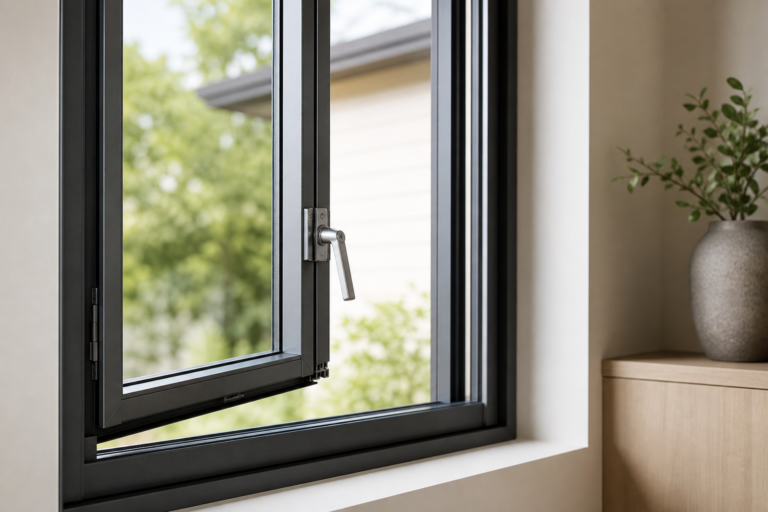
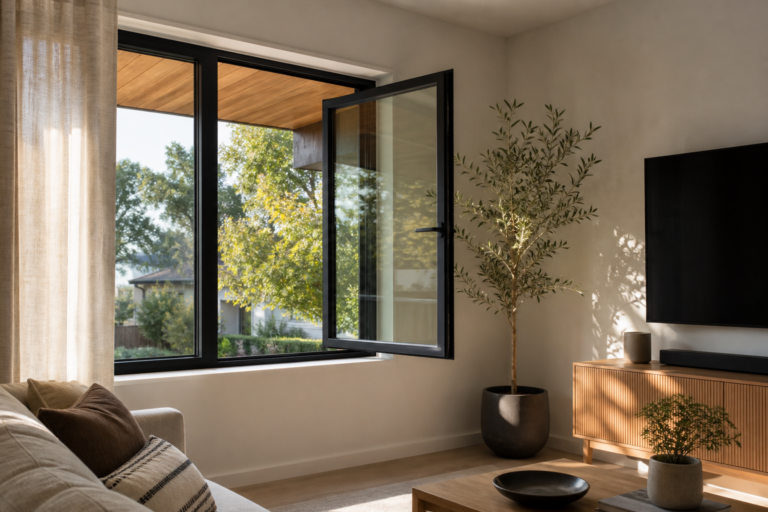
Both sashes are hinged at their outside jambs and meet at the center. In a true French configuration, opening both sashes removes the permanent center obstruction from the passage. A meeting stile or attached astragal travels with one sash, and the two edges seal and lock together when closed.
Many systems designate one active sash with the everyday handle or operator. That sash opens first. The passive sash remains secured until secondary bolts, levers, or concealed hardware are released. Closing usually reverses the order: secure the passive sash, then close and lock the active sash against it. The exact sequence must come from the manufacturer.
This differs from a fixed-mullion paired casement, where each sash closes against a permanent center member. The Forge casement layout guide provides context for single, paired, fixed, and other arrangements. The casement parts and operation guide defines the underlying sash, frame, hinge, lock, and operator terms.
Active sash, passive sash, astragal, and locks
| Component | Typical role | Verification question |
|---|---|---|
| Active sash | Primary everyday operating leaf | Which handle, crank, or latch operates it? |
| Passive sash | Secondary leaf opened after release | How is it released and secured? |
| Meeting stile | Center edge where sashes close together | Which seals and hardware meet here? |
| Astragal | Member attached to a sash that helps close the center joint | Does it travel with the passive or active sash? |
| Shoot bolts | Secure a sash into the head and sill | Are they exposed, concealed, manual, or linked? |
| Operator/stay | Moves or limits the sash | What is the normal maximum opening? |
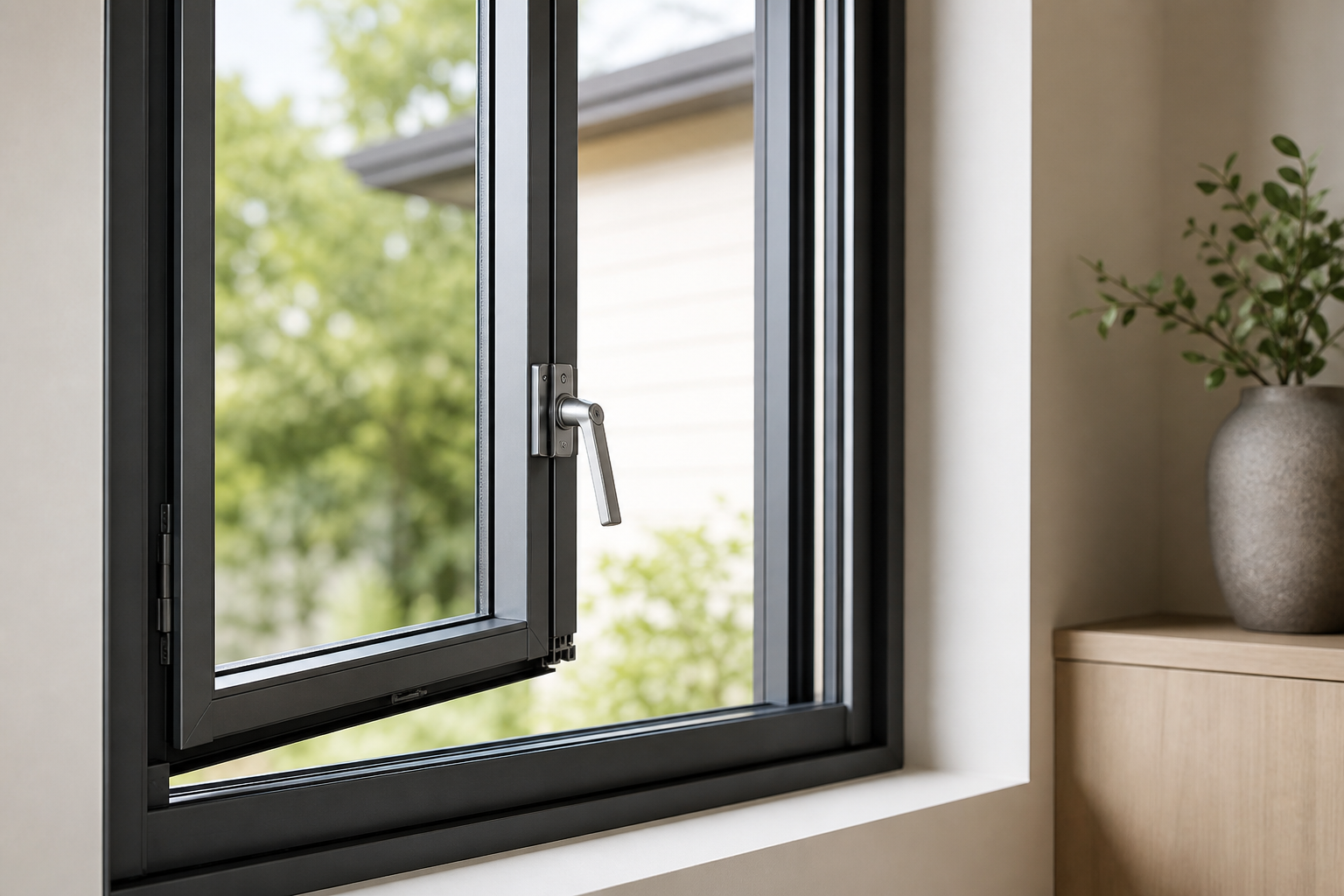
Terminology varies. Some manufacturers use “inactive” rather than “passive,” and some call the traveling center member an astragal or floating mullion. Put the manufacturer’s term on the approved drawing and add a plain-language description. The goal is not to force one vocabulary but to make the operating sequence unambiguous.
Handing also needs a declared viewpoint. Record active-sash hinge side, passive-sash hinge side, swing direction, and the side from which the elevation is viewed. The casement handing guide explains how a missing viewpoint can reverse an order.
Opening, closing, screening, and cleaning sequence
- Clear the area. Move shades, furniture, and interior screens as the product requires.
- Unlock the active sash. Use the primary handle or operator without forcing it.
- Open the active sash. Move it to the manufacturer’s normal service position.
- Release the passive sash. Operate the designated bolts or lever only after the active sash is clear.
- Open the passive sash. Check exterior or interior swing clearance.
- Close in reverse. Seat and secure the passive sash first, then close and lock the active sash.
- Confirm the seal. Check that meeting edges, head, sill, and jamb seals engage evenly.
Never force one sash against the other or use the passive leaf as an everyday operator unless the instructions permit it. Mis-sequencing can stress locks, seals, hinges, or operators. At handover, demonstrate the procedure and leave the owner with the correct product instructions.
Screen design should be selected with the operation, not added later. An outward-opening French pair may use an interior screen arrangement; an inward-opening pair requires a different strategy. Confirm screen division, removal path, access to passive-sash releases, and interference with handles or shades. The casement screen and clearance guide covers these interfaces in more detail.
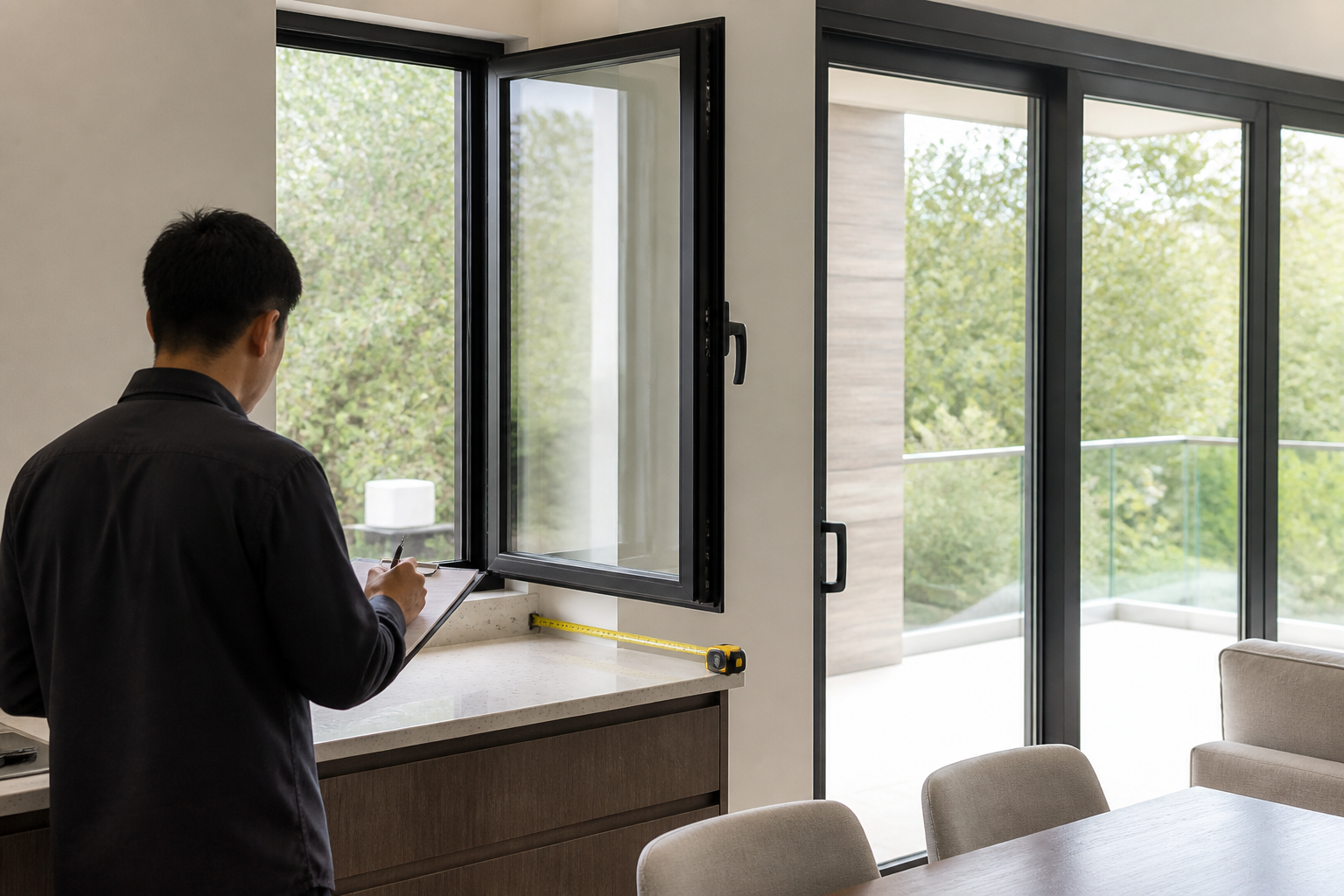
Cleaning access depends on swing, reach, sash position, and building height. Keep both feet on a stable interior floor and follow the manufacturer’s safety instructions. Do not detach stays or hardware just to reach exterior glass. If safe access is not possible, plan professional cleaning or another operating configuration.
French casement specification checklist
- Show a true French center condition with no permanent mullion when fully open.
- Identify active and passive sashes and their hinge sides.
- State interior or exterior viewpoint for handing.
- Show opening direction and manufacturer-limited maximum angle.
- Identify meeting stile or astragal location and which sash carries it.
- Describe primary lock, passive release, shoot bolts, and owner sequence.
- Coordinate screen layout, removal, shades, and handle projection.
- Check exterior swing against walls, roofs, landscaping, paths, and wells.
- Check interior swing against furniture, counters, curtains, and circulation.
- Request ratings for the exact size, glazing, frame, and French configuration.
- Verify installation, anchorage, flashing, drainage, and perimeter seals.
- Include commissioning and owner instruction at handover.
The NFRC residential certification program explains how complete window products receive energy ratings. Use the exact French configuration’s label or certified documentation; a rating from a different single-sash unit may not represent the pair. ENERGY STAR buying guidance also recommends selecting by climate zone and keeping the NFRC and ENERGY STAR labels.
If the project is custom, request a full elevation, sections at jamb/head/sill/meeting stile, hardware schedule, drainage detail, glazing make-up, finish samples, and installation instructions. The assembly should be reviewed as one system rather than a collection of attractive components.
Frequently asked questions
What makes French casement windows different?
They use two side-hinged sashes that can open without leaving a permanently fixed center mullion in the clear opening. The sashes meet and lock together through product-specific center hardware.
What is the active sash?
The active sash is the primary everyday operating leaf. It normally carries the main handle or operator and opens before the passive sash. The exact role and handing must be confirmed on the product drawing.
Can either French casement sash open first?
Usually the designated active sash opens first and the passive sash releases second. Some products differ, so follow the manufacturer’s sequence rather than forcing either leaf.
Do French casements have a center post?
A true French configuration has no permanent center post remaining when both sashes are open. A meeting member may travel with one sash. If a fixed mullion remains, it is a paired double casement rather than a post-free French opening.
Conclusion
French casement windows deliver a broad opening through coordinated sashes, not through the absence of detail. Define the active and passive leaves, center hardware, handing, sequence, screens, clearances, ratings, and installation on the approved documents. Then commission the pair and teach the owner how to operate it correctly.