2026-09-17
Choose sliding windows when a projecting sash would obstruct a path, balcony or room. Consider casement windows when a hinged opening and compression seals suit the layout. Neither name guarantees weather resistance or quietness: compare the exact assembly, its test evidence and the installation detail.
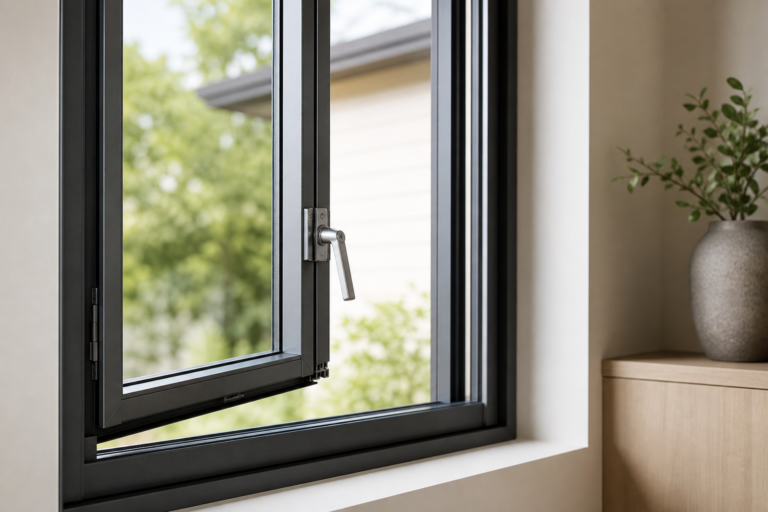
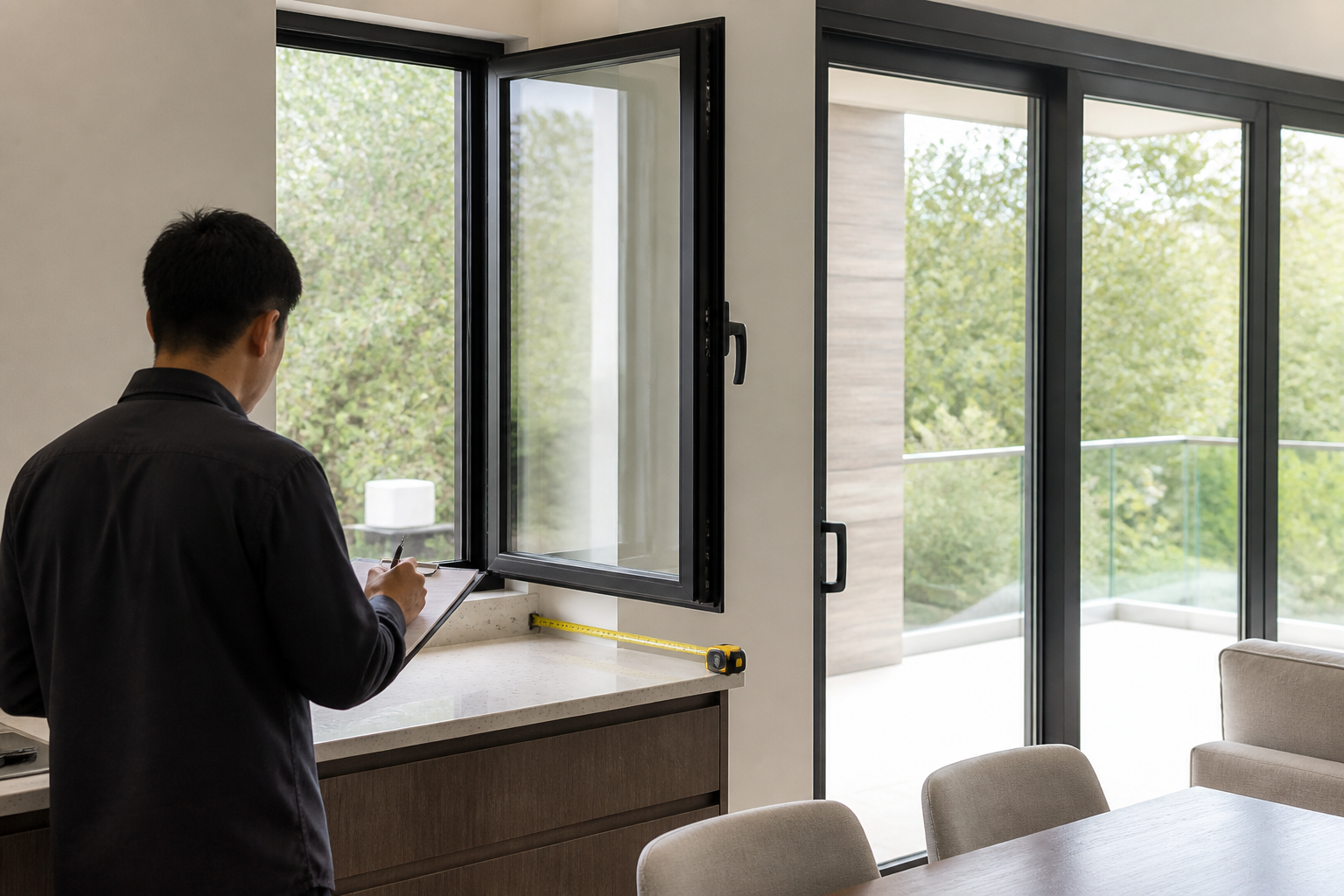
The easiest mistake is to compare two closed showroom windows. Open each one fully. Operate the handle with the screen in place. Imagine the counter, curtains and person standing beside it. Those small actions reveal differences that a front elevation cannot show.
Compare the opening you can actually use
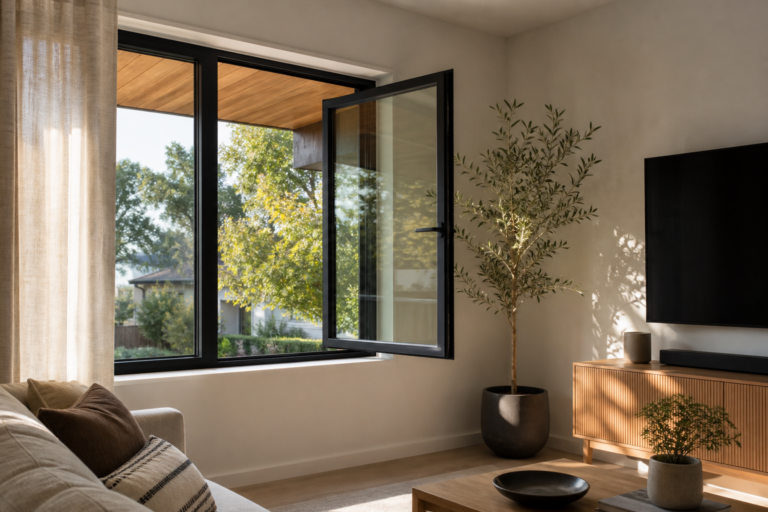
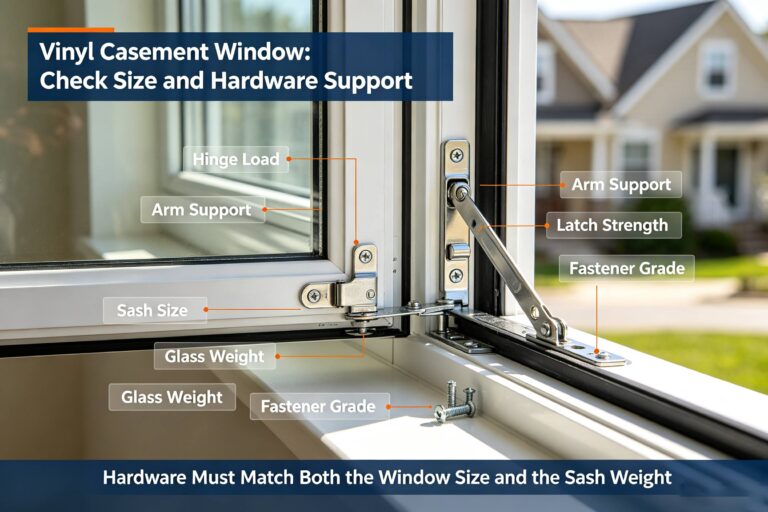
A conventional two-panel slider usually keeps one part of the opening glazed when the other panel moves. A casement swings around hinges, but its sash and hardware occupy space. Record clear ventilation area and any required clear passage separately from frame width. For a large opening, ask whether several smaller operating sections would be easier to use.
| Decision | Sliding window | Casement window |
|---|---|---|
| Movement | Panel travels within the frame | Sash swings inside or outside |
| Adjacent space | No conventional sash swing | Needs a clear swing zone |
| Routine care | Track, rollers and meeting seals | Hinges, operator and compression seals |
| Screen planning | Confirm track and panel access | Confirm screen position relative to handle |
| Performance evidence | Test the proposed system | Test the proposed system |
Do casement windows always seal better?
Compression closure can be a useful feature, but a type comparison is not a product test. The Department of Energy discusses how operation affects air leakage. For a purchase, request the actual air and water results, size limits and hardware configuration. An out-of-square frame or damaged gasket can undermine a good design.
For noise, avoid choosing on frame material or opening style alone. Ask for a whole-window acoustic result and consider vents and surrounding walls. A window that performs well when closed cannot provide the same protection while it is open.
Try a room-specific decision
At a ground-floor window beside a narrow walkway, a slider may keep the route usable. At a kitchen sink, a casement with a reachable operator may be convenient, but check how far the user must lean. On an exposed upper floor, the designer must consider wind, safe operation and cleaning access before either choice is approved.
Draw the sash in its open position and add the nearest cabinet, tap, blind and screen. The custom window fit review helps turn that sketch into a brief. Do not assume a showroom unit’s opening direction matches the quoted one.
Frequently asked questions
Which type is easier to maintain?
It depends on access and the hardware. Sliders need clean, undamaged tracks; casements need sound hinges and closing hardware. Ask which parts are replaceable locally and how the external glass is reached. A difficult-to-reach window can be inconvenient in either format.
Are sliders always cheaper?
No universal price comparison is reliable. Dimensions, frame series, glazing and installation can outweigh the operating-type difference. Request two alternatives for the same opening and the same performance brief, with exclusions shown beside each price.
Can both types be used in one house?
Yes, subject to the design and system options. Keep a consistent finish and coordinate visible proportions while choosing operation room by room. Use a labelled drawing set so the supplier quotes the intended mix.