2026-10-06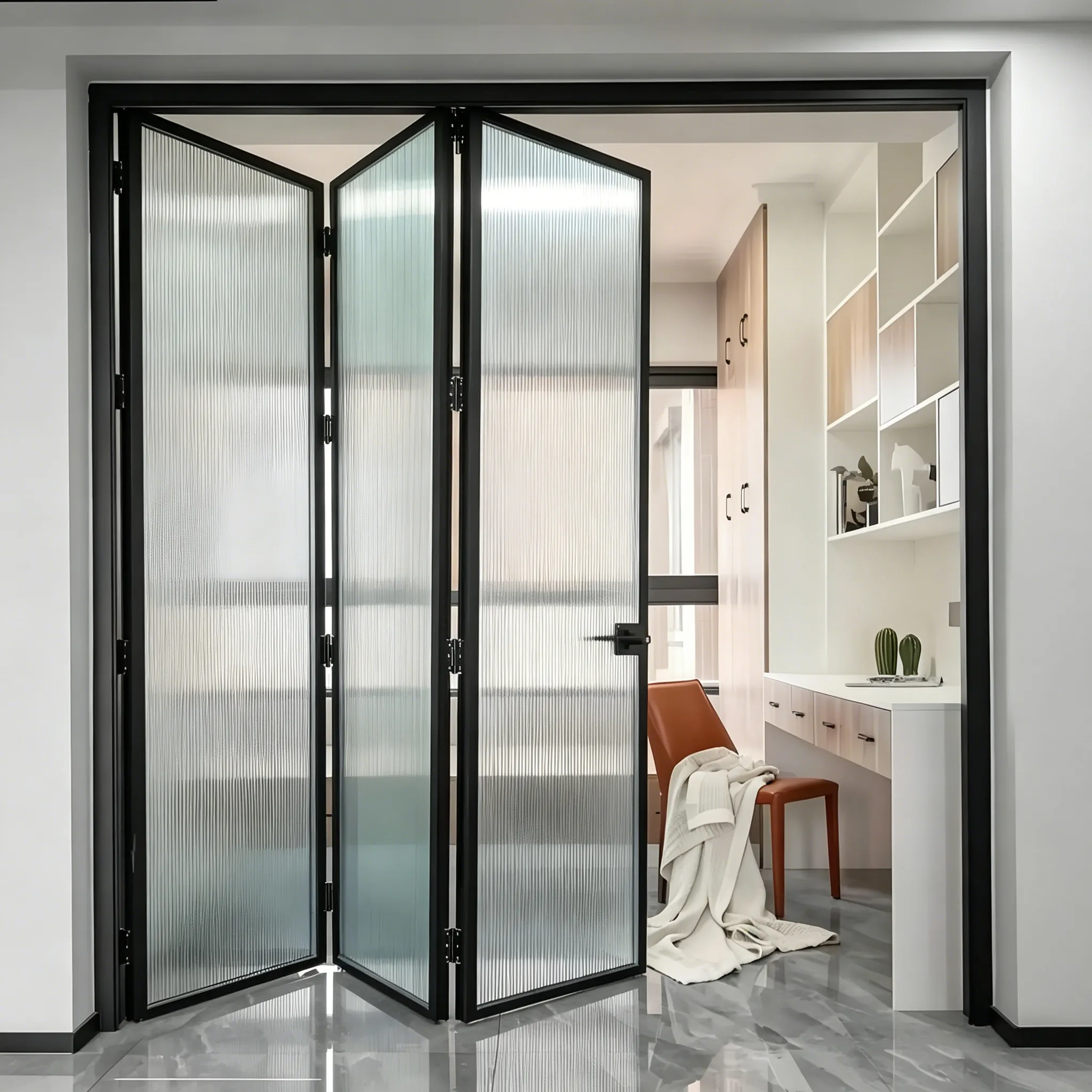
Direct answer: Folding doors are often used to connect rooms, divide flexible spaces, open a patio or create a wide service opening. Their value comes from the way panels park when open, so the right choice depends on traffic, furniture, privacy and the available stack zone.
鈥淔olding door鈥?describes a family of systems rather than one standard product. Some panels hinge together and fold to a jamb; others combine folding with sliding or use a top guide and bottom rollers. Confirm the operating sequence on a plan before comparing appearance or price.
Room dividers and flexible layouts
In a living room, study or meeting suite, folding panels can separate spaces for quiet work and open again for shared use. Measure the return wall where the stack will park, then check that sofas, bookcases, light switches and curtains remain reachable. If sound control matters, ask for the tested partition build-up and seal arrangement; a visual divider does not automatically create acoustic isolation.
Patios and garden connections
Exterior folding doors are used to widen a route between an interior and a terrace. The opening must be treated as part of the weather envelope. Ask for a sill section showing drainage, waterproofing, finished-floor levels and the location of open weeps. Walk the full panel travel with screens and shades in place, because the open stack can occupy more room than the closed elevation suggests.
Kitchens and serving openings
In a kitchen, folding panels may close a pantry, conceal appliances or create a serving opening. Keep handles clear of worktops and confirm that the active leaf can be used without moving every panel. Choose surfaces that tolerate the room鈥檚 cleaning routine, and document how tracks are vacuumed so food debris does not become a maintenance problem.
Commercial, hospitality and meeting spaces
Restaurants, clinics and offices use folding systems where circulation changes through the day. Specify the daily traffic leaf, expected operating frequency, lock release and staff handover. The supplier should state who prepares the substrate, sets the frame, adjusts rollers and services the hardware. A short commissioning checklist is more useful than a generic promise of durability.
Selection checklist
| Question | Record before ordering |
|---|---|
| Where do panels park? | Stack depth, return wall and furniture clearances |
| How is daily access handled? | Traffic leaf, handing, latch and clear passage |
| What supports movement? | Top guide or sill track, substrate and tolerances |
| How is weather managed? | Sill, flashing, seals, weeps and discharge path |
| What is handed over? | Drawings, cleaning, adjustment and service instructions |
Frequently asked questions
Are folding doors suitable for every room?
No. The stack, swing arc, threshold and hardware need space. A measured plan should show the complete open and closed positions.
Can one panel be used as a normal door?
Many systems include a designated traffic leaf, but the permitted operation varies. Confirm the configuration with the manufacturer.
What should a quotation include?
Require the panel layout, dimensions, glass or infill, hardware, sill, trims, installation scope, tolerances, warranty and maintenance plan.
Share your opening survey with Forge Windows when you need a configuration-specific review.