 2026-08-25
Direct answer: Vinyl casement windows can be a practical choice when you want a low-maintenance frame and the project-specific window has suitable ratings, reinforcement, hardware, glass, size limits, and installation details. Do not choose one from frame material alone; compare the complete labeled unit and the opening conditions.
Key Takeaways
- Vinyl describes the frame material, while casement describes side-hinged operation.
- Compare whole-window NFRC ratings rather than assuming every vinyl frame performs alike.
- Check sash size, reinforcement, hardware, color limits, glass, screens, and installation together.
- Confirm that the open sash clears paths, landscaping, curtains, counters, and nearby windows.
- Use written product data for the exact configuration, not a generic family claim.
What Are Vinyl Casement Windows?
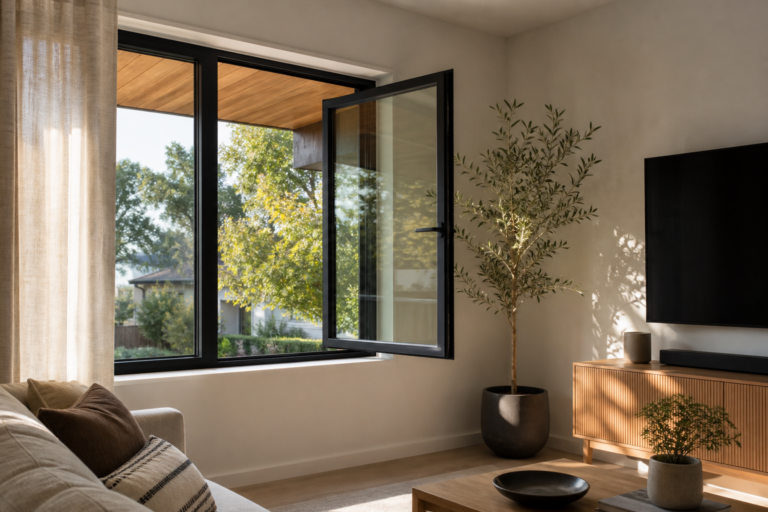
Vinyl casement windows are side-hinged operable windows whose primary frame and sash members are made from polyvinyl chloride, often called PVC or vinyl. A handle or operator moves the sash, and the closed sash presses against perimeter seals. The material, operating system, glass, reinforcement, and installation all affect the final result.
The U.S. Department of Energy explains that vinyl frames do not require painting and have good moisture resistance. It also notes that frame construction varies, including hollow cavities that may be insulated. That is a useful material overview, but it is not a rating for a particular product. Review the Department of Energy’s Window Types and Technologies guidance (accessed August 25, 2026) alongside configuration-specific documents.
When Are Vinyl Casement Windows a Good Fit?
They may suit residential openings where the design calls for side-hinged ventilation, an interior operator, and a frame that does not need routine repainting. They are not automatically the right option for every opening. Large sash dimensions, dark exterior colors, strong exposure, unusual glass loads, impact requirements, narrow sightlines, and custom hardware can change the decision.
Begin with the room and opening. A kitchen window above a counter needs reachable hardware. A bedroom may need a separate emergency-escape review. An upper-level opening may require fall-protection coordination. An outward-opening sash needs a clear exterior arc. The Forge Windows casement screen and operating-clearance guide provides a useful checklist for screens, handles, furnishings, and exterior obstructions.
| Decision area | What to request | Why it matters |
|---|---|---|
| Frame and sash | Profile drawing, reinforcement, corner construction, size chart | Material name alone does not define stiffness or allowable size |
| Energy data | NFRC record for the proposed configuration | U-factor, SHGC, visible transmittance, and air leakage are whole-product values |
| Operation | Handing, operator, hinge, locks, opening limit, screen | Hardware must suit the sash and remain reachable |
| Glass | Glass makeup, safety glazing location, spacer, coatings | Climate, orientation, safety, view, and weight affect selection |
| Installation | Rough-opening, anchorage, flashing, sealant, and drainage details | A rated unit still needs a suitable wall connection |
How Should You Compare Vinyl Casement Windows?
1. Compare the complete window label
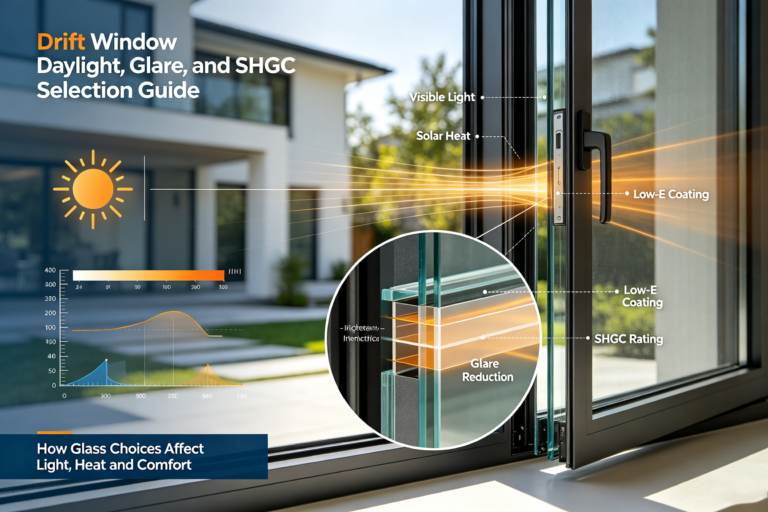
ENERGY STAR states that certified windows are independently tested, certified, and verified by the National Fenestration Rating Council and must meet criteria for the applicable climate zone. The program does not require one frame material. Use the current ENERGY STAR product criteria (accessed August 25, 2026), then match the exact product record, size, glass, and operator to the quote.
Save the NFRC label or Certified Products Directory reference with the order documents. A low U-factor, suitable solar heat gain coefficient, and documented air-leakage value can support a decision, but no single number answers every question. Orientation, shading, room use, condensation conditions, and installation still matter. Forge’s NFRC window-label guide explains the main fields.
2. Check size and reinforcement
A casement sash projects away from the frame, placing demands on hinges, operator arms, locks, and sash corners. Ask for the manufacturer’s allowable width, height, area, glass weight, and aspect-ratio limits for the exact series. Confirm whether reinforcement changes with size, color, glass, or exposure. Do not scale a small display sample into a large opening without written approval.
3. Review color and appearance
Vinyl profiles may be offered in integral colors, laminates, or applied finishes, depending on the product. Request current samples and written cleaning guidance. Ask how the interior and exterior surfaces, corner joints, glazing beads, screens, and hardware will look. A broad color description on a screen is not a substitute for an approved sample.
4. Test operation and service access
Confirm the viewing side used for left- or right-hand labels. Draw the open sash, screen, handle, curtain, counter, guard, and exterior path. Ask how the operator, hinges, locks, seals, and screen are cleaned or replaced. The Forge Windows operator and lock guide shows why closing, locking, alignment, and hardware symptoms should be documented separately.
What Should Be Confirmed Before Installation?
- Record the rough opening, wall construction, exterior finish, sill condition, and drainage path.
- Resolve whether the project uses an insert, sash-only, or full-frame replacement scope.
- Confirm anchorage, flashing, sealant joints, shims, insulation, and interior/exterior trim details.
- Check for lead-safe work requirements before disturbing painted surfaces in a pre-1978 property.
- Verify operation, locking, seal contact, glass condition, drainage, and screen fit at handover.
A window should not be ordered before the field opening and wall condition are understood. Product dimensions are not the same as rough-opening dimensions. Ask the supplier and installer to identify who owns each measurement and what tolerance applies. Photograph concealed conditions during installation and keep the final labels, drawings, care instructions, and warranty documents.
Frequently Asked Questions
Are vinyl casement windows energy efficient?
They can be, but frame material alone does not establish performance. Compare the whole-window NFRC ratings for the exact size, glass, frame, sash, and operator. Use the applicable ENERGY STAR climate-zone criteria when certification is a project goal, and keep installation quality as a separate check.
Do vinyl casement windows need painting?
The Department of Energy notes that vinyl frames do not require painting. Follow the specific manufacturer’s cleaning and finish instructions, however. Do not apply paint, film, solvent, or an aftermarket coating unless the product documentation permits it, because an added finish can affect appearance and service terms.
Are vinyl casement windows better than aluminum casement windows?
Neither material is best for every project. Compare sightlines, structural limits, finish options, maintenance, climate exposure, hardware, glass, ratings, cost, and supplier documentation. Thermally improved aluminum and different vinyl constructions can vary widely, so compare proposed assemblies rather than generic material labels.
Can vinyl casement windows be used for large openings?
Only within the written size, weight, aspect-ratio, reinforcement, hardware, and exposure limits of the selected series. Large projecting sashes increase loads on hinges and operators. Ask for a product-specific size chart and engineering or approval documents required for the project location.
Conclusion
Vinyl casement windows are worth considering when their complete configuration fits the room, opening, climate, appearance, and service needs. Compare labeled performance, size limits, reinforcement, glass, hardware, screens, and installation details before approving an order. Send Forge Windows a marked opening schedule and project requirements to discuss suitable documented options without relying on material-name assumptions.