 2026-08-28
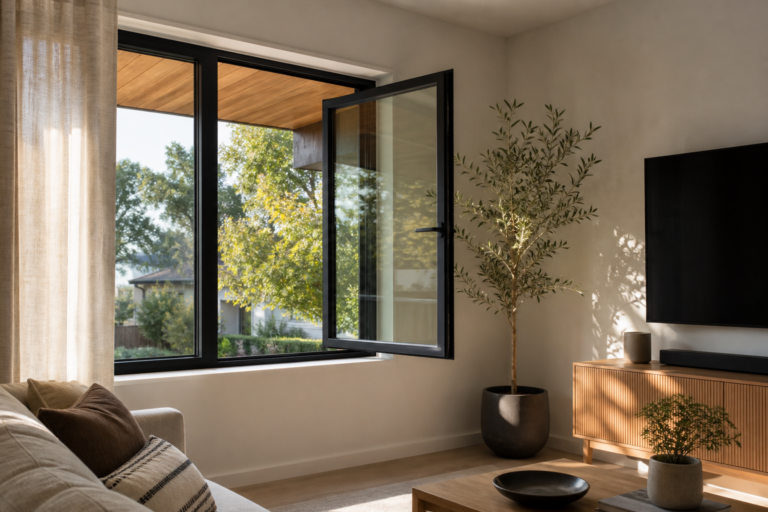
Direct answer: What are casement windows? They are windows with side-hinged sashes that swing open, usually with a crank or handle. Their value is not only the definition: sash direction, room placement, screens, reach, shading, and a second airflow opening determine how well they support daily ventilation.
- Casement describes side-hinged operation, not one frame material or glass package.
- Use them where the open sash and handle remain clear and reachable.
- Plan an inlet and outlet when natural ventilation is the goal.
- Match whole-window ratings to climate, orientation, and exact configuration.
- Verify safety, screens, cleaning, and installation independently.
What Are Casement Windows in Practical Terms?
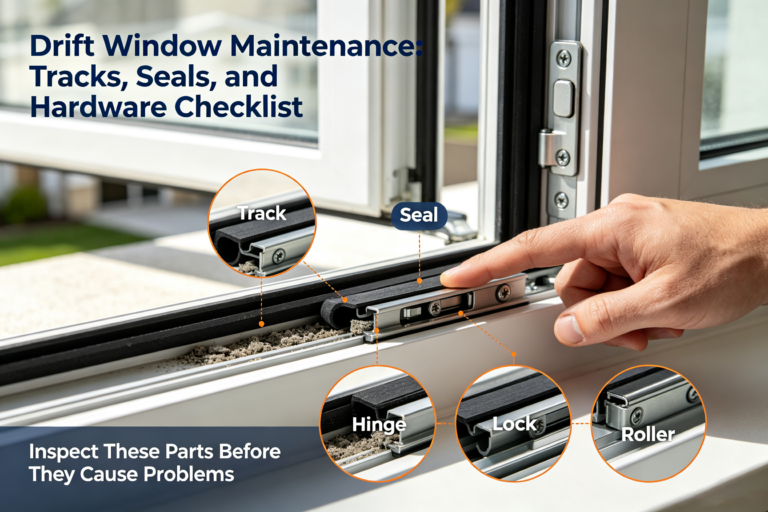
A casement sash rotates around hinges on a vertical jamb. When closed, the lock pulls the sash toward the frame and weather seals. The U.S. Department of Energy notes that casements generally have lower air leakage than sliding types because the sash presses against the frame, but actual results vary with product design, seals, use, size, and installation. See the agency’s window types and technologies guidance.
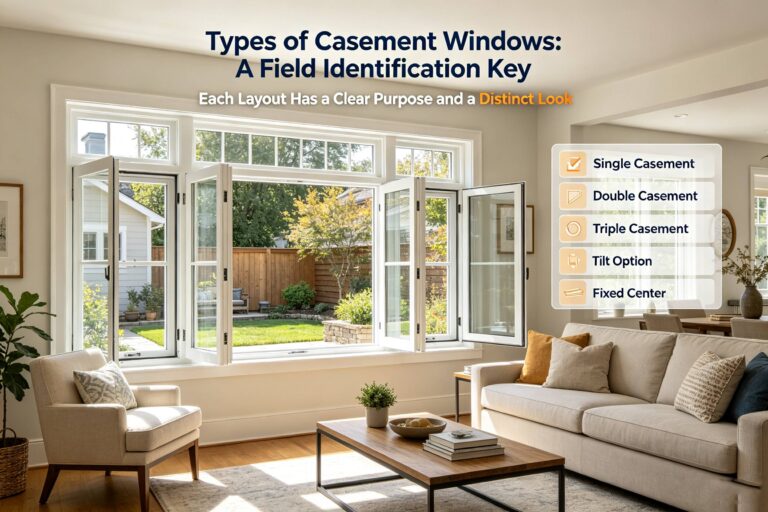
Casements may be single, paired with a fixed mullion, paired without a fixed center member in some French configurations, or combined with fixed glass. They may open inward or outward, use a crank or direct handle, and place an insect screen on a product-specific side. The word does not tell you frame material, glass layers, performance rating, opening limit, or emergency-escape status.
That distinction prevents a common buying error: treating every side-hinged window as interchangeable. A narrow single sash, a wide paired unit, and a casement beside fixed glass can place different loads on hinges and operators, create different clear openings, and use different screens. Each layout therefore needs its own drawing, product record, and room-clearance review.
This guide is for homeowners and project teams deciding where casements fit in a room. It does not replace product drawings, structural design, local code review, or manufacturer installation instructions. For sash, frame, jamb, and operator terminology, use Forge Windows’ casement parts and operation explainer.
Where Do Casement Windows Work Well?
The answer depends on reach, clearance, airflow, cleaning, and view. A kitchen window above a counter may benefit from a crank that is reachable without leaning too far, but a faucet or deep sill can still block the handle. A bedroom may need separate review for emergency escape and fall risk. A living room may favor a large clear view, while a bathroom may require privacy glass and moisture-aware ventilation planning.
| Room or location | Potential reason to use a casement | Check before approval |
|---|---|---|
| Kitchen | Reachable crank and directed breeze | Faucet, counter depth, backsplash, shade, screen removal |
| Bedroom | Controllable ventilation and clear view | Egress, fall protection, furniture, cleaning access |
| Bathroom | Short-duration purge ventilation | Privacy, condensation, corrosion exposure, exhaust fan strategy |
| Living room | One large operable lite beside fixed glass | Exterior projection, curtain, furniture, solar gain |
| Stair or high wall | High-level outlet for warm air | Safe operator reach, remote hardware, service access |
Do not assume that every opening should operate. Fixed glazing may be preferable where no ventilation or emergency opening is needed and access is difficult. Conversely, a fixed-only room may not meet the owner’s ventilation goals. The design should allocate operable and fixed areas from use, not visual symmetry alone.
How Casement Windows Support Ventilation
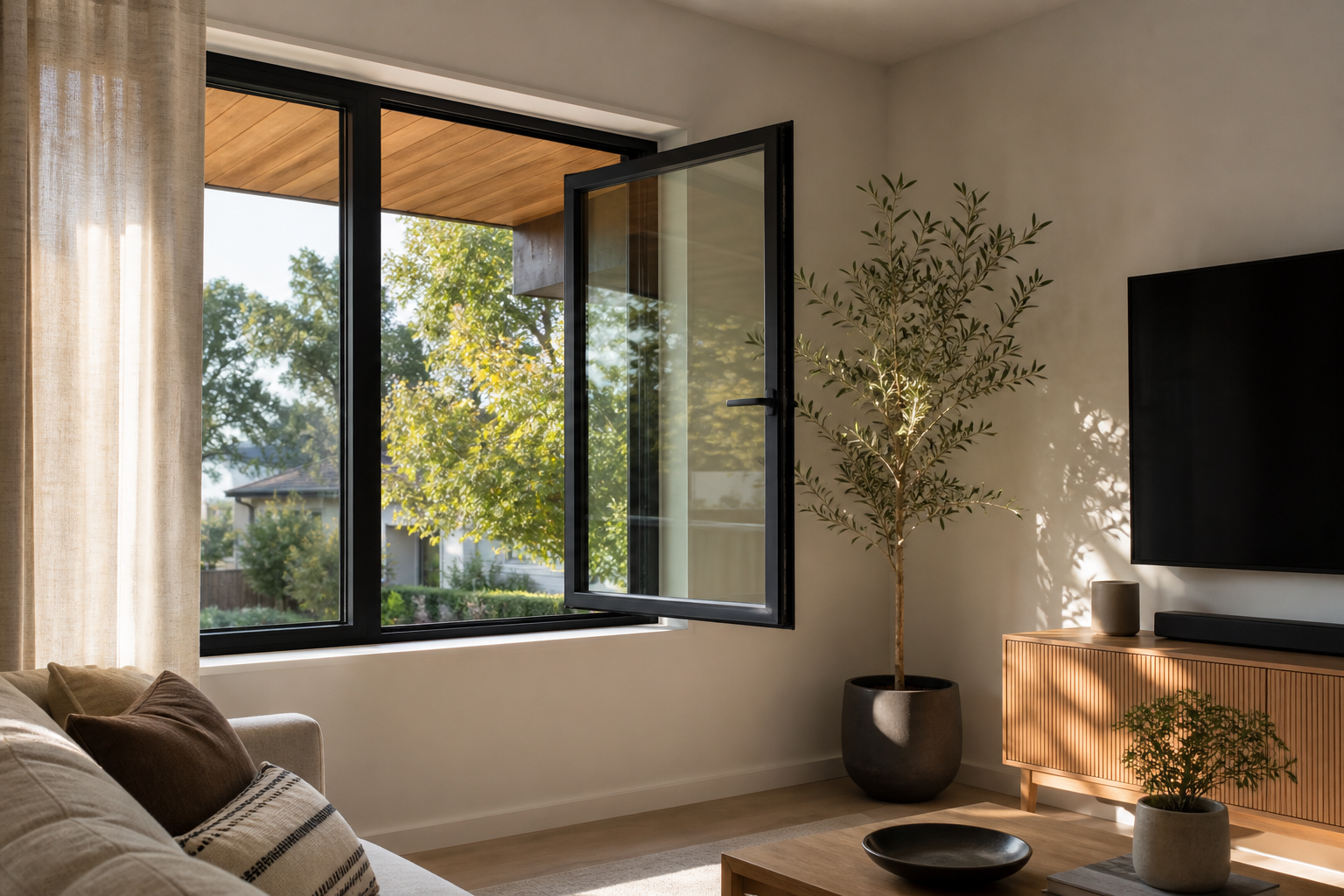
Natural ventilation needs a pressure difference and a path. Air can enter one opening and leave another on the opposite wall, an adjacent wall, or at a different height. The U.S. Department of Energy’s Building Science Education program explains that cross-ventilation uses prevailing breezes and that stack effect can move air from lower openings toward higher ones. Review its natural ventilation overview before treating any sash as a complete cooling plan.
The projecting sash can sometimes act like a small fin that catches or deflects wind. That effect changes with hinge side, opening angle, facade pressure, insect screen, nearby walls, landscaping, and other openings. Avoid promising an airflow rate without a project-specific analysis. Natural ventilation should also be limited when outdoor air quality, temperature, humidity, noise, or security conditions make open windows unsuitable.
Plan the window in at least three states: closed and locked; partly open for ordinary ventilation; and at the maximum permitted opening. Show the sash on plan and elevation. Coordinate guards, restrictors, window opening control devices, screens, shades, roof edges, and exterior paths without defeating required safety features.
Forge Windows’ room-by-room casement ventilation guide provides a handoff checklist for these relationships. Use it with a mechanical ventilation plan rather than assuming open windows will provide dependable ventilation in all seasons.
Five Buying Checks Beyond the Definition
- Configuration: Record single, paired, French, or fixed-plus-operable layout, along with hinge and lock sides.
- Whole-window ratings: Match the National Fenestration Rating Council record to the exact series, size, glass, spacer, frame, and operator.
- Climate and orientation: Select U-factor and solar heat gain coefficient for the project location and shading, not a national slogan.
- Daily use: Test handle reach, screen removal, shade travel, cleaning access, and the exterior swing zone.
- Installation: Coordinate opening preparation, sill support, flashing, attachment, drainage, perimeter seals, and final adjustment.
The National Fenestration Rating Council explains standardized ratings that help compare products. ENERGY STAR’s current residential window guidance organizes qualifying performance by climate zone and advises buyers to retain both ENERGY STAR and NFRC labels. Neither source says that all casements perform alike.
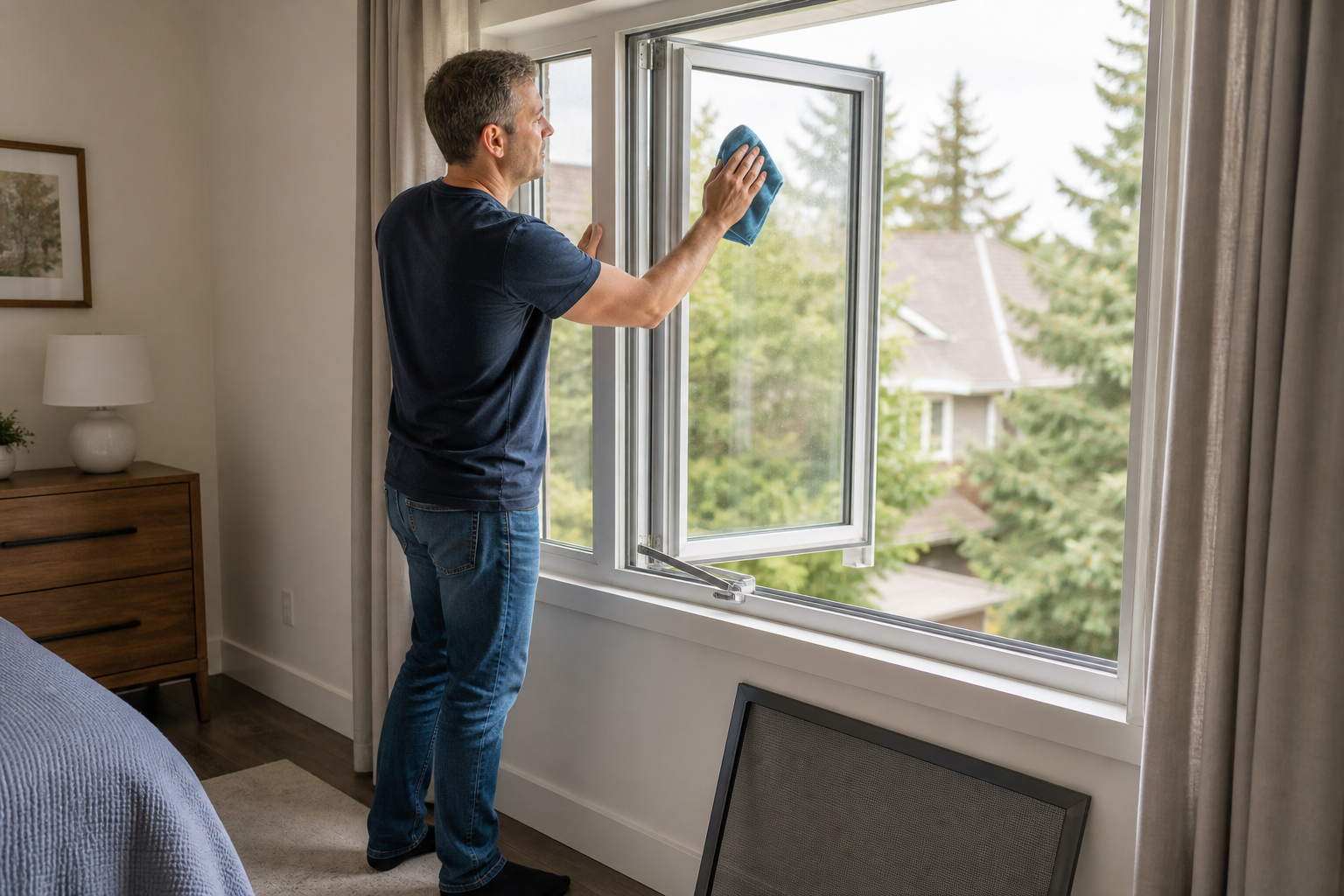
Ask the supplier for a dimensioned operating drawing, glass description, finish, screen, hardware, certification record when available, and current installation instructions. For an efficient request, attach an opening schedule with room name, rough opening, wall depth, inside and outside photos, hinge preference, and performance requirements.
Frequently Asked Questions
Do casement windows always open outward?
No. Many U.S. residential casements open outward, but inward-opening configurations also exist. Confirm the exact product, screen position, hinge side, handle, and open-sash clearances. Do not infer operation from a catalog photo or from the word “casement” alone.
Are casement windows more airtight than sliders?
Casements generally benefit from compression at the closed sash, and the U.S. Department of Energy says they generally have lower air leakage than sliding types. Actual performance still depends on the complete tested unit, seals, size, operation, and installation.
Can a casement window go above a kitchen sink?
Yes, when the operator is reachable and clears the faucet, backsplash, counter, screen, and shade. Measure reach from the intended user position. A deep counter or high sill can make even a low-force crank inconvenient.
Are casement window screens inside or outside?
Many outward-opening casements place the insect screen on the room side, while other configurations differ. Confirm screen location, mesh, frame, latches, removal direction, and compatibility with the handle and interior shade for the exact product.
Conclusion: What Are Casement Windows Best Used For?
What are casement windows? They are side-hinged operable windows whose real usefulness comes from coordinated room placement, sash direction, reach, airflow, shading, screens, and verified performance. Choose them by drawing the opening in use and matching the exact product documentation, then ask Forge Windows for a configuration-specific review.