 2026-09-05
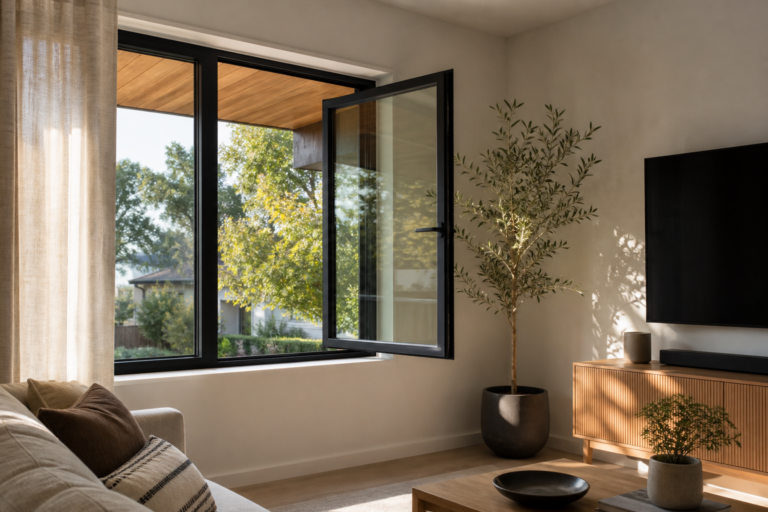
Direct answer: A casement window is a window whose sash is attached to the frame with side hinges and opens by rotating outward or, in some specialty systems, inward. A crank or other operator moves the sash, while locks pull it against the weather seal. The definition describes the motion; material, glass, size, and performance still require a project-specific selection.
The Plain-Language Casement Window Definition
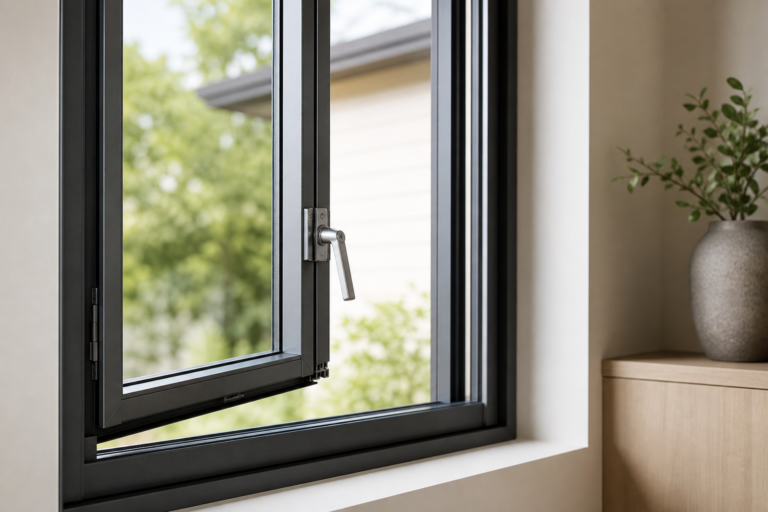
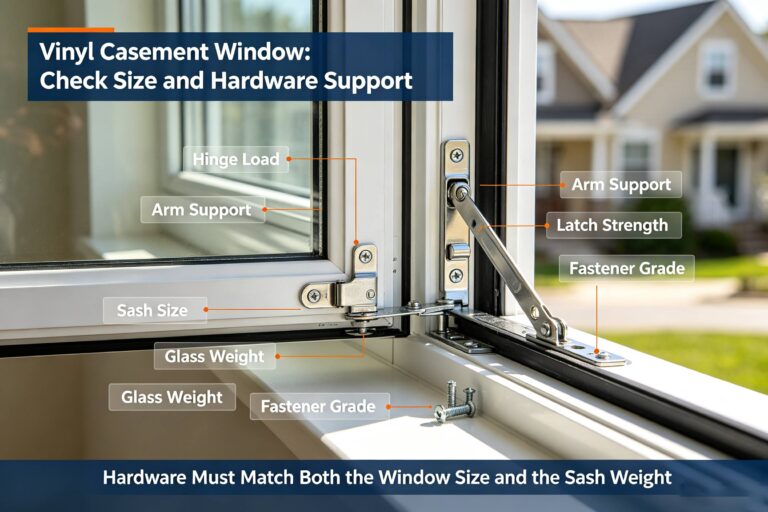
In ordinary use, a casement is a hinged window. The sash rotates about a vertical axis instead of sliding vertically or horizontally in a track. The hinges may be visible at the side or concealed in a hinge shoe and track. An operator—often a folding handle and crank—pushes the sash open and draws it closed. A lock or multipoint mechanism then compresses the seals around the perimeter.
The term can describe one opening sash, a pair of French casements, or a group that combines fixed and operating lites. Forge Windows’ architectural-drawing guide shows why a drawing should label fixed, left-hand, and right-hand units instead of relying on the word casement alone. A picture window beside a casement is an assembly, not one giant operable sash.
| Term | Meaning | Why it matters |
|---|---|---|
| Frame | Stationary perimeter secured to the opening | Sets rough-opening, support, drainage and trim interfaces |
| Sash | Moving glazed frame | Determines clear opening, weight, hinge load and swing |
| Hinge | Pivot connection between sash and frame | Establishes handing, alignment and adjustment limits |
| Operator | Mechanism that moves or holds the sash | Controls reach, opening force and hardware clearance |
| Keeper and lock | Parts that engage and pull the sash closed | Support seal contact and security when correctly matched |
| Screen | Insect barrier fitted to the opening side | Can affect egress, cleaning and ventilation area |

Name the Parts Without Mixing Them
Start at the outside boundary. The frame includes head, sill, jambs, and any mullion or transom that divides an assembly. The sash carries the insulated glass unit or single glazing, glazing beads, weather seals, and hardware. The hinge side is the side where the sash pivots; the lock side receives the keeper. Do not call the entire window the sash, and do not call an operator a hinge.
At the room side, identify handle location and the area needed to turn or fold it. At the exterior, identify the sash edge, screen plane, and any opening limiter. In a multi-lite assembly, label each lite and note which are fixed. Forge Windows’ sash, frame, jamb, and head terminology guide can be used as a shared vocabulary during a survey or shop-drawing review.
- Mark the opening and viewing convention.
- Identify fixed and operable lites.
- Record hinge side, handle side, and opening direction.
- List operator, lock, keeper, screen, limiter, and any specialty hardware.
- Connect each term to a drawing, photo, or manufacturer detail.
Understand Motion, Handing, and Clear Opening
Handing is not universal unless the team states how it is viewed. “Left-hand” may mean hinge left when viewed from inside, outside, or the room elevation. Put the convention in the schedule and draw the sash arc. Check curtains, furniture, counters, guards, neighboring sashes, and exterior paths. The clear opening is the usable space after the sash, stops, hardware, screen, and frame are accounted for; it is not the same as frame width.
For emergency escape and rescue openings, confirm the adopted local code and installed condition. The International Residential Code resource is a starting point for code language, but the authority having jurisdiction and project professional control the final interpretation. A fixed lite cannot satisfy an operable-opening requirement simply because it is large.
Ventilation is similarly tied to the opening sash. A narrow flanker may provide a useful air path, while a broad fixed lite provides none. Screens and opening-control devices can reduce area or change operation. Record those accessories with the base unit.

Specify a Casement Correctly
A useful specification combines movement with the attributes that make the unit perform. Record nominal or call size, frame size, rough opening basis, material, glazing build-up, safety glazing, thermal values, solar control, air and water criteria, structural design pressure, finish, hardware, screens, and installation interface. The NFRC product-rating resources explain why ratings belong to a specific certified product and option set; do not copy a value from a different sash size.
For energy decisions, consult the ENERGY STAR residential window guidance and applicable climate-zone requirements. For older buildings, disturbance of coatings during replacement may trigger the EPA renovation, repair and painting rules; a definition article cannot determine legal duties for a jobsite.
At the wall, show support, sill drainage, flashing, sealant joints, insulation, interior returns, exterior trim, and finish restoration. A casement definition is the start of a conversation, not an order. The supplier should confirm the selected system, tolerances, and tested limitations.
Compare Casements With Other Window Types
A double-hung sash moves vertically and usually stays within the frame plane. A slider moves horizontally and needs track clearance. An awning is hinged at the top and opens outward from the bottom; a hopper is hinged at the bottom and generally opens inward from the top. A fixed picture lite does not move. These descriptions are useful only when the drawing also records the actual hardware and clearances.
| Type | Primary motion | Planning consequence |
|---|---|---|
| Casement | Side-hinged rotation | Plan swing arc, hinge load, operator reach and exterior conflict |
| Awning | Top-hinged outward rotation | Check head conditions, rain exposure and lower-handle reach |
| Double-hung | Vertical sliding | Check balance, meeting rail and track clearance |
| Slider | Horizontal sliding | Check overlap, track drainage and one-sided ventilation |
| Fixed | No opening motion | Plan view, glass safety, cleaning and daylight only |
Frequently Asked Questions
What is the simplest casement window definition?
A casement window has a sash attached to the frame with side hinges and opened by an operator or handle; the sash rotates instead of sliding.
Is a fixed picture window a casement?
No. A fixed picture lite may share an assembly with casements, but it has no opening sash and supplies daylight or view rather than ventilation.
What is the difference between a sash and a frame?
The frame is stationary and secured to the opening. The sash is the moving glazed portion carried by hinges and controlled by the operator and locks.
Why does handing need a viewing convention?
Left and right can reverse when a unit is viewed from inside, outside, or an elevation. Stating the convention prevents a mirrored order and wrong-side hardware.
Conclusion: Use the Definition to Improve the Brief
Knowing the casement window definition helps a buyer or project team ask better questions: which sash opens, where does it pivot, how is it controlled, what clear opening is available, and what performance evidence belongs to that exact unit? Carry those answers into drawings, schedules, hardware selections, and installation details so a familiar word becomes a verifiable specification.