 2026-09-08
Installation availability must be confirmed for your project location and order. A window supplier may offer supply only, arrange a separate installer, or quote a combined service. Ask who contracts for the work and obtain written responsibilities for measurement, site preparation, fixing, sealing, finishing and final checks.
The important question is not simply whether someone can fit the windows. It is whether the complete opening will be delivered, connected to the building correctly, and handed over with clear service responsibilities. This is especially important when a manufacturer supplies products to another region or country.
Understand the three common arrangements
| Arrangement | What it may mean | What to clarify |
|---|---|---|
| Supply only | The supplier provides the manufactured assemblies | Who checks dimensions, unloads and installs? |
| Installer referral | The supplier introduces a separate contractor | Who signs the installation agreement and handles defects? |
| Supply and installation | One quotation combines products and fitting | Which preparation and finishing tasks remain excluded? |
These labels are not complete scopes. A combined offer may still exclude removal, scaffolding, wall repairs or decoration. A referral does not automatically make the manufacturer responsible for the installer’s work. Ask for the actual arrangement rather than relying on the label.

Assign responsibility at each building interface
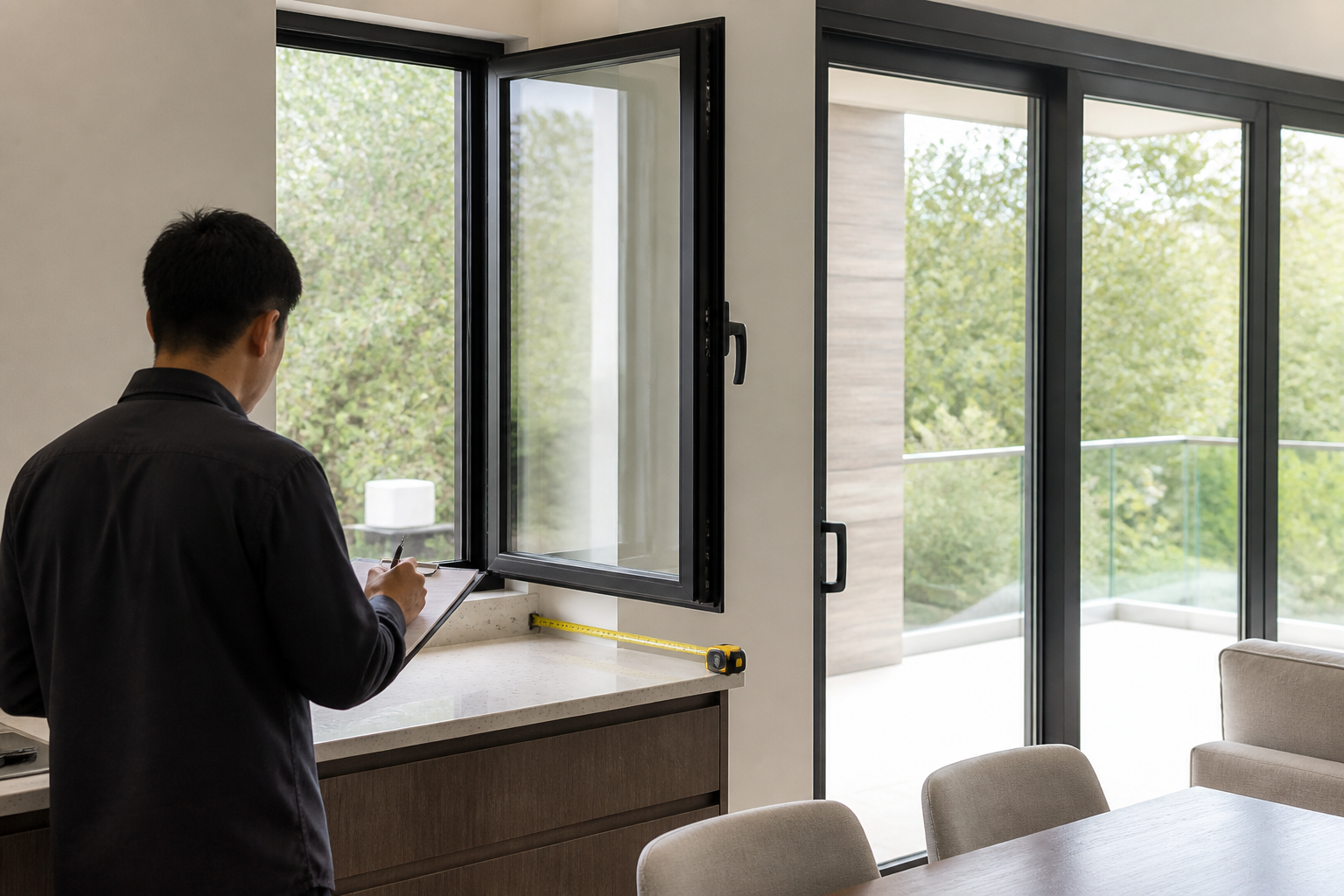
Start before installation day. Someone must verify the final opening, confirm the mounting detail, and coordinate the surrounding construction. If the manufacturer and builder use different dimensions, resolve the discrepancy before the windows are released for production.
At a door threshold, agree who prepares the support, exterior surface levels and drainage connection. At a window perimeter, agree who provides the specified fixing and sealing materials and who finishes the internal and external reveals. Do not assume the person delivering the product owns all these tasks.
Record the responsibilities against opening identifiers. For example, a balcony door may have a different access and waterproofing arrangement from a ground-floor window. A single sentence saying “installation included” does not explain those differences.
Confirm the installation instructions and acceptance checks
Ask the proposed installer to use the product-specific installation instructions and to raise any conflict with site conditions before work starts. A method suitable for one wall or frame system should not be assumed suitable for every opening.
Air sealing matters to the completed result: the Australian government’s window guidance identifies gaps around windows and doors as sources of draughts. The scope should therefore identify perimeter sealing and operational checks, while preserving drainage paths required by the product design.
Agree a handover record covering smooth movement, latching, visible damage, seals, drainage openings and any unresolved finishing work. If formal field testing is specified, identify the method and responsible party in advance. Opening and closing a sash is useful, but it is not a substitute for a specified performance test.
Get the commercial scope in writing
The U.S. Federal Trade Commission advises consumers to obtain written work descriptions and completion terms. Treat that as a practical purchasing principle; licensing, consumer rights and contract requirements must be checked in the jurisdiction where your project is located.
Ask the quotation to identify who you contact for damaged glass, a sticking panel, failed perimeter sealing or an unfinished reveal. The answer may involve more than one organisation. Keep their contact details and the relevant order reference with the handover documents.
Compare installation offers against the same list of tasks. Our guide to choosing an aluminium window installer covers contractor selection; this checklist focuses on the responsibilities that should appear in the accepted scope.
Questions to resolve before accepting the order
- Is installation available at the actual project address?
- Who is the installation contracting party?
- Who takes responsibility for manufacturing measurements?
- Are removal, access equipment, unloading and disposal included?
- Who completes waterproofing interfaces and decorative repairs?
- What installation records and care instructions will be provided?
- Who handles each type of defect after handover?
If an item is outside the supplier’s scope, allocate it to the builder or a named contractor. An explicit exclusion can be managed; an unassigned task often becomes a problem only when the opening is exposed or the delivery arrives.
Frequently asked questions
Does Forge Windows install in my area?
Ask the team to confirm current installation availability for your project address. Do not assume that product supply or overseas delivery includes an installation crew, local site preparation or building repairs.
Can my own builder install supplied windows?
Discuss this with the supplier and your builder before ordering. Confirm competence for the system, access to installation instructions, responsibility for final measurements and any conditions attached to product warranties.
Who should I call if the finished window leaks?
Use the agreed defect-reporting route and record when and where water appears. The cause may involve the product, installation or surrounding construction, so avoid assigning blame before the relevant parties inspect it.
Confirm your installation arrangement
Send the project address, building type and proposed opening list through Forge Windows. Request a written supply-and-installation scope or a clear supply-only offer so that every task has an owner before work begins.