2026-09-16
A security gate for a sliding patio door can add a physical barrier, but it must remain usable as part of the doorway. It should not trap occupants, block an intended exit, overload the frame or make daily opening so awkward that people leave it unsecured. Treat the gate, patio door, threshold and surrounding wall as one coordinated installation.
Document how the opening is used, who operates it and whether it forms an escape route. Photograph the head, jambs, sill, tracks and nearby furniture. This record lets a fabricator design around real circulation.

Define the separate barrier
Describe the function in plain language: delay casual entry, control access while glass panels are open, or provide a lockable barrier while occupied. Request plan, elevation and section drawings showing gate, handles, locks and fixings. The CPSC architectural-glazing guidance shows why safety performance is separate from other product claims; it does not certify a gate.
Protect the intended exit
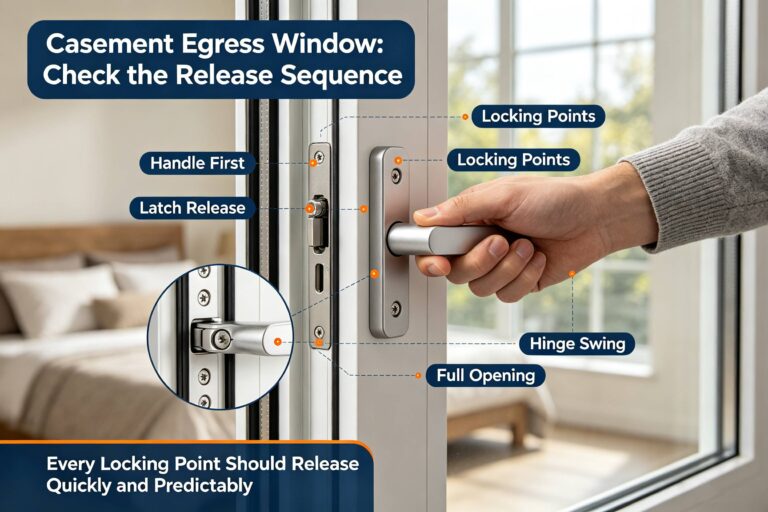
Tell the designer if this is an escape route. A gate needing a key, hidden release or two simultaneous actions may be unsuitable. Ask the local building official or responsible authority to review the arrangement before fabrication; requirements depend on the building and jurisdiction. Demonstrate inside release with both door and gate closed, and ensure every likely user can operate it.
Check clear passage after handles, stops and seals are fitted. Keep the release reachable and visible. Record normal locking and urgent-release steps in the handover.
Coordinate daily operation
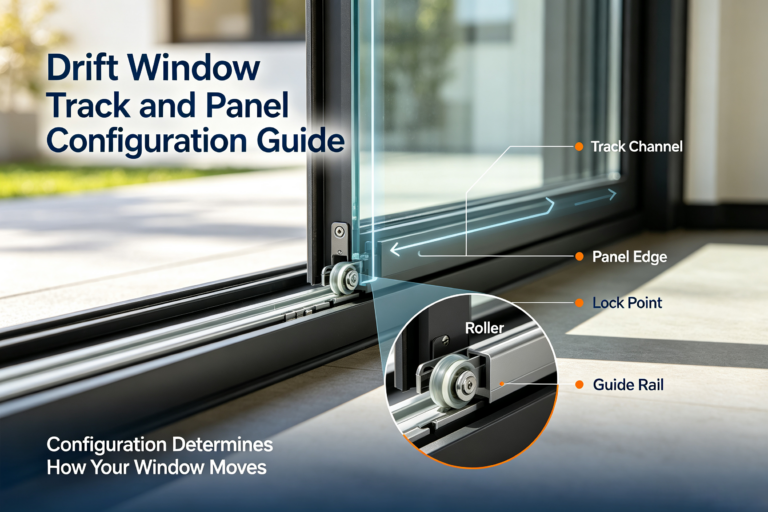
Cycle the sliding panels and gate together. Confirm which leaf moves first, where the gate parks, and whether hinges or tracks compete with rollers. Check handle clearance, latch alignment and both ends of travel. Mark swing and stack zones on the floor rather than relying on a render.
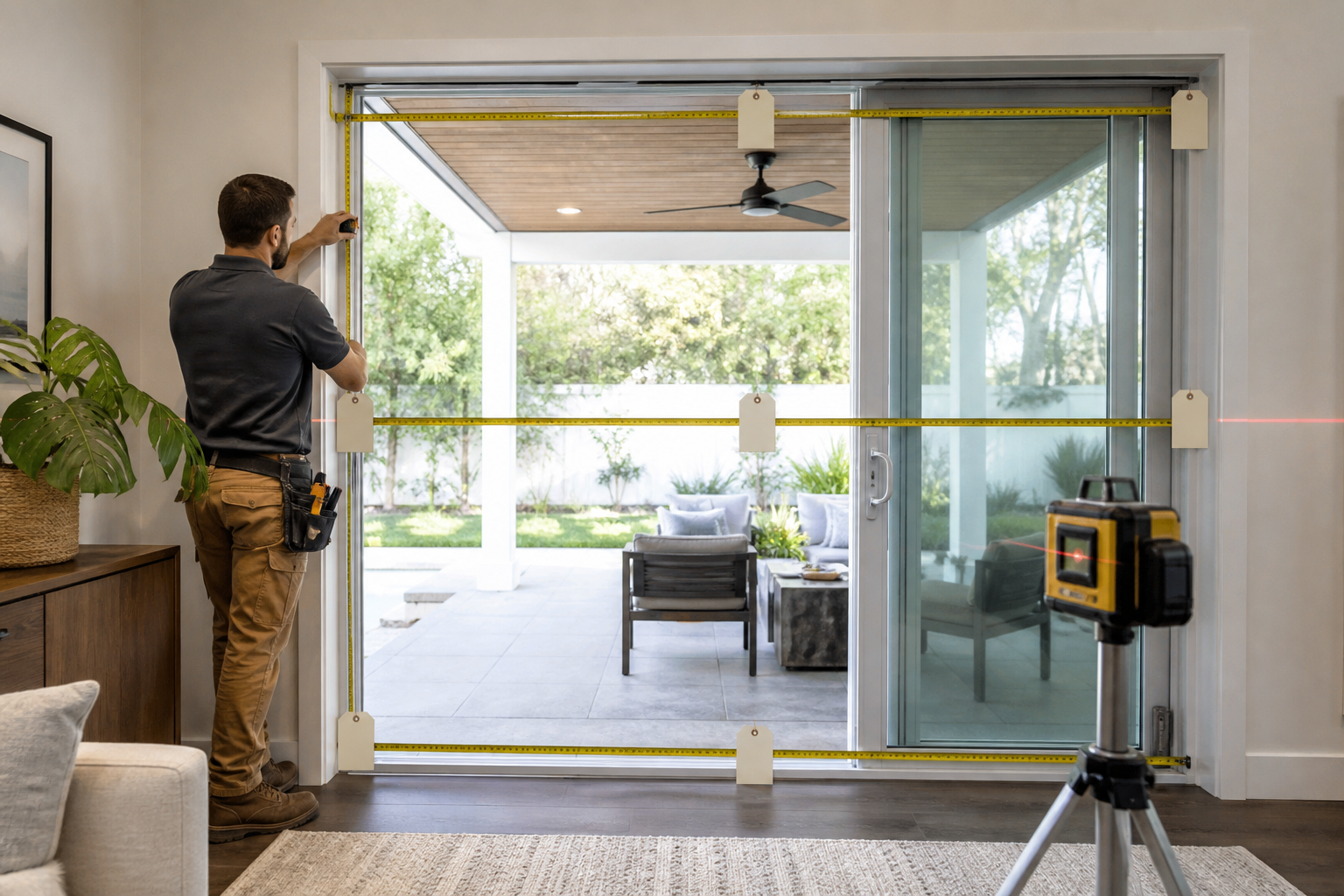
Ask for tolerances and substrate requirements, then clarify fasteners, packers, trims and threshold protection. The U.S. Department of Energy guidance reinforces correct installation and maintenance; follow the specific manufacturer instructions.
Plan maintenance and handover
Agree inspection intervals for tracks, hinges, locks and seals. Keep grit out, lubricate only as permitted, and replace damaged seals. Ask whether servicing is possible without removing patio panels. Keep product identification, spare-part contacts and warranty exclusions.
Practical checklist
| Check | Record |
|---|---|
| Purpose | Barrier function, users and sequence |
| Exit | Inside release, passage and authority review |
| Fit | Substrate, tolerances and clearances |
| Scope | Gate, locks, trims, installation and testing |
| Care | Inspection routine, parts and service |
Do not treat a gate as a substitute for a tested door assembly. Review glazing safety, lock strength, anchorage and user access as separate questions. If children, older adults or guests use the opening, observe them operating the release rather than assuming familiarity. Check visibility from the approach so users can see whether the gate is locked before pulling the patio handle. Where a screen, curtain or furniture is added later, repeat the clearance check. Seasonal movement, settlement and corrosion can change alignment, so schedule a documented inspection after the first period of heavy use and after any building work near the opening.
Frequently asked questions
Can a security gate block a patio-door escape route?
It can if release or passage is unsuitable. Identify the route and obtain local review before installation.
Will a gate interfere with sliding-door operation?
It may. Approve drawings and test travel, clearances, parking and latch sequence together.
What maintenance does a separate gate need?
Inspect hinges or tracks, locks, fasteners and seals; remove grit; and follow adjustment and lubrication instructions.
During handover, record the release test, key control, cleaning method and adjustment limits. Give occupants a simple operating sequence and identify who may authorize duplicate keys or changes. A clear record prevents well-intended modifications from compromising the barrier or exit.
Start a measured discussion with Forge Windows using this checklist.