2026-09-15
Retractable screens for bifold doors work best when the screen is designed with the door, rather than added after the fact. The cassette, running tracks, handle positions and folded panel stack all need a clean path. Start by recording the finished opening and how the bifold leaves move, then ask the screen supplier to overlay its system on the door drawing.
A screen can look slim in a brochure and still clash with a projecting handle, an uneven sill or the parked leaves. A reliable quote identifies the screen model, cassette side, track locations, mesh type and the clear opening that remains when the screen is closed.
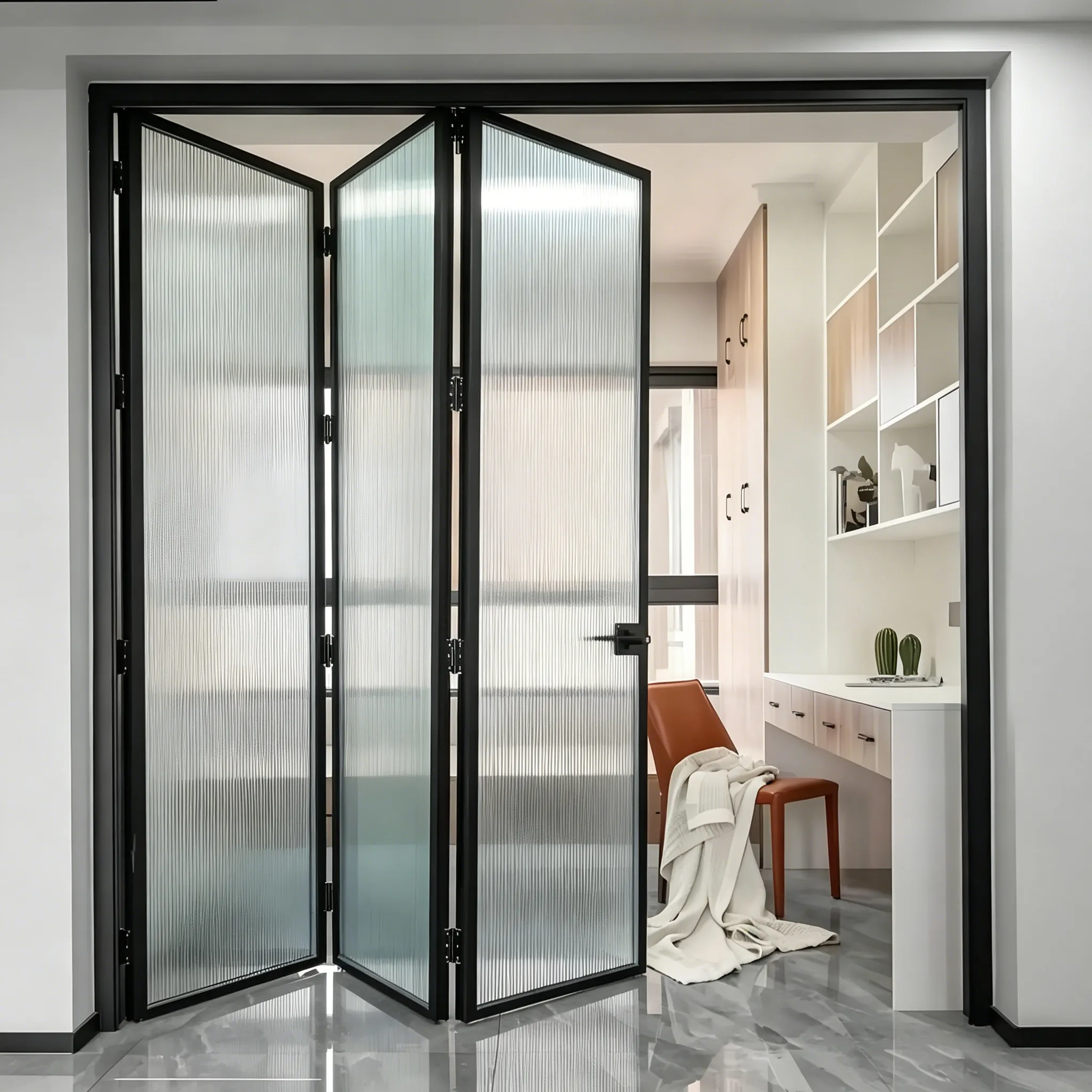
Choose the screen layout before measuring
Decide whether the screen will retract to one side, meet at the centre or use a pair of opposing panels. The choice follows the traffic pattern and the door’s folding direction. A single screen cassette normally sits on a jamb and the mesh pulls across to a magnetic or latching side. A centre-opening arrangement uses two cassettes and needs space for both housings.
Review the manufacturer’s configuration drawings. Phantom Screens’ large-opening screen range shows that retractable systems are configured for different opening types and operating widths. Treat published maximums as a starting point; the supplier still needs to confirm your height, width and wind exposure.
Protect cassette and handle clearance
Measure the flat mounting surface where the cassette will be fixed. Include trim, weather seals and any door stop that reduces that surface. The cassette must sit plumb, with enough room for its cover and service access. Do not bury it behind decorative trim unless the supplier approves that detail.
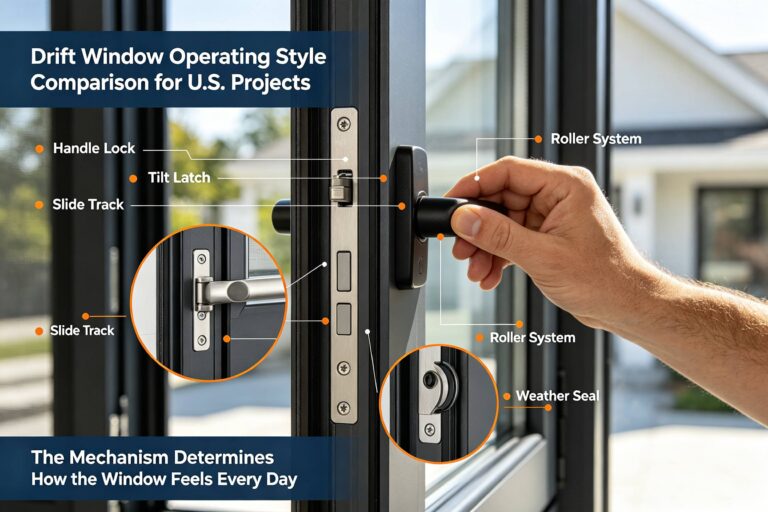
Next, map every handle and finger pull through the folding cycle. With the doors closed, measure the projection from the face of the panel. Open the leaves slowly and note the widest sweep. Leave clearance so the screen handle can be grasped without catching the door handle; a few millimetres on a static drawing can disappear when tolerances accumulate.
Check the stack side as well. Folded bifold panels occupy a real parking zone, and the screen cassette or latch should not force the last leaf to stop short. Centor explains its integrated insect-screen approach for folding doors in its integrated door-screen information, a useful reference for coordinating screen and door interfaces.
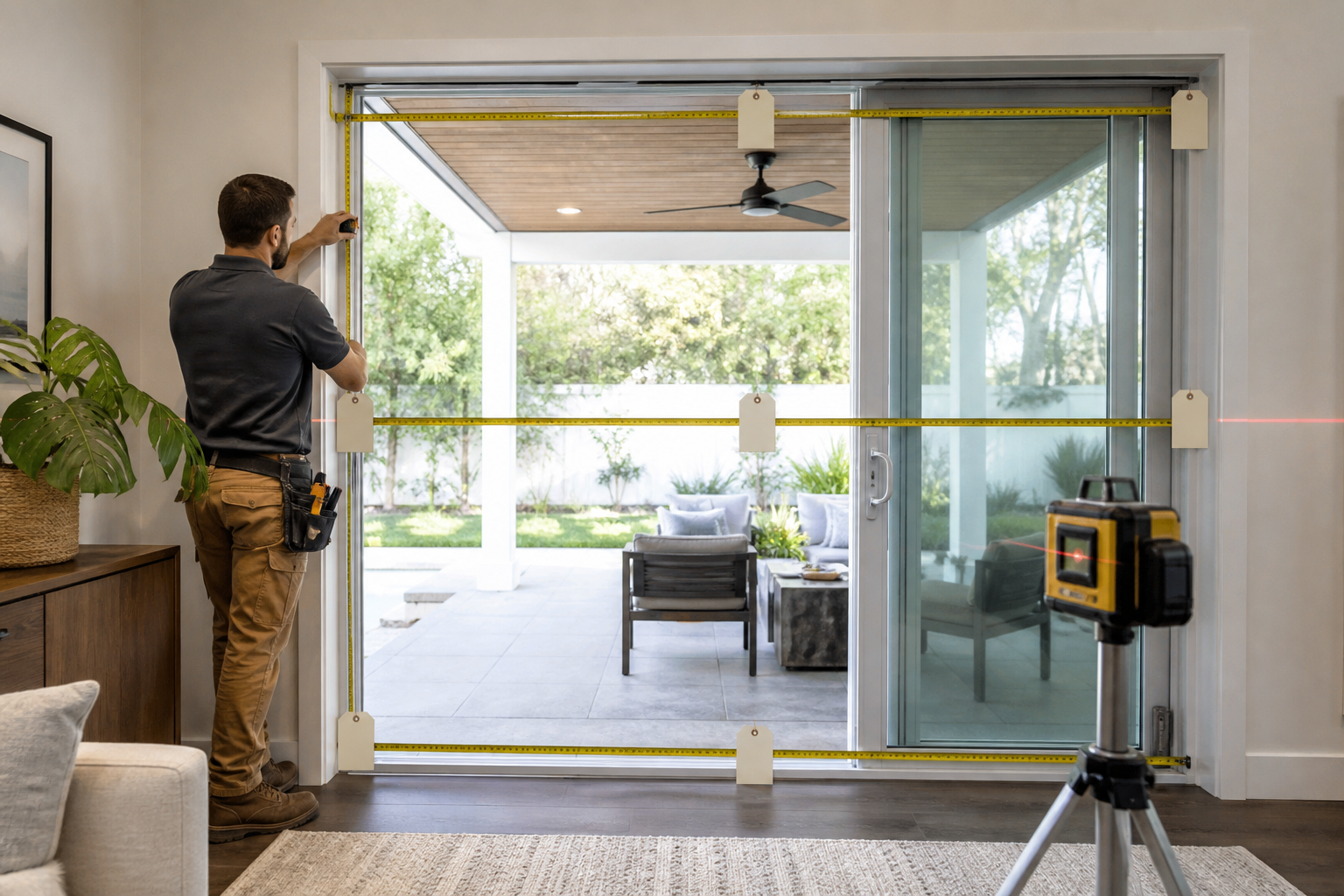
Measure the finished opening in three places
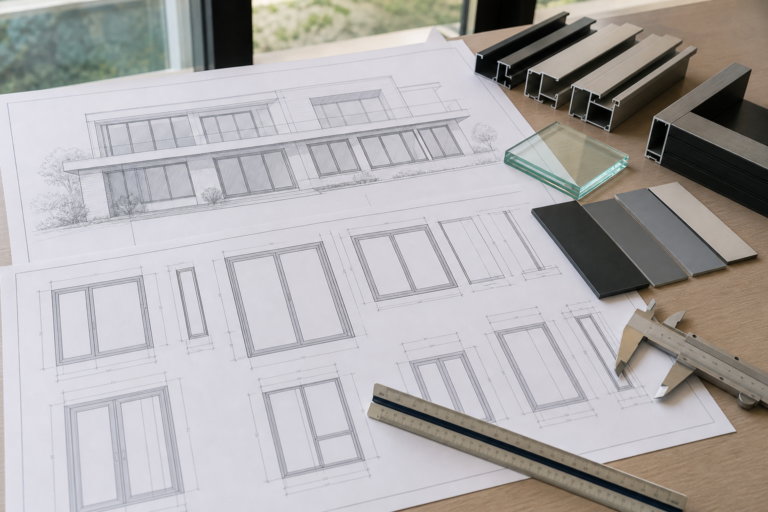
Measure width at the head, middle and sill, and height at the left, centre and right. Record the smallest width and height, plus each variation. Measure from the actual finished surfaces where tracks will sit, not from a rough structural opening. Note plumb, level and any step at the sill.
Photograph each jamb, the head, sill and folded stack. Mark the door handing, traffic leaf and the side where panels park. Tell the supplier whether flooring, trim or painting is still scheduled; those finishes can change the final dimensions. Never deduct a generic allowance yourself. Screen manufacturers use model-specific deductions for cassette and track sizes.
Use this site checklist
| Check | Record for the quote |
|---|---|
| Opening | Three width and three height readings; smallest finished size |
| Door movement | Folding direction, traffic leaf and parked-panel side |
| Cassette | Mounting surface width, trim depth and service access |
| Handles | Projection and sweep through the full opening cycle |
| Sill | Track height, level, drainage and trip exposure |
| Operation | Latch force, mesh tension and emergency release expectations |
Test the installed screen
Before handover, cycle the screen while opening and closing every bifold leaf. Confirm that the mesh tracks straight, the bottom guide stays seated and the latch engages without slamming. Check the screen from both sides for wrinkles or light gaps caused by a twisted frame. Ask for cleaning instructions, mesh replacement details and the adjustment procedure.
Keep the screen retracted during severe weather when the product instructions require it. A screen is an insect barrier, not a substitute for a closed, weather-rated door. Make sure children and guests know where the mesh is before walking through the opening.
Key takeaways
- Choose the cassette and opening layout before taking final sizes.
- Trace handle projection and folded-panel movement, not just the closed elevation.
- Use the smallest finished opening measurements and document sill conditions.
- Require a full-cycle operation check at handover.
Frequently asked questions
Can I add a retractable screen to existing bifold doors?
Often, yes, if a jamb and sill can accept the cassette and tracks. A site survey must confirm handle, trim, stack and threshold clearances.
Should a screen cassette go on the handle side?
Not automatically. Place it where the mesh parks without blocking the traffic leaf, handles or folded stack; handing and supplier drawings decide the practical side.
How accurately do I need to measure a bifold opening?
Measure finished width and height in three locations, record the smallest readings and report variations. The manufacturer should apply the model’s deductions.
For a project-specific layout, share those measurements and photographs with Forge Windows before ordering.