 2026-08-19
Direct answer: A Casement Window should be selected by comparing verified whole-product ratings, the home’s climate and orientation, the complete frame-and-glass configuration, operating needs, and the planned installation. A frame material or glass label alone cannot establish energy performance. For energy efficient casement windows, ask for documentation tied to the exact size and options being quoted, then confirm that the installation details preserve drainage, alignment, and air sealing.
Key Takeaways
- Compare whole-window U-factor, solar heat gain coefficient, visible transmittance, and air-leakage information when available.
- Match glass and frame choices to climate, orientation, shading, room use, and comfort goals.
- For aluminum casement windows, ask how the quoted frame manages heat flow and whether the documented rating covers that exact configuration.
- Review operating hardware, screens, clearances, drainage, and installation with energy performance.
- Use certified product records rather than assuming that a product name proves a rating.
Contents
- What an energy-focused selection means
- How to compare ratings
- Questions for aluminum frames
- How to match the window to the room
- A practical request checklist
- Frequently asked questions
What Energy Efficient Casement Windows Actually Means
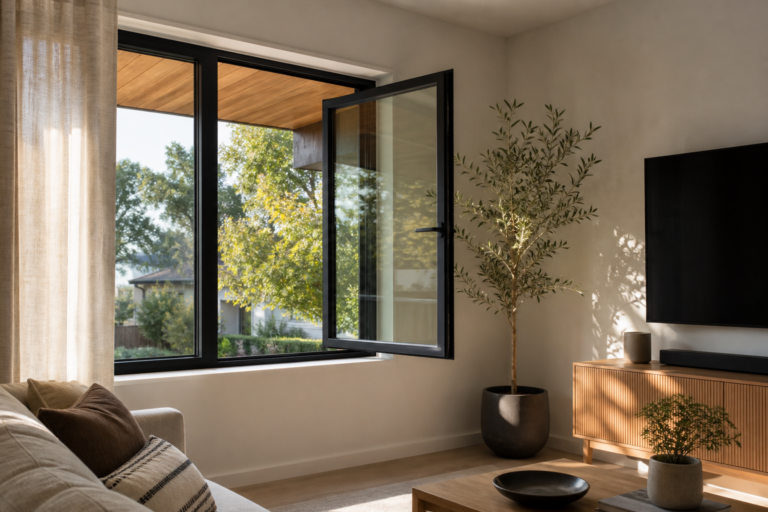
A side-hinged sash can close against weather seals, but operating style is only one part of the result. Glass construction, spacer details, frame design, sash alignment, locks, hardware, size, and installation all affect how the completed opening performs. The useful question is not whether casement windows are always efficient; it is whether the exact proposed unit has suitable, verifiable ratings for the project.
The ENERGY STAR residential windows, doors, and skylights guide explains that qualified products are evaluated against program requirements. Its current key product criteria organize window requirements by climate zone. Both official pages were accessed August 17, 2026; project teams should recheck them when specifications are finalized.
Compare Casement Window Ratings Before Comparing Materials
Start with the rating for the complete window, not a center-of-glass value or a general statement about a frame material. The National Fenestration Rating Council Certified Products Directory gives buyers a place to look for certified fenestration records. The directory was accessed August 17, 2026, and the exact manufacturer, series, operator type, glass, spacer, and size details should be matched to the submitted unit.
| Item to review | What it helps describe | What to request |
|---|---|---|
| U-factor | Heat transfer through the complete assembly | A whole-product value for the quoted configuration |
| Solar heat gain coefficient | Solar heat admitted through the product | A value suited to climate, orientation, and shading |
| Visible transmittance | Visible light passing through the assembly | A value reviewed with daylight and glare goals |
| Air leakage | Air movement under the stated test conditions | The applicable rating and its test or certification context |
| Product record | Identity of the tested or certified configuration | Series, operator type, glass, spacer, and option match |
Forge Windows provides a guide to reading an NFRC window label that can help organize a submittal review. Use it as a starting checklist, then verify the current label or directory record for the exact unit. A rating from a different size, glass package, or operating type should not be silently transferred to the proposed window.
Questions to Ask About Aluminum Casement Windows
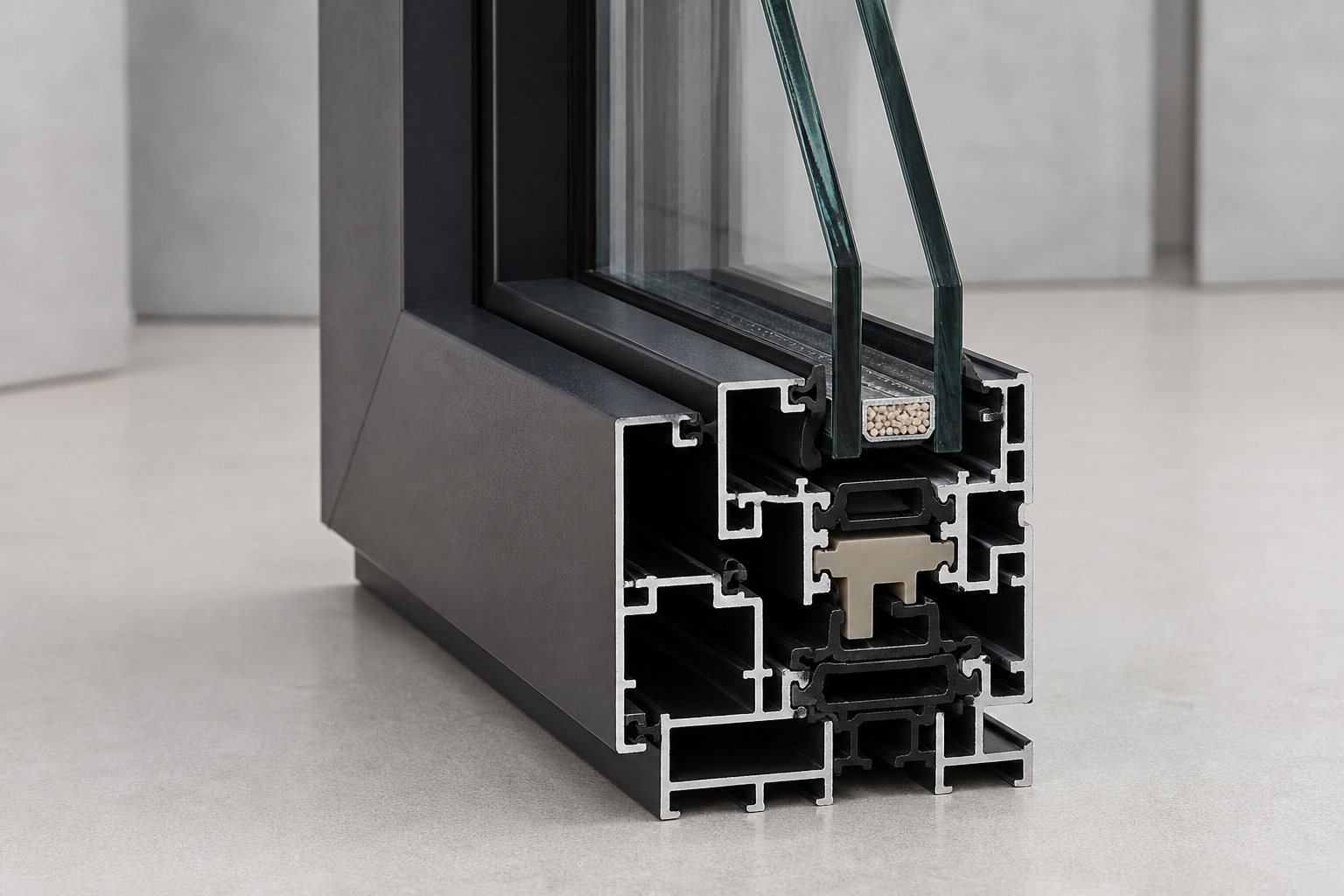
Aluminum offers slim-profile design possibilities and structural properties, but metal also conducts heat. Ask how the proposed frame interrupts heat flow and how that construction appears in the certified whole-window record. Forge Windows’ overview of thermal breaks in windows explains the design concept without replacing configuration-specific documentation.
Do not treat the words “thermal break,” “insulated,” or “system window” as a performance value. Request a drawing that identifies the frame, sash, insulating elements, glazing, gaskets, drainage, and hardware. Then compare that drawing with the product page, quotation, schedule, and rating record so one description is used throughout the project.
The Forge Windows casement window product category and its 65 thermal-break casement window listing can help buyers identify questions for a product discussion. Treat published dimensions, options, and images as page-specific information, and request confirmation for the exact order rather than assuming every choice is available together.
Match the Window to Climate, Orientation, and Room Use
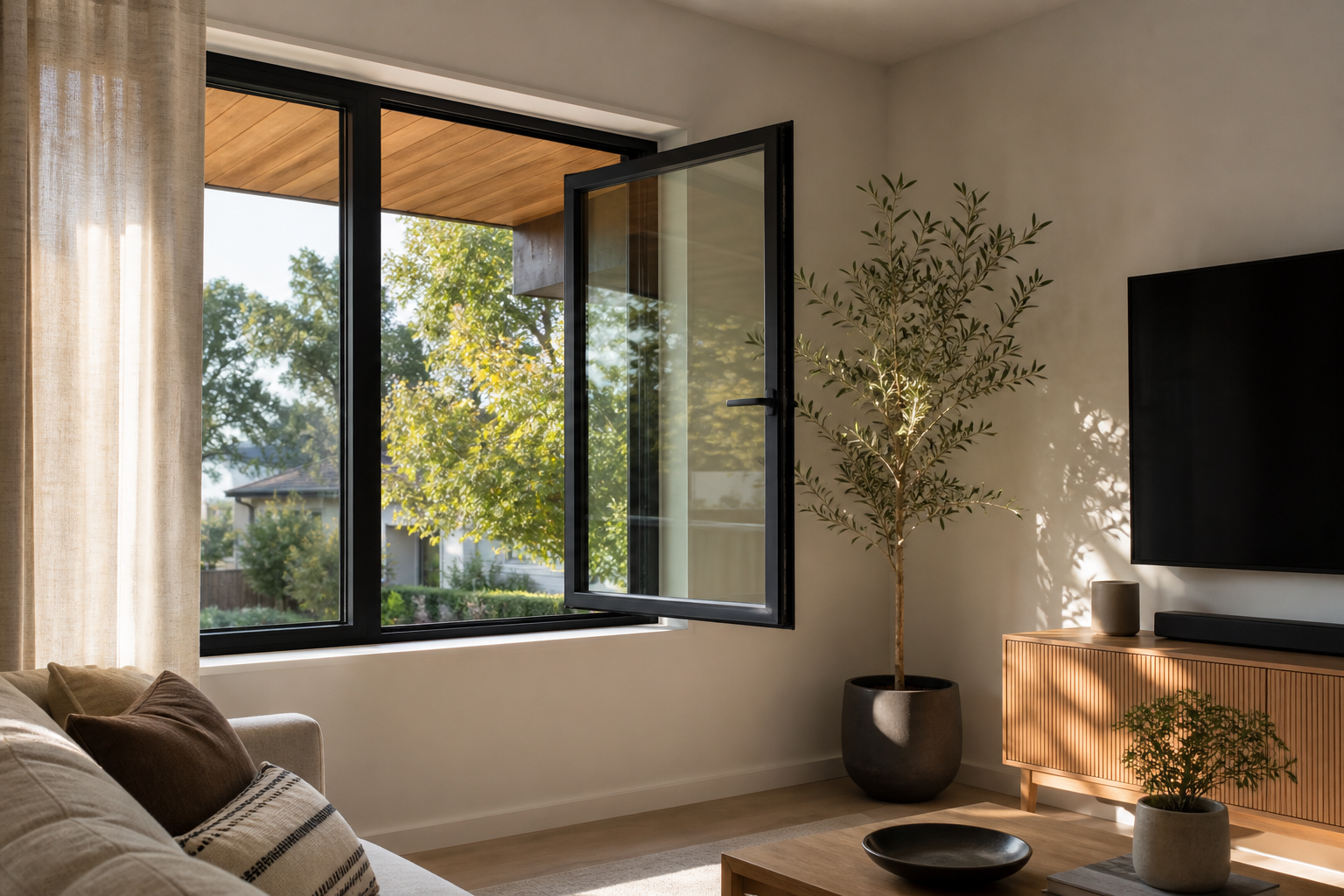
A west-facing living area, a shaded north-facing room, and a kitchen above a countertop can require different tradeoffs. Record the direction the glass faces, exterior shade, interior coverings, desired daylight, glare sensitivity, ventilation goal, screen location, furniture conflicts, and cleaning access. This brief lets the supplier and design team discuss glass and operation in the context of the room.
Do not choose solar heat gain only by seeking the lowest possible number. The preferred balance can change with climate, season, orientation, shading, and heating or cooling priorities. Use the current ENERGY STAR climate-zone criteria as a screening reference, then have the project’s qualified professionals determine applicable code and specification requirements.
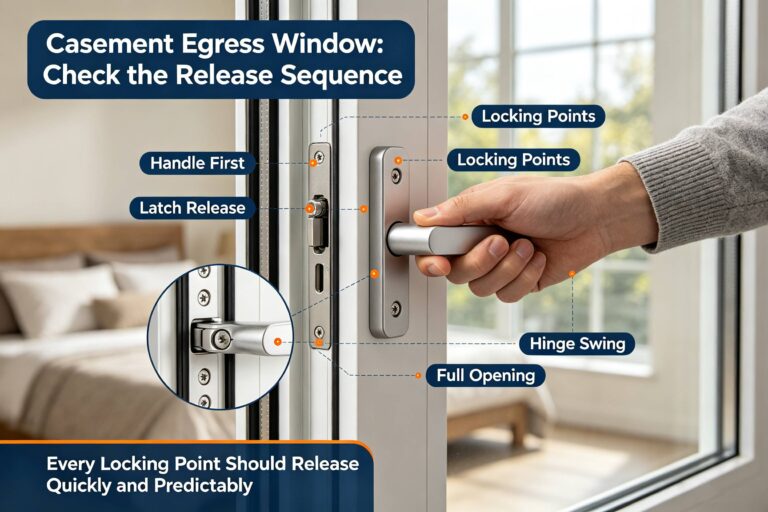
Operation also affects daily results. A window that cannot fully close because of misalignment, a damaged seal, or an obstructed handle will not function as intended. Plan reachable hardware, sash travel, screen removal, curtains, shades, insect control, and maintenance before approving the opening.
Casement Window Energy Request Checklist
- List each opening, nominal size, handing, room, orientation, and exposure.
- Define comfort, daylight, glare, ventilation, privacy, and appearance priorities.
- Request the exact frame, sash, glass, spacer, hardware, screen, finish, and drainage description.
- Obtain whole-product ratings and match the product record to the proposed configuration.
- Coordinate rough opening, perimeter flashing, sealants, attachment, sill support, and drainage.
- Review how replacement parts, adjustment instructions, cleaning, and service requests will be handled.
- Record exclusions and unresolved items before the order is approved.
When requesting a Forge Windows quotation, attach this information instead of sending only a width and height. A clear request reduces assumptions and makes alternate options easier to compare. It also creates a useful record for shop-drawing review and installation handoff.
Frequently Asked Questions
Are casement windows always more energy efficient?
No operating style is automatically best for every configuration. Casement hardware can pull a sash toward its seals, but whole-product performance still depends on frame, glass, spacer, seals, size, options, fabrication, and installation. Compare certified records for the exact products under consideration.
What rating should I check first?
Begin with whole-product U-factor and solar heat gain coefficient, then review visible transmittance and other project-required data. The priority between ratings depends on climate, orientation, shading, and room goals. Confirm the current criteria and applicable local requirements.
Does a thermal break prove an aluminum window is efficient?
No. A thermal break describes a frame design feature, not a guaranteed whole-window result. Ask for the complete configuration and its rating record. Compare the submitted frame, glass, spacer, operating type, and size with the product identified in that record.
Should screens and shades be selected later?
They should be coordinated early because they can affect handle access, sash movement, daylight, view, cleaning, and interior clearances. Draw them with the window in open and closed positions. Confirm attachment locations do not interfere with drainage, seals, glass, or hardware.
Conclusion: Build a Verifiable Casement Window Specification
A Casement Window energy decision is strongest when ratings, configuration, room conditions, operation, and installation tell the same story. Use energy efficient casement windows and aluminum casement windows as search starting points, not as proof of performance. Review the current Forge Windows product information, request exact documentation, and contact Forge Windows with an opening schedule and project requirements for a focused discussion.