2026-09-18
Aluminium windows can work in hot climates when the complete window and shading suit the exposure. Compare solar heat gain coefficient, whole-window U-factor and daylight transmission. Low-E is a coating category, not one performance level; request values for the proposed glass and frame rather than assuming every Low-E option keeps heat out equally.
A room can become hot with the windows closed because sunlight still enters through glass. The roof, walls, internal heat sources and ventilation also matter. Before ordering replacements, record when the room overheats and which surfaces receive direct sun.
Separate solar gain from heat transfer
Solar heat gain coefficient, or SHGC, describes the fraction of incident solar energy admitted by a glazing system. U-factor describes heat transfer driven by a temperature difference. Visible transmittance describes daylight. The NFRC label guide explains how to read those measures together.
| Problem | Compare | Also review |
|---|---|---|
| Direct afternoon sun | Solar-control performance | External shading and glass area |
| Air-conditioned room gains heat through the opening | Whole-window U-factor and air leakage | Perimeter seals and door-opening habits |
| Room feels dark after tinting | Visible transmittance | Daylight distribution and finishes |
| Hot frame surfaces | Frame design and thermal break | Orientation and sun exposure |
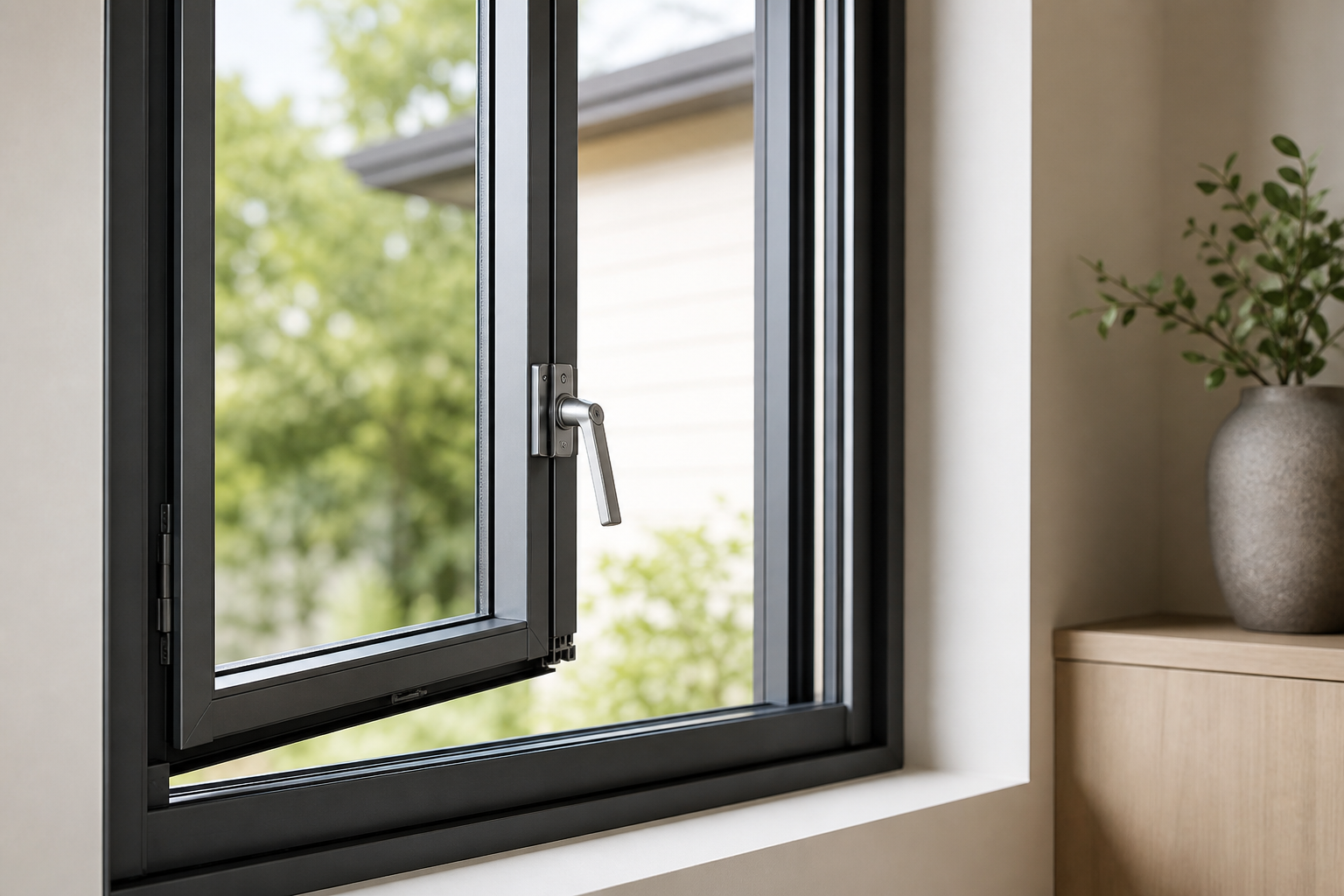
Double glazing or Low-E is the wrong either-or
Double glazing describes an insulated assembly with separated panes; Low-E describes a coating that can be used within such an assembly. They can be specified together. The Department of Energy notes that Low-E coatings can have different solar-gain characteristics. Request the exact proposed combination.
A dark tint is not enough information. Ask for a physical sample and the relevant performance data. Compare its appearance in daylight, from inside after dark, and beside the frame. Include the effect on useful light in your decision, rather than choosing solely by how dark the sample looks.
Match each elevation to its exposure
Start with the worst room rather than applying one premium package to the whole house. A shaded opening and an unshaded afternoon-facing wall can have different needs. Your Home’s climate guidance emphasises coordinating glazing with shading and the building design. Its regional examples should be adapted by the project designer.
As a practical comparison, request the base specification and one alternative for the same opening. Keep frame, dimensions and installation scope constant. Ask the designer what comfort problem the upgrade is expected to address and which other measures remain necessary.
Frequently asked questions
Is aluminium or uPVC better in hot weather?
Compare the whole windows. Frame design, thermal breaks, glazing and seals matter more than a material label by itself. Ask for equivalent sizes and operation with documented performance, then include appearance, serviceability and local installation support.
How much extra does Low-E glass cost?
There is no project price established here. Ask for an itemised upgrade against the same base window, identifying the coating, pane build-up and installation. An isolated glass price can omit changes to the frame, weight or manufacturing requirements.
Is Low-E worth it for a hot climate?
It can be useful when the chosen solar-control performance addresses the actual exposure. Avoid a guaranteed payback claim without an energy assessment. Compare comfort goals, shading options and the measured specification before accepting the price difference.